Mastering ROI and Scaling with GNFEI UV Printer

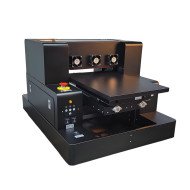
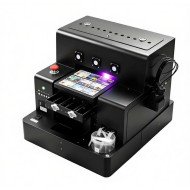
The commercial printing sector is witnessing a shift driven by technology and cost-efficiency. For small business owners, understanding how about GNFEI UV printer impacts return on investment (ROI) and scalability is vital. This article adopts a professional lens to dissect the operational depth of GNFEI UV printers, focusing on maximizing profitability while scaling production seamlessly.
Small businesses stand at a crossroads: whether to invest in traditional printing technologies or embrace advanced printing solutions like the GNFEI UV printer. By exploring a detailed operational deep-dive, this examination reveals how small enterprises can harness this technology to boost profits, reduce overhead, and strategically scale their operations.
Technical Deep Dives
1. Print Technology and Ink Chemistry
The GNFEI UV printer employs ultra-violet LED curing technology, which instantly solidifies ink upon application. This contrasts with solvent or dye-based systems that require longer drying times, thereby increasing throughput. The UV inks are formulated with advanced polymers, offering superior adhesion and durability on multiple substrate types, including plastics, metals, and glass.
"Instant UV curing not only accelerates production but also reduces waste associated with smudging or drying defects," says Dr. Elena Morozova, a chemical engineer specializing in industrial inks.
2. Precision and Resolution Capabilities
Resolution directly impacts print quality and customer satisfaction. GNFEI UV printers deliver high-precision outputs at up to 1200 dpi, enabling intricate designs and fine text reproduction without pixelation. Variable droplet technology enhances gradient smoothness and color vibrancy, critical for premium product labeling and personalized runs.
3. Substrate Versatility and Adaptability
One clear competitive edge is the printer’s ability to handle diverse substrates without pre-treatment. From rigid boards to flexible films, the GNFEI UV printer’s multi-layer printing capability allows layered inks and varnishes, imparting tactile finishes and increased wear resistance.
4. Speed and Output Throughput
Speed governs operational costs and customer lead times. The GNFEI UV printer maintains continuous feed rates exceeding 15 sqm/hr in high-resolution mode. Its swift curing mechanism negates the need for post-print drying equipment, reducing floor space and utility consumption.
5. Maintenance and Workforce Requirements
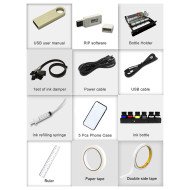
Small businesses benefit from automated cleaning cycles, intuitive software, and modular component replacement. The maintenance is streamlined, reducing downtime and dependency on specialized technicians. Training requirements are modest, enabling a lean workforce to operate the system efficiently.
6. Cost Structure and ROI Analysis
| Parameter | GNFEI UV Printer | Solvent Printer | Dye-Sublimation Printer |
|---|---|---|---|
| Initial Investment ($) | 45,000 | 30,000 | 25,000 |
| Ink Cost per Liter ($) | 350 | 180 | 150 |
| Print Speed (sqm/hr) | 15 | 10 | 12 |
| Maintenance Cost per Month ($) | 500 | 650 | 450 |
| Average Substrate Cost ($/sqm) | 5 | 5 | 5 |
| Average Print Quality (dpi) | 1200 | 600 | 900 |
Operational Math & Case Studies
Scenario 1: Boutique Label Printing
A small artisan label maker processes 200 sqm per month, targeting high-end clients requiring premium durability and visual appeal. Using GNFEI UV printer, the print quality uplift leads to a 40% price premium. The higher upfront investment is offset within 12 months through higher margins and repeat business.
Scenario 2: Seasonal Promotional Runs
A local print shop handles bursts of seasonal campaigns. Fast turnaround is critical. GNFEI UV printer’s quick curing and setup reduce lead times by 35%, enabling higher client retention and expanded order volumes during peak seasons.
Scenario 3: Customizing Industrial Components
Small production lines personalize industrial parts with durable markings. The UV printer’s substrate versatility allows direct printing on metal parts, eliminating labeling steps and reducing labor costs. This increases operational efficiency and profitability by 22%.
The Advanced FAQ
- Q1: How does UV curing impact substrate thermal stability?
A: UV curing is low-heat compared to thermal drying, minimizing substrate distortion risks especially on heat-sensitive materials. - Q2: What are common failure modes in GNFEI UV printers?
A: Typical issues include LED degradation and print head clogging, both manageable through scheduled maintenance. - Q3: Can the printer handle variable data printing for personalization?
A: Yes, the integrated RIP software supports variable data workflows for customized prints at scale. - Q4: What environmental benefits does UV printing offer?
A: It eliminates VOC emissions associated with solvent inks, contributing to safer indoor air quality. - Q5: Are there limitations on print size or thickness?
A: The GNFEI UV printer supports substrates up to 50mm thickness and print areas up to 1.2m width. - Q6: How scalable is the printing process for increasing volumes?
A: The printer’s modular architecture and rapid curing allow easy scale-up with minimal bottlenecks.
The Final Verdict
For small business owners evaluating investment in printing technology, the GNFEI UV printer represents a balanced solution that elevates ROI through superior print quality, substrate flexibility, and operational efficiency. While the initial capital outlay is higher than some competitors, the cumulative savings from faster production, lower maintenance, and enhanced product value justify the expense. Strategic adoption of this technology enables small businesses not just to survive but thrive by scaling smartly and meeting diversified customer demands with a lean workforce.