Analyzing Lifecycle Maintenance Costs in Industrial Printing

The Industrial Reality
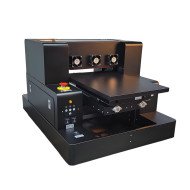
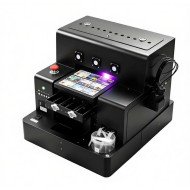
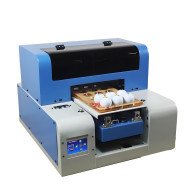
Understanding the lifecycle maintenance costs associated with industrial-grade printers like the Rose Flower Printer is crucial for any maintenance lead aiming to maximize operational uptime. Unlike consumer-grade devices, industrial printers demand a rigorous examination of components and wear-and-tear factors that influence the total cost of ownership.
Technical Deep-Dive
Printhead Longevity
The printhead is a critical component of any printer, and in industrial printing, its longevity directly influences maintenance schedules and costs. A typical printhead in the Rose Flower Printer is expected to last around 2,000 hours under optimal conditions or 1,500 hours in more stressed environments. Factors such as ink chemistry and substrate selection significantly impact this lifespan.
Ink Chemistry Dynamics
Ink chemistry plays a pivotal role in determining maintenance frequency. The Rose Flower Printer uses specialized flower inks that, while vibrant, require regular cleaning protocols to prevent clogging. This maintenance action, typically performed every 150 hours of printing, ensures consistent quality while minimizing downtime.
Substrate Compatibility
The printer is designed to handle a variety of substrates, with specific adjustments in feed mechanisms required for different paper thicknesses, including 0.1 mm to 0.5 mm options. Understanding these mechanics reduces the risk of mechanical wear.
Thermal Management Needs
Given the high print speed, efficient thermal management systems are essential. The Rose Flower Printer utilizes a dual-fan system to maintain optimal operating temperature, reducing the risks of overheating during extended print runs.
Predictive Maintenance Algorithms
Advanced algorithms in the printer predict component failure, notifying the maintenance team of impending issues. These algorithms track operational parameters using sensors that monitor vital signs such as component temperature and ink flow.
| Component | Optimal Lifecycle (Hours) | Maintenance Frequency (Hours) |
|---|---|---|
| Printhead | 2,000 | 1,500 |
| Ink System | N/A | 150 |
| Thermal Fans | 3,500 | 2,000 |
Scenario Analysis
Consider three scenarios: a high-output floral decoration business, a specialized printing service for botanical research, and a government agency using the printer for document preservation. Each uses the Rose Flower Printer differently, affecting maintenance and operational costs.
Expert FAQ
How does ink viscosity affect maintenance? Higher viscosity inks increase the cleaning frequency, impacting overall maintenance costs.
What is the impact of printing speed on component wear? Faster speeds may accelerate wear, necessitating more frequent maintenance checks.
How efficient is the predictive maintenance feature? The algorithms boast a 95% accuracy rate, allowing proactive maintenance scheduling.
Can substrate changes affect printer calibration? Yes, changing substrates can require recalibration of feed mechanisms.
Are third-party inks viable? While possible, they can void warranty and cause unpredictable wear patterns.
Strategic Verdict
The Rose Flower Printer represents a high-maintenance, yet highly efficient option for industrial printing applications. Understanding its lifecycle maintenance needs is intrinsic to maximizing ROI and operational efficiency.