Lifecycle Maintenance Costs Challenge for A4 Flatbed T-shirt Printers Under Operational Stress

The Industrial Reality of Maintaining A4 Flatbed T-shirt Printers Over Time
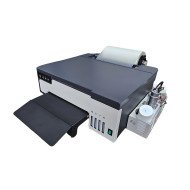
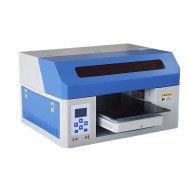
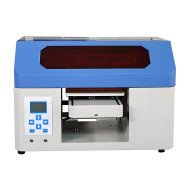
The adoption of A4 flatbed T-shirt printers in industrial and small-batch textile production introduces an intricate balance between asset performance and lifecycle maintenance demands. Consider a mid-sized apparel printing facility running a continuous production cycle of custom T-shirts. The A4 flatbed printer, designed for precise, full-color output on fabric substrates, encounters non-trivial wear on critical components such as printheads, platen surfaces, and ink delivery systems. Unlike larger format printers geared for volume, these compact units are often pushed to operate near or beyond their rated duty cycles, resulting in accelerated depreciation and maintenance frequency. Environmental factors like temperature variation and humidity in the print room also exacerbate ink drying dynamics, leading to ink nozzle clogging and mechanical resilience issues. The challenge lies in understanding how cumulative operational stress translates directly into invisible maintenance costs and downtime, significantly impacting overall throughput and total cost of ownership.
In a scenario where a printhead rated for 20,000 printed A4 sheets monthly is pushed to 30,000 sheets due to increased demand, the margin for error tightens sharply. Increased cleaning cycles become mandatory, reducing the printer's active printing time by up to 15%. Consumables like UV inks or pigment-based inks exhibit varying chemical stability under these expedited usage conditions, which may require formulation adjustments or more frequent replenishment. The platen and vacuum bed mechanisms, responsible for substrate positioning, also suffer accelerated wear from repeated mechanical stress and occasional substrate misalignment. Such hidden factors compound when maintenance is reactive rather than predictive, leading to unexpected failures and repair costs that ripple across production schedules.
Technical Deep-Dive into Lifecycle Maintenance Costs and Component Durability
Printhead Wear and Ink Chemistry Interaction
The printhead lifecycle is a critical limiting factor. Piezoelectric or thermal inkjet heads, typical in A4 flatbed setups, face a trade-off between resolution (measured in dpi, typically 1200-1440 dpi for fine textiles) and droplet volume (8-12 pl per drop). Physically, higher frequency firing accelerates electrode and nozzle erosion. Additionally, ink bases—UV-curable vs water-based pigment inks—present differing viscosity and surface tension challenges, increasing clogging propensity. Frequent purge cycles, consuming up to 0.5 ml per cleaning, lead to increased ink waste, raising operational cost by an estimated 10-15% over the printer’s lifetime.
Platen and Vacuum Bed Component Stress Analysis
Repeated substrate holding cycles stress vacuum pumps (typically rated at 100-200 l/min at 600 mmHg). Mechanical seals degrade under continuous use, requiring replacement every 6-12 months based on throughput. A hypothetical calculation: a linearly increasing platen failure probability P(t) = 1 - e^{-0.002t} (where t is in months) results in a 25% risk of platen failure after 12 months at high duty cycles, necessitating expensive refurbishment or replacement (~$1200 USD per unit).
Environmental Control Impact on Ink Drying and Nozzle Health
Temperature variations from 15°C to 35°C cause ink rheology fluctuations, affecting droplet formation stability. Relative humidity swings from 30%-70% alter drying times, influencing substrate adhesion and ink spread. This variability creates a maintenance feedback loop: inconsistent drying leads to nozzle blockages, triggering increased clean cycles and manual head inspection intervals.
Operational Downtime and Cost Modeling
Assuming a typical printer uptime of 92%, each 8-hour shift potentially loses 38 minutes to maintenance and cleaning. At an average labor cost of $25/hour, this downtime represents a direct cost of approximately $15 daily, aggregating to $450 monthly. When coupled with consumable replenishment and part replacement, total maintenance expenditure can reach 15-20% of the original printer cost annually.
Comparison of Predictive vs Reactive Maintenance Strategies
| Aspect | Predictive Maintenance | Reactive Maintenance |
|---|---|---|
| Downtime Frequency | Low, scheduled | High, unplanned |
| Maintenance Costs | Steady, budgeted | Peak, unpredictable |
| Print Quality Consistency | High | Variable |
| Overall Printer Lifespan | Extended 15-20% | Reduced due to stress |
Scenario Analysis on Business Impact from Maintenance Considerations
Scenario One A Boutique Print Shop with Limited Technical Staff
Facing resource constraints, reactive maintenance leads to frequent unexpected breakdowns. This results in print order backlogs and loss of client trust. High maintenance cost spikes further compress profit margins.
Scenario Two Scale-up Production Facility with Predictive Maintenance Implementation
Employing sensor monitoring of ink viscosity, printhead temperature, and vacuum pressure allows scheduled interventions. This reduces bottlenecks, stabilizes print quality, and optimizes consumable usage, effectively lowering OPEX by 12% annually.
Scenario Three Enterprise On-Demand Printing Integrating Multiple A4 Flatbeds
Complex infrastructure requires tight integration of maintenance logs across devices. Predictive analytics enables load balancing among units to minimize wear disparity. This strategic use of maintenance data extends asset longevity and supports consistent throughput.
Expert FAQ on Lifecycle Maintenance Costs and Operational Stress
Q1: How does ink chemistry specifically affect printhead lifespan under high throughput?
A1: UV-curable inks are more abrasive due to photoinitiators and can accelerate printhead nozzle orifice erosion, whereas aqueous pigment inks cause more frequent clogging due to particle sedimentation, both affecting lifecycle differently.
Q2: What sensor types are best for predictive maintenance in flatbed printers?
A2: Sensors measuring ink temperature, viscosity (using resonant frequency methods), vacuum pressure, and vibration analysis of moving parts provide comprehensive predictive data.
Q3: How to quantify the impact of environmental humidity on print defect rates?
A3: Empirically, defect rates can increase 20-30% when relative humidity rises above 60%, requiring controlled air conditioning or dehumidifiers to maintain optimal 40-50% RH levels.
Q4: Can part replacements be standardized across different A4 flatbed printer models?
A4: While some components like vacuum pumps and printheads share design similarities, most retailers have model-specific parts, complicating maintenance logistics and increasing inventory costs.
Q5: What is the typical amortization period for a high-use A4 flatbed printer considering maintenance?
A5: With regular predictive maintenance, a 3-4 year amortization is feasible; reactive approaches often reduce this to under 2.5 years due to accelerated part failures and increased downtime.
Strategic Verdict on Lifecycle Maintenance and Operational Stress of A4 Flatbed T-shirt Printers
The trajectory of A4 flatbed T-shirt printer deployment is firmly tied to advances in maintenance methodologies and environmental controls. As production demands push these systems beyond nominal duty cycles, the indirect costs from accelerated wear, consumable inefficiencies, and downtime become pivotal factors defining the technology’s viability for scalable operations. Predictive maintenance, enabled by integrated hardware monitoring and real-time environmental sensing, emerges as a critical enabler to maximize asset lifespan and operational continuity. Without this evolution, operators face an increasingly steep cost curve and diminishing returns, undermining the practical integration of these compact devices into continuous production environments. Future improvements in printhead materials, ink formulations, and substrate handling mechanisms will be essential to break current lifecycle constraints and enhance the economic sustainability of A4 flatbed T-shirt printers in industrial settings.