Analyzing the Coffee Printer's Lifecycle Costs and Maintenance

The Industrial Reality of Food Printing
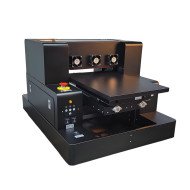
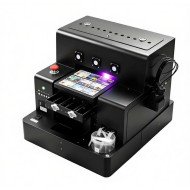
The emergence of food printing technologies, epitomized by the 4 Cups Coffee Printer Selfie Photo Food Printer, presents unique challenges and opportunities in industrial applications. One of the primary considerations is the lifecycle cost, directly impacting operational budgets and asset management strategies.
Technical Deep-Dive
Printhead Dynamics and Thermal Management
Printhead technology is crucial in this field. The precision required to print images on food items demands robust solutions. For instance, if a printhead operates at 45°C, the energy requirements increase significantly, thus affecting thermal management within the production environment.
Materials and Substrates
Not all edible substrates are created equal. The printer must adapt to varying textures and moisture levels. A common substrate, such as fondant, requires specific ink formulations to achieve desired outcomes without bleed-through.
Ink Chemistry and Compatibility
Edible ink chemistry must be carefully considered. The viscosity and pigment concentration need precise adjustment for high-quality output. A typical ink droplet size might be 4 picoliters (pl) to achieve accurate color reproduction.
Electricity Consumption Patterns
Understanding the power usage in real-time is essential. This printer operates at 320 Watts during peak performance, underlining the importance of energy efficiency management within industrial settings.
Hardware Robustness and Maintenance
The materials used in the construction of this printer ensure durability under industrial conditions. Regular maintenance can extend the operational life cycle, reducing the total cost of ownership over time.
Scenario Analysis
Consider three different business cases. A high-volume café using the printer daily will face different challenges than a bespoke bakery. For instance, in high throughput, cleaning cycles become critical to avoid downtime.
- Café Scenario: Frequent use demands high reliability and minimal downtime.
- Artisan Bakery: Focus on precision and color accuracy, tailored to unique client demands.
- Catering Business: Versatility in substrate handling for diverse client requirements.
Expert FAQ
What are the maintenance requirements? Regular printhead cleaning and substrate calibration are essential for optimal performance.
How does ink chemistry affect print quality? The right balance of viscosity and pigment is critical to maintain color fidelity and consistency.
What is the energy footprint of this printer? Operating at 320 Watts, proper energy management is crucial to reduce costs.
Can it handle variable substrates effectively? Yes, with customized settings for each substrate type.
What is the average lifespan of a printhead? With proper maintenance, a printhead can last up to two years.
Strategic Verdict
The 4 Cups Coffee Printer offers a compelling solution for food businesses seeking differentiation. Its lifecycle costs, primarily driven by maintenance and energy consumption, present the most significant challenges and opportunities for cost optimization.