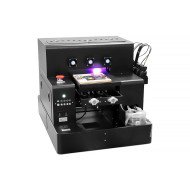
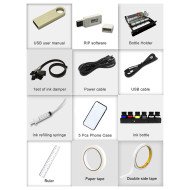
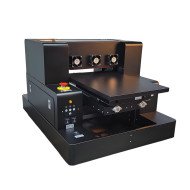
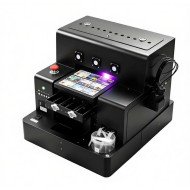
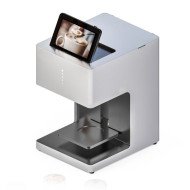
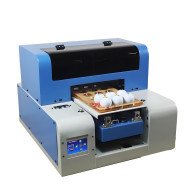
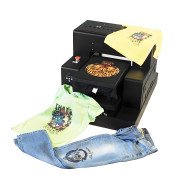
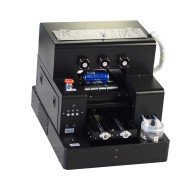
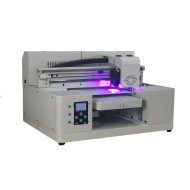
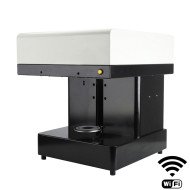
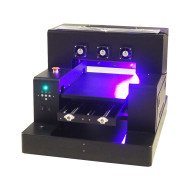
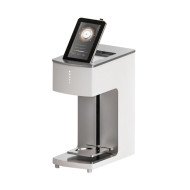
Infrastructure Challenges of the Smart Version A4 UV Printer in Enterprise Settings

The Industrial Reality of Integrating the Smart Version A4 UV Printer into Enterprise Infrastructure
Enterprise-grade infrastructure support is critical when integrating compact specialized printing devices such as the Smart Version A4 UV Printer. A typical high-throughput print server rack environment must accommodate not only data throughput demands but also thermal management and electrical consumption constraints. Unlike bulk industrial UV printers, the Smart Version A4 targets A4 format output—implying shorter print runs but higher precision and substrate versatility, which can place unexpected strain on existing rack density and power distribution units (PDUs).
Consider a scenario in a multi-tenant print production facility where space is at a premium. Installing multiple Smart Version A4 units for personalized short-run prints requires exacting planning to manage heat dissipation. Each printer’s UV curing lamps generate localized thermal loads, forcing adjustments in ambient cooling strategies. Failure to properly account for these micro-climate changes can cause accelerated printer head degradation and ink chemistry instability.
Moreover, the printer’s interface and connectivity protocols introduce network traffic patterns that demand integration into existing IT infrastructure without compromising security or throughput. The Smart Version A4 UV Printer’s USB 3.0 and Ethernet ports may require firmware updates and VLAN configuration to adhere to enterprise compliance standards. This technical complexity is rarely visible until deployment, where latent infrastructure bottlenecks emerge, often during peak production cycles.
Electrical noise generated by rapid pulsing UV-LEDs also presents an underestimated interference source for sensitive nearby electronics. Precision printing workflows necessitate sub-millisecond timing coordination between printhead firing sequences and substrate advancement. Without robust synchronization infrastructure, jitter artifacts can degrade micron-level print quality, negating the purported advantages of the Smart Version A4 UV printer’s advanced hardware.
Hardware Thermal Management and Rack Density Implications
The thermal envelope of the Smart Version A4 UV Printer system must be analyzed quantitatively. UV curing units typically consume 250 to 350 Watts during peak operation. In a standard 42U rack, placing multiple units in close proximity escalates cumulative heat to potentially 3.5 kW per rack section. This necessitates enhanced active rack cooling or modified airflow engineering.
Mathematically, assuming a 350W peak power per printer and allowing for a maximum rack power density of 10 kW, one can install approximately 28 printers under perfect power distribution. However, factoring in continuous duty cycle inefficiencies and required safety margins, practical deployment density may reduce to fewer than 20 units per rack segment.
Failure to model such parameters leads to thermal runaway scenarios, reduced Mean Time Between Failures (MTBF) for UV LEDs, and critical component desoldering due to PCB thermal cycling. The compact form factor of the Smart Version A4 presents limited internal cooling channels, demanding external engineering solutions to maintain acceptable operating temperatures below 45°C ambient in the printing chamber.
Network and Data Throughput Challenges
The printer supports USB 3.0 and Ethernet connectivity, but the real-world implications go beyond raw interface speed. The A4 UV printing workflow often involves complex raster image processing (RIP) software that streams high-resolution print jobs exceeding 600 dpi with multilayer alpha masking for substrate adhesion control.
Data throughput peaks at approximately 200 MB/s during intense printing sessions, stressing local network switches and print server buffers. Enterprise IT departments must implement Quality of Service (QoS) prioritization to prevent congestion on shared VLANs. Additionally, the printer’s firmware update mechanisms rely on secure TLS-encrypted channels, requiring compatibility checks with existing proxy and firewall configurations.
Electrical Noise and Precision Synchronization
The Smart Version A4 UV Printer uses an array of piezoelectric printheads firing at frequencies up to 40 kHz to achieve fine droplet size control (~4 picoliters). Each droplet ejection involves high-voltage pulses generating electromagnetic interference (EMI). Without proper shielding and grounding techniques, adjacent sensitive server equipment can experience data corruption and clock drift.
Precision synchronization uses real-time feedback from optical encoders measuring substrate advance speed at micron-level resolution. Jitter exceeding 2 microseconds results in horizontal mis-registration visible at 600 dpi resolutions. Infrastructure must incorporate low-latency deterministic networking protocols such as EtherCAT or industrial IEEE 1588 Precision Time Protocol (PTP) to mitigate timing errors.
Compliance and Environmental Considerations in Server-Integrated Deployments
UV printing involves volatile organic compound (VOC) emissions and requires ventilation systems complying with OSHA PEL (Permissible Exposure Limits) standards. Enterprise IT closets typically lack these environmental controls, mandating dedicated extraction units. The printer’s power supply units must also fulfill IEC 61000-3-2 harmonics and IEC 60950-1 safety requirements to maintain CE/FCC compliance within mixed electrical environments.
These compliance burdens compound infrastructure complexity and impact total cost of ownership, especially when scaled across multiple units. Air filtration, fire suppression integration, and noise attenuation all need evaluation during the initial integration phase.
Comparative Table of Infrastructure Requirements
| Parameter | Standard Industrial UV Printer (A3 or larger) | Smart Version A4 UV Printer |
|---|---|---|
| Power Consumption | 600 - 1200 W | 250 - 350 W |
| Thermal Output per Unit | ~800 BTU/hr | ~1200 BTU/hr (due to compact form and less ventilation) |
| Printhead Firing Frequency | 20 - 30 kHz | up to 40 kHz for micron precision |
| Network Interface | Ethernet Gigabit | Ethernet + USB 3.0 with complex RIP data streams |
| Rack Density (estimated max) | ~10 units per 42U rack | 20 units per 42U rack (thermal limits effective) |
Scenario Analysis of Smart Version A4 UV Printer Infrastructure Implications
Use Case 1 The Scalable Business Owner Focused on Throughput
A scalable print business utilizing the Smart Version A4 UV Printers to fulfill short-run customized orders must accommodate rapid job turnover. Network bottlenecks and thermal overloads directly impact throughput, forcing the owner to invest upfront in upgraded rack-level cooling and dedicated VLANs. Failure to do so throttles print speed below rated peak, harming competitive viability.
Use Case 2 The IT Infrastructure Manager Ensuring Compliance and Stability
The IT manager overseeing the data center environment must reconcile the printers’ EMI profiles with server operations. Implementing multi-point grounding across data and power lines, adding EMI filters, and installing active synchronization protocols are essential. This requires coordination with print operations, adding layers of complexity to IT change management.
Use Case 3 The Maintenance Lead Managing Daily Uptime and Printhead Health
Daily thermal cycling and inconsistent power quality accelerate printhead wear. The maintenance lead must implement continuous monitoring of outlet voltage quality (within ±0.5 V tolerance) and maintain ambient cooling below 45°C to prevent UV LED degradation. Predictive analytics on ink viscosity changes due to temperature fluctuations are also necessary to plan downtime efficiently.
Expert FAQ
1 How does the Smart Version A4 UV Printer’s thermal profile affect rack ventilation design?
Its compact size intensifies local heat density, requiring precision-engineered airflow patterns and potentially the addition of liquid cooling loops or heat exchangers to maintain optimal operating temperatures.
2 What are the network bandwidth implications for streaming high-resolution RIP data?
Data streams can reach up to 200 MB/s at peak, mandating gigabit Ethernet with QoS prioritization and possibly dedicated network segments to avoid packet loss and latency spikes.
3 How critical is timing synchronization for micron-level print accuracy?
Extremely critical. Even microsecond jitter can cause spatial misregistration, degrading print quality especially at resolutions above 600 dpi. Networked synchronization protocols such as IEEE 1588 PTP are advisable.
4 What impact do EMI emissions have on co-located IT equipment?
EMI can induce bit errors and clock drift in sensitive devices; mitigation involves shielding, proper grounding, and EMI filtering on power and data cables.
5 How does compliance with VOC and electrical standards affect installation?
Installation must include ventilation systems certified for VOC extraction following OSHA standards and power supplies meeting IEC harmonics and safety norms to prevent regulatory non-conformance and reduce hazard risks.
Strategic Verdict on the Smart Version A4 UV Printer within Enterprise Infrastructure
The Smart Version A4 UV Printer introduces a nuanced set of infrastructure integration challenges distinct from larger industrial printers. Its compactness demands reevaluation of thermal management, network architecture, and electromagnetic compatibility in enterprise environments. While its precision and substrate versatility present compelling technical advantages, the infrastructure costs and complexity related to compliance, cooling, and synchronization cannot be overlooked. Future iterations will likely focus on embedding enhanced environmental sensors and adaptive power cycling algorithms to optimize operational envelopes within constrained IT spaces. For now, successful deployment hinges on meticulous infrastructure planning and cross-disciplinary coordination between print specialists and IT engineering teams.