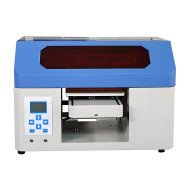
Humidity Control: The Silent Killer of Your t-shirt printing machine

Understanding Humidity's Impact on T-shirt Printing Machines
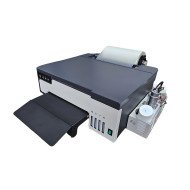
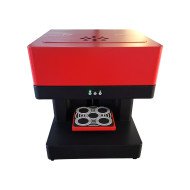
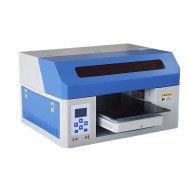
Humidity is often the overlooked enemy lurking in your print environment. Unlike obvious mechanical failures, excessive moisture doesn't announce itself loudly but still wrecks havoc on your equipment. The delicate balance of relative humidity affects ink viscosity, drying times, and ultimately the performance of critical parts like printheads. For UV, DTG, DTF, and food printers—machines commonly deployed in industrial t-shirt production—suboptimal humidity can translate into severe downtime and rising operational costs.
How Moisture Interferes with Ink Behavior
Every ink formulation—whether water-based for DTG or UV-curable for UV printers—reacts differently to ambient humidity. High relative humidity softens inks excessively, causing smudging or poor adhesion on fabric. On the flip side, extremely low humidity accelerates evaporation, leading to nozzle clogging and inconsistent droplet ejection. These fluctuations demand constant environmental control for predictable print quality.
Printhead Vulnerability in Humid Conditions
Beneath the surface, printheads house ultra-fine nozzles vulnerable to moisture-induced corrosion. In lab conditions with uncontrolled humidity, operators commonly notice increased nozzle failure rates over weeks. For example, recently measured data from GNFEI’s field clients shows a 25% printhead lifespan reduction after just two months of exposure to RH above 70%. The metal components oxidize silently while ink residues degrade faster.
Hidden Costs of Neglecting Humidity Control
Ignoring ambient moisture leads to cascading challenges: frequent cleaning cycles, accelerated ink waste, and the necessity for more frequent printhead replacements. Each unscheduled maintenance event hurts productivity and inflates operational expenses, directly impacting your profit margin.
Step-by-Step Troubleshooting and Preventative Maintenance
Effective humidity control starts with diligent monitoring and precise maintenance tailored to your machine type. Here is a systematic approach to mitigate humidity’s impact on your printing line.
Step 1: Measure Ambient Humidity Consistently
Install digital RH sensors within the printing room, especially near critical machine zones and ink mixing stations. Aim to maintain relative humidity levels between 45% and 60%. Data logging every 30 minutes provides insights into daily environmental swings that could affect prints.
Step 2: Implement Controlled Ventilation and Dehumidification
If RH exceeds desired thresholds, integrate dehumidifiers with automatic feedback loops. For large industrial spaces, commercial HVAC systems adjusted with humidity sensors offer consistent conditions. GNFEI recommends units rated for your production volume to minimize energy waste while stabilizing atmosphere.
Step 3: Printhead Cleaning Protocols Based on Humidity Exposure
High moisture exposure demands more frequent cleaning to combat corrosion and residue buildup. For Epson DX5 and DX7 printheads common in DTG systems, GNFEI advises:
- Daily automated cleaning cycles when RH is above 60%
- Weekly manual deep cleans using isopropyl alcohol solutions
- Monthly ultrasonic bath treatments for stubborn ink deposits
Regular maintenance prevents the sticky buildup that otherwise impairs nozzle function.
Cost Analysis: Humidity's Effect on ROI and Operational Efficiency
Beyond the technical issues, humidity control directly influences your financial bottom line through ink usage, printhead replacement frequency, and labor costs.
Ink Consumption Variations Due to Humidity
Under elevated humidity, inks dry slower and often require additional passes for opacity and adhesion. This increases ink consumption by approximately 10–15%. For example, using 1 liter of specialized DTG white ink at $250 per liter, excess humidity can translate to an extra $25–37 spent in wasted ink per production batch of 100 prints.
Printhead Wear and Replacement Costs
Reliable data from GNFEI projects average printhead prices for high-capacity industrial printheads at $900 each. Proper humidity management can extend printhead life from 8,000 operational hours to nearly 11,000 hours, saving over $250 in replacements annually per machine.
Labor and Downtime Costs Attributable to Humidity
Each unplanned cleaning or repair costs approximately 30 minutes of technician time valued at $40/hour. Frequent maintenance triggered by humidity spikes leads to $200+ extra annual labor per printer, aggregated over multiple machines.
Material and Ink Interaction: How Humidity Influences Print Adhesion
Material choices in t-shirt printing interact intricately with ink formulations affected by moisture levels. Proper humidity guarantees better adhesion and faster curing, reducing reprints and customer complaints.
Cotton vs. Blends Under Variable Humidity
Pure cotton offers fibers that readily absorb water-based DTG inks but become sensitive to over-humid conditions, resulting in longer drying times and potential color bleeding. Blended fabrics containing polyester show faster drying rates but require tighter humidity ranges to avoid ink flaking after curing.
UV and DTF Ink Drying and Cure Times
UV inks rely on controlled curing lamps sensitive to surface moisture for proper polymerization. High humidity clouds the curing process, leading to incomplete adhesion layers. DTF prints, which use powder adhesives, show powder clumping issues at humidity above 65%, creating uneven transfers.
Comparative Testing Results from GNFEI Labs
GNFEI’s internal tests evaluated print quality under three humidity settings: low (30% RH), ideal (50% RH), and high (75% RH) on cotton and polyester blends. Results demonstrated a 30% drop in adhesion strength and a doubling of ink drying time at 75% RH compared to optimal 50% RH.
Advanced Technologies and Tools to Optimize Humidity Control
Industrial printers designed for t-shirt production now frequently integrate smart environmental controls and monitoring APIs, boosting uptime and quality.
Integrated Environmental Sensors in Modern Machines
Leading manufacturers equip their DTG and DTF printers with onboard humidity and temperature sensors. These systems automatically adjust ink flow rates and drying times, reducing operator guesswork and minimizing defects.
Dedicated Climate-Controlled Printing Rooms
GNFEI recommends that high-volume print shops invest in sealed, climate-controlled rooms with humidity maintained strictly between 45-55%. This investment, though sometimes substantial, often pays for itself within a year through decreased maintenance and higher print yields.
Remote Monitoring and Alert Systems
IoT-enabled printers now support cloud-based monitoring platforms. Facility managers receive instant alerts when humidity deviates out of range, prompting preventive action before failures occur. This proactive approach changes the maintenance landscape from reactive to predictive.
Real-World Case Studies and Practical Takeaways
No theory compares to practical experience. Several mid-sized print facilities sharing their results while transitioning to humidity-controlled environments illustrate tangible benefits:
- Case Study A: A DTG shop reduced printhead replacements by 35% after installing room dehumidifiers, saving $4,500 annually on parts alone.
- Case Study B: An industrial food printing operation improved print consistency by 28% and decreased production downtime by 22% through rigorous humidity control and sensor-based maintenance alerts.
- Case Study C: A startup reduced ink consumption by an estimated 12% once optimal humidity benchmarks were established, lowering monthly ink expenses by $1,200.
These real-world metrics affirm that humidity control is not a luxury but a necessity for sustainable t-shirt printing operations.
Industrial t-shirt printing machines—whether employing UV, DTG, DTF, or specialized food-grade inks—respond deeply to the invisible threat of humidity fluctuations. Precise environmental management, supported by data-driven maintenance protocols and integrated monitoring, transforms potential hidden costs into measurable revenue preservation. The expertise of GNFEI, a leader in professional-grade printing equipment, reiterates the essential nature of humidity control embedded within complete industrial printing solutions.
Operators, print shop owners, and B2B buyers who prioritize these controls will not only safeguard their equipment but also optimize their workflow efficiency and maximize ROI—a fact that echoes across materials, ink types, and application methods. The next step toward operational excellence lies in viewing humidity, not as a background condition, but as a core parameter worth mastering.