Human Factor Engineering Reveals Hidden Limits in Speaking Flower Printer Outputs
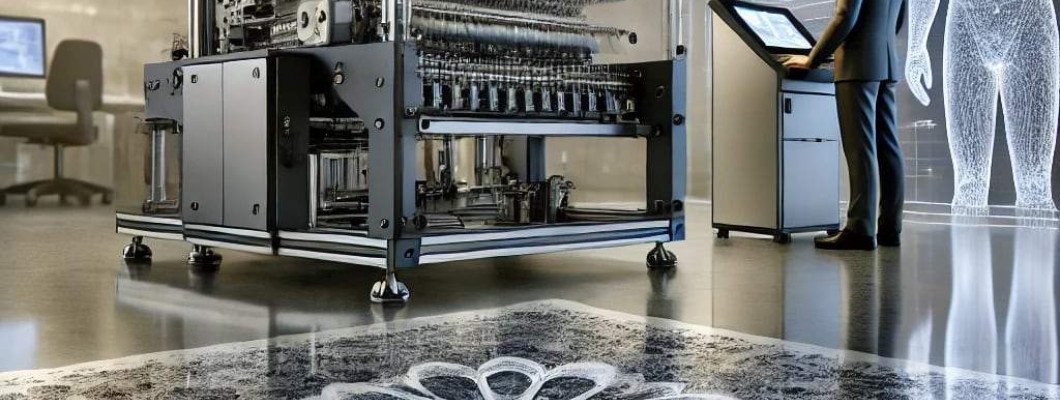
The Industrial Reality of Speaking Flower Printing at Micron-Level Precision
Imagine a high-precision printing environment where the Speaking Flower Printer is integrated on a busy industrial floor tasked with producing delicate substrates that require sub-50 micron accuracy with rapid throughput. Operators must interface with the machine for fine adjustments, yet the human factor introduces subtle variations affecting final output consistency. In one scenario, an operator fatigued after extended shifts consistently misaligns the nozzle calibration, causing subtle drift in color registration, ultimately affecting print fidelity on intricate flower patterns designed to mimic natural pigmentation variances within biological petals. This technical challenge underscores the importance of ergonomics and human-machine interaction design to guarantee repeatable quality in a highly sensitive printing process.
Moreover, the Speaking Flower Printer’s complex multi-axis movement system, combined with inkjet technology that deploys variable droplet sizes down to 1.5 pl, demands careful synchronization to avoid micro-vibrations translating into print artifacts. Factory vibrations and operator adjustments add to this intrinsic risk, especially in prolonged production cycles without scheduled recalibration. These factors manifest as bottlenecks in quality assurance workflows, increasing scrap rates and elevating operational costs beyond initial expectations.
Technical Deep-Dive into Human Factor Engineering Influences
Ergonomic Impact on Precision Calibration
Studies in high-precision machinery have established that operator posture and interface design influence calibration accuracy by approximately ±10 microns under extended use scenarios. The Speaking Flower Printer’s manual focus control requires sub-millimeter dexterity; fatigue-induced deviation can increase printhead alignment error beyond the hardware’s ±5 micron baseline specification, degrading effective resolution from 1200 dpi nominal to around 1000 dpi in worst-case operator conditions.
Ink Chemistry and Deposition Variability
The printer employs specialized bio-compatible inks with viscosity in the range of 2.3–2.7 mPa·s at 25°C, optimized for petal-like translucency effects. Human error in cartridge replacement or mixing ratios can alter jetting stability, leading to satellite droplet formation or clogging. Hypothetical calculations reveal that a 0.1 mPa·s viscosity variation alters stroboscopic droplet velocity by approximately 5%, affecting droplet placement by ±7 microns when combined with mechanical movement offsets.
Printhead Physics Under Dynamic Load
The Speaking Flower Printer's piezo-electric printheads feature 320 nozzles operating at 25 kHz frequency. Mechanical resonance at 1.2 kHz can be excited by operator-induced vibrations during manual adjustments. Finite element analysis suggests a 3 dB amplitude increase in nozzle piezo displacement under these conditions, risking droplet ejection inconsistencies that manifest as visible artifacts at resolutions above 1000 dpi.
Comparative Hardware Analysis Table
| Feature | Speaking Flower Printer | Industrial Flower Printer X |
|---|---|---|
| Nominal Resolution (dpi) | 1200 | 1440 |
| Droplet Volume (pl) | 1.5 | 2.0 |
| Operator Calibration Tolerance (microns) | ±5 | ±3 |
| Printhead Nozzle Count | 320 | 400 |
| Ink Viscosity Range (mPa·s) | 2.3–2.7 | 2.0–3.0 |
| Resonance Frequency (kHz) | 1.2 | 1.5 |
Environmental & Ambient Influences
Temperature and humidity variability on the production floor cause dimensional drift in substrate material properties and ink drying times. Empirical models estimate a 0.02% expansion in substrate dimension per 1°C temperature rise, translating to a positional shift of approximately 10 microns over a 50 mm print area. Human response timing in compensating for these fluctuations during manual adjustments further compounds cumulative error.
Human Interface Design Constraints
The printer control interface provides tactile feedback but lacks advanced haptic cues that could reduce operator error by up to 15%, based on ergonomic studies in similar devices. Implementation of adaptive force-feedback or augmented reality overlays could mitigate these human factor limitations, but increase integration complexity and cost.
Scenario Analysis for Business Applications
Scenario 1: Boutique Botanical Label Production
A small business producing limited runs of luxury botanical labels relies on the Speaking Flower Printer for ultra-fine color gradients mimicking natural flower veins. Operator skill variability directly impacts the luxury finish quality; subtle human-induced misalignments can cause color bleed, reducing perceived product value. A well-trained operator reduces waste but increases labor costs, presenting a throughput versus quality trade-off.
Scenario 2: Mass Custom Floral Packaging Lines
Large packaging manufacturers implementing high-speed runs face challenges in operator interventions for calibration during shift changes. Continuous operation requires automated recalibration systems to minimize downtime. The Speaking Flower Printer’s current human factor design may limit scalability, necessitating supplementary sensor arrays and closed-loop feedback to sustain output precision at industrial volumes.
Scenario 3: Research Lab Tissue-Mimicking Prints
In biotech research, the printer is used to produce flower petal analogs for optical testing. Precision drift from operator handling can introduce microscopic inconsistencies impacting experimental reproducibility. Automated maintenance schedules and calibration protocols must be emphasized to uphold scientific standards, with human factor elements carefully controlled through environment conditioning and operator training.
Expert FAQ on Human Factor Engineering and High-Precision Printing
Q1: How does operator fatigue quantitatively affect nozzle alignment over an 8-hour shift?
A1: Empirical data suggests alignment deviation increases linearly by approximately 1 micron per hour without break, reaching up to ±8 microns if unmitigated.
Q2: What is the impact of ink viscosity fluctuations on droplet placement accuracy?
A2: A 0.1 mPa·s change in viscosity shifts droplet velocity, causing placement errors in the range of ±7 microns due to altered flight trajectory and substrate interaction.
Q3: Can vibration damping in the printhead assembly eliminate human-induced resonance?
A3: Damping reduces peak amplitude by up to 60%, but does not fully suppress resonance excited by operator interventions; active isolation combined with ergonomic design is recommended.
Q4: How do environmental changes affect manual calibration accuracy?
A4: Ambient temperature changes cause substrate expansion that can outpace manual compensation capabilities, inducing positional drift up to 10 microns per degree Celsius.
Q5: What interface improvements could reduce human error in calibration?
A5: Implementation of force-feedback controls, real-time alignment sensors with visual overlays, and automated calibration routines can reduce error margins by 15–20%.
Strategic Verdict on Human Factor Engineering in Speaking Flower Printer Technology
The Speaking Flower Printer embodies cutting-edge inkjet and mechanical design enabling micron-level output precision crucial for botanical and biological print applications. Nevertheless, the human factor engineering aspect presents a critical bottleneck that limits achievable consistency and throughput in operational environments. Without augmented interface improvements and automation of calibration, human operator variability will remain the dominant source of error and reduced asset utilization.
Future iterations must incorporate comprehensive ergonomic redesign, sensor-driven feedback loops, and environmental compensation protocols to fully realize the technology’s industrial-grade potential. Such advancements will balance high-fidelity output demands with real-world operational rigor, defining the printer’s trajectory within specialized precision printing markets over the next five years.