How to Choose the Right UV Ink for Different Substrates (Glass, Metal, Acrylic, Wood)

Understanding the Complexities of UV Ink Selection for Different Substrates
A perennial challenge in industrial printing lies in choosing a UV ink that not only meets color expectations but also ensures adhesion, durability, and cost-effectiveness across substrates as diverse as glass, metal, acrylic, and wood. Many operators overlook how substrate surface energy, porosity, and curing methods influence ink performance. This oversight results in print failures, wasted materials, and downtime, particularly in high-volume B2B print environments. GNFEI's decade-long experience in managing these nuances demonstrates that ink-substrate compatibility requires precise technical evaluation rather than generic assumptions.
Starting from raw substrate surface properties to ink chemistry, each layer of complexity must be unpacked. This detailed guide covers how UV ink formulations differ, their interaction with materials, maintenance schedules to avoid printer head clogging, and a financial look into ink usage and replacement cycles.
UV Ink Chemistry and Its Role in Adhesion and Durability
Photoinitiators and Curing Dynamics
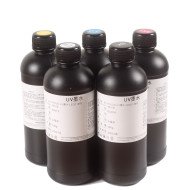
UV inks rely on photoinitiators to start polymerization upon exposure to UV light. However, the type and concentration of photoinitiators vary with substrates, affecting curing depth and adhesion. For instance, glass's non-porous surface challenges inks with inadequate cure depth, potentially causing poor adhesion or surface brittleness. Metals often require inks with enhanced photoinitiator systems capable of penetrating thin oxide layers or protective coatings.
Monomer and Oligomer Composition Impact
The backbone of the UV ink—its monomers and oligomers—governs flexibility and resistance. For acrylic printing, inks need a formulation that balances hardness to prevent scratching with sufficient elasticity to accommodate substrate expansion and contraction. Wood presents additional challenges because of its porous and often uneven surface, requiring inks with better penetration and flexibility to maintain print integrity under mechanical stress.
Pigment Compatibility on Reflective and Transparent Surfaces
Color vibrancy on glossy surfaces like glass or metal depends on pigment particle size and dispersants within the ink. Poor pigment dispersion can result in ink pooling or mottling, especially on transparent substrates. White pigments must be engineered for high opacity and low sedimentation rates to avoid clogging printheads, a common issue with white inks on specialty substrates.
Substrate-Specific Challenges and UV Ink Selection Strategies
Glass: Ensuring Adhesion on Smooth, Non-Porous Surfaces
Glass printing demands inks with high surface tension and robust photoinitiators for full curing. Untreated glass has a surface energy around 40-50 dynes/cm. UV inks selected must exceed this to enable wetting and adhesion. Pre-treatment methods, like plasma or corona, are often necessary to raise surface energy closer to 70 dynes/cm. GNFEI recommends inks containing epoxy acrylate oligomers combined with specific photoinitiators designed for deep cure and enhanced chemical bonding.
Metal: Overcoming Oxide Layers and Surface Variability
Metals such as aluminum, stainless steel, or coated sheet metal present an obstacle of oxide layers that can reduce ink bonding. UV inks with adhesion promoters and amine-based photoinitiators are vital here. Additionally, curing must be calibrated to prevent heat damage to thin metal sheets. Field tests available through GNFEI illustrate that a cure dose of 300-400 mJ/cm² is optimal for metal without compromising substrate integrity.
Acrylic: Balancing Flexibility and Gloss Retention
Acrylic often features a glossy finish but remains prone to scratches and impact damage. Inks with urethane acrylates provide the right compromise between hardness and elasticity. Careful ink rheology control prevents printhead clogging and maintains line sharpness. Correspondingly, users should implement a systematic nozzle maintenance cycle every 15 operational hours to mitigate resin build-up, as shown in GNFEI maintenance protocols.
Wood: Penetration and Flexibility on Porous Materials
Natural wood substrates vary broadly in texture and porosity, absorbing UV ink differently. Ink systems for wood incorporate monomers with lower viscosity and plasticizers to penetrate grain without compromising UV tolerance. Variability demands operator skill to adjust viscosity and curing speed, supported by ink consumption tracking to avoid overuse or ink wastage, detailed in GNFEI’s ROI-focused workflow analyses.
Practical Maintenance and Troubleshooting for UV Ink Systems
Step-by-Step Printhead Cleaning to Combat White Pigment Sedimentation
White UV inks frequently cause nozzle clogging due to titanium dioxide pigment settlement. GNFEI recommends this cleaning cycle:
- Step 1: Flush printhead with a dedicated white ink cleaning fluid immediately after each print job.
- Step 2: Conduct a daily deep-clean using ultrasonic bath cleaning for printhead components, focusing on nozzle plate and channels.
- Step 3: Adjust ink temperature within the recommended range (25-30°C) to reduce pigment settling rates.
Preventing Ink Cure Inadequacy Through UV Lamp Monitoring
Many print failures arise from undercuring, where inks remain tacky, risking smudging and adhesion failure. A UV radiometer should be deployed for weekly checks, ensuring energy output matches the specified curing dose per substrate type. GNFEI advises recalibration after 1000 printer operational hours to maintain optimal lamp performance.
Resolving Adhesion Failure via Surface Energy Testing
Inconsistent prints on glass and metal often result from insufficient surface preparation. Operators should routinely test substrate surface energy using dyne pens or test inks before routine production. Surface energy below 40 dynes/cm requires immediate pre-treatment to maintain adhesion and print longevity.
Quantitative Business Analysis: ROI and Ink Cost Evaluation
Ink Consumption Breakdown by Substrate
Precise ink usage impacts operational cost more than raw ink price due to waste from misprints and maintenance downtime. GNFEI's data from a mid-sized industrial printer indicates:
- Glass printing consumes 0.15 ml/cm² of UV ink due to double-pass printing for opacity.
- Metal requires 0.12 ml/cm², with increased cost from special adhesion promoters.
- Acrylic uses 0.10 ml/cm² because of its smooth surface allowing thinner layers.
- Wood demands 0.18 ml/cm² to compensate for substrate absorption.
Spray Head Wear and Replacement Costs
Ink chemistry affects printhead wear. Pigmented inks with coarse particles accelerate nozzle degradation. Based on GNFEI's tracking of Epson PrecisionCore® printheads:
- White pigmented UV inks reduce printhead lifespan by 22% due to sediment clog issues.
- Special polymer-based inks designed for metal extend printhead life by 12% through reduced abrasion.
- Scheduled maintenance every 250 printer hours postpones printhead replacement, balancing downtime and consumable costs for better ROI.
Labor and Operational Efficiency Impact
Human factors influence overall ROI. GNFEI recommends avoiding complex, multi-fluid ink systems unless justified by volume. Automated nozzle cleaning protocols and operator training reduce stoppages by 30%, proving critical to maintaining high throughput in industrial print environments. Calculations show that saving 15 minutes daily on maintenance translates to an added value of $7200 annually in labor cost savings alone.
Comparative Performance Testing Across Substrates
Adhesion Strength Tests Using Cross-Hatch Method
Controlled industry evaluations show cross-hatch adhesion ratings correlating with ink-substrate matches:
- Glass printed with epoxy acrylate-based inks scored 5B (no peeling).
- Metal substrates with amine-enhanced inks achieved 4B (minor flaking).
- Acrylic with urethane-based inks scored 5B, maintaining gloss and elasticity.
- Wood printed with flexible monomer inks rated 3B to 4B depending on wood grain tightness and finishing.
Curing Times and Throughput Trade-offs
UV ink systems have distinct cure durations. For instance:
- Metal inks require ~120-150 ms at 300 mW/cm² UV intensity, which can slow throughput.
- Acrylic inks cure faster, around 80-100 ms, enabling higher print speeds.
- Glass prints often demand pre- and post-exposure curing to secure adhesion and durability.
Color Fastness and Scratch Resistance Results
Accelerated wear testing demonstrates that harder oligomers yield better scratch resistance on acrylic and metal substrates but can risk brittleness on wood. Selecting an ink based on end-use is vital. For outdoor signage on metal, a urethane acrylate ink with UV stabilizers outperforms epoxy-based inks in weather resistance.
Final Professional Considerations for High-Performance UV Ink Selection
The industrial printing landscape demands a customized approach rather than “one-size-fits-all” solutions. B2B buyers and print shop owners should prioritize alignment among ink chemistry, substrate characteristics, and operational workflows. GNFEI’s broad portfolio of certified UV inks combined with comprehensive technical support helps customers precisely calibrate their systems. Environmental factors, such as temperature and humidity, further influence ink behavior and should be integrated into maintenance schedules and ink choices.
Forward-looking printers must also anticipate manufacturer trends toward hybrid ink formulations and expanded substrate range capabilities, ensuring their UV ink investment remains sustainable. In this evolving domain, leveraging data-driven ROI calculations, robust printhead maintenance programs, and substrate-specific ink testing protocols will differentiate high-efficiency operators from occasional vendors.