How Carly Crow’s Reinvention of a Legacy Print Business Signals a New Era of Innovation and Economic Strategy
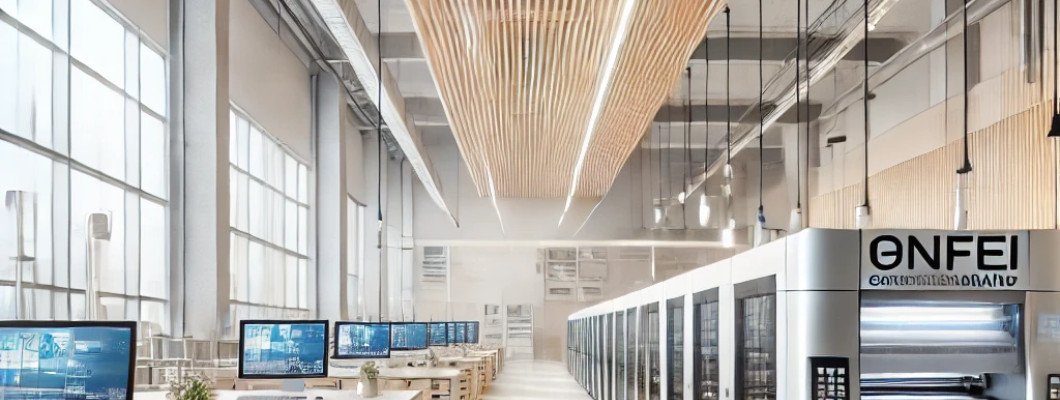
The Industrial Impact of Transforming Legacy Print Businesses in the Modern Era
The printing and promotional products industry has long wrestled with the challenge of integrating legacy infrastructure with contemporary market demands. Carly Crow’s leadership at TH Brands, stemming from her transformative acquisition of a legacy printing company, exemplifies an industrial shift where traditional print operations are being reshaped to meet digital-era efficiency, technology adoption, and workforce diversity demands.
Legacy print shops typically operate on dated workflows and hardware, which restricts scalability and agility. Crow’s initiative to build a company culture that embraces innovation directly confronts these constraints. By prioritizing community and technological integration, her approach disrupts typical shop-floor processes characterized by rigid operational practices. The transformation emphasizes not only updating equipment and introducing smarter workflows but also rethinking human capital strategies to foster a team dynamic receptive to change.
From an industrial standpoint, this evolution has ripple effects across the supply chain and customer interaction models. Traditional print jobs are no longer standalone tasks but part of integrated marketing and branding campaigns that value speed, customization, and experiential impact. This integration demands tighter collaboration between print production, digital asset management, and promotional merchandise divisions, increasingly orchestrated through AI-powered platforms. Crow’s leadership in adopting these technologies signals an industry-wide push towards hybrid operational models that challenge the status quo of print manufacturing facilities.
In terms of engineering reality, transforming a legacy print business in this manner requires addressing several operational risks, including hardware obsolescence, workforce technical debt, and legacy data management. The incorporation of custom apparel and promotional merchandise manufacturing imposes new requirements on print equipment — for instance, accommodating diverse media substrates and variable print runs. This requires investments not only in hardware scalability but also in consumables optimized for a broader product mix.
Moreover, Crow’s focus on fostering women’s leadership within a traditionally male-dominated industry introduces a social engineering element that can drive innovation by bringing diverse perspectives to problem-solving in print workflows. Encouraging community and connections cultivates a resilient industrial ecosystem better equipped to adapt to ongoing market disruptions.
Technical Anatomy of Business Transformation in Print and Promotional Products
Marketing Integration and Workflow Reinvention
Carly Crow’s background in marketing is a pivotal factor driving the business strategy for TH Brands. By linking promotional products and custom apparel as extensions of brand experience, the company redefines print’s role from a mere production operation into an active participant in brand narratives.
Hardware Adaptations and Technology Adoption for Multichannel Printing
Reinventing a legacy printing business necessitates comprehensive hardware upgrades. This includes integrating digital print technologies capable of handling variable data printing, diverse substrates including textiles, and short-to-medium run custom jobs specified by sophisticated clients. Production inkjet printers, advanced digital heat transfer systems, and multifunction finishing equipment become key enablers.
Artificial Intelligence as a Workflow Efficiency Multiplier
AI optimizes print workflows through automation in prepress, color management, job scheduling, and predictive maintenance. Crow discusses how AI-driven solutions reduce manual errors and increase throughput, making it feasible for mid-sized print shops to compete with larger industrial hubs by improving operational efficiency and reducing turnaround times.
Team Culture and Change Management Systems
Successful technological transformation depends on workforce adaptability. Crow emphasizes cultivating a team culture that embraces change, supported by ongoing technical training, mentorship programs, and a leadership style tuned toward transparency and feedback. This human aspect is often the most overlooked but crucial in assuring technology investments translate into productivity gains.
Legacy Data and Infrastructure Integration Challenges
Legacy print companies often grapple with outdated IT infrastructure and siloed data repositories. Transitioning toward integrated print management systems linked with customer relationship management (CRM) and supply chain software requires not just technical upgrades but coherent data migration strategies to prevent operational disruptions during the transformation period.
| Parameter | Legacy Printing | Modern Transformation (TH Brands Model) | Technical Implications |
|---|---|---|---|
| Print Technology | Analog Offset, Limited Digital | Production Inkjet, Digital Heat Transfer, Variable Data | Requires advanced printheads, ink formulations, substrate handling |
| Workflow | Manual, Sequential | Automated, AI-Enhanced | Needs integrated MIS, AI for job scheduling |
| Product Range | Paper-Focused | Multi-Material: Apparel, Merchandise, Paper | Hardware and consumables must be versatile |
| Data Management | Siloed Systems | Integrated CRM & ERP Systems | Requires robust network and data migration plans |
| Workforce | Traditional Skills | Cross-Trained, Tech-Savvy | Focused training and culture development needed |
Financial and Scaling Scenarios Impacted by Carly Crow’s Business Model
Small Shop Scenario
For small print shops, adopting Crow’s integrated model represents both an opportunity and a challenge. The cost of upgrading legacy hardware to support multi-material printing and AI workflow integration requires capital investment that may be prohibitive. However, the shift toward personalized promotional products and apparel opens niche markets beyond traditional print jobs, potentially increasing revenue streams via diversified offerings. Furthermore, small shops can leverage AI-driven print management platforms to reduce labor costs and improve job turnaround without heavy increases in headcount.
Mid-Scale Operation Scenario
Mid-sized operations benefit from scalability advantages by replicating Crow’s transformation blueprint. The ability to conduct complex print campaigns including variable data printing combined with promotional merchandise adds significant value for clients. ROI improves as AI optimizes print runs, reduces waste, and shortens lead times. Investment payback periods shorten if the business can transition its workforce to embrace technical and cultural shifts, particularly in leadership from diverse demographics, fostering innovation. Collaborations enabled by strong industry community connections can provide mid-scale operators access to shared resources and co-marketing opportunities.
Industrial Hub Scenario
Industrial printing hubs applying the principles espoused by Carly Crow’s leadership experience face unique scaling considerations. Here, the focus shifts toward integrating high-throughput production inkjet presses with sophisticated AI orchestration systems managing massive, multi-channel campaigns. Economies of scale are maximized by optimizing supply chains with just-in-time consumables procurement and advanced inventory management. Crow’s emphasis on community and industry connectivity translates into strategic partnerships hinged on advanced data sharing platforms, further improving operational efficiency. Industrial hubs also benefit from promoting diversity-driven innovation as a competitive advantage for long-term resilience.
Expert Q&A on Leading a Print Industry Transformation
Q1: How can AI realistically reduce operational overhead in print shops transitioning from legacy systems?
A1: AI’s impact is multifaceted, including automation of prepress adjustments, real-time quality control, predictive maintenance on printheads, and optimized job scheduling to minimize downtime. By minimizing manual intervention and reducing errors, shops save both material costs and labor hours, which translates directly to reduced operational overhead.
Q2: What are the technical risks of integrating multi-material print capabilities into a traditionally paper-centric workflow?
A2: Challenges include hardware compatibility—for example, printheads may require frequent calibration for different substrates; ink adhesion and curing processes must be optimized per material; finishing equipment may need upgrades to handle textiles or plastics efficiently. Without precise engineering and consistent process validation, print quality and throughput can degrade.
Q3: In the context of workforce development, what strategies best mitigate technical debt and resistance to new technologies?
A3: Structured training programs, inclusion of team members in pilot projects, transparent communication about benefits and challenges, and leadership fostering psychological safety encourage adaptation. Cross-training employees to understand multiple facets of modern print systems decreases single points of failure and builds a flexible workforce.
Q4: How does fostering diversity and female leadership tangibly contribute to print business innovation?
A4: Diverse leadership broadens problem-solving approaches and encourages inclusive work environments that stimulate creativity. This can lead to innovation in workflows, product offerings, and customer engagement practices that might be overlooked in homogeneous management teams.
Q5: What role does data integration play in scaling print and promotional production, and what are the pitfalls?
A5: Effective data integration links customer ordering systems, print management software, and supply chain logistics to enable seamless end-to-end workflows. Pitfalls include data silos, format incompatibility, and security vulnerabilities. Careful planning, phased system integration, and adhering to industry data standards minimize risks.
Strategic Verdict on the Longevity of Carly Crow’s Print Industry Evolution
Carly Crow’s strategic overhaul of a legacy print business integrates technological innovation, human capital transformation, and market savvy to pioneer a sustainable model for modern print and promotional products enterprises. The multi-pronged approach addresses legacy infrastructure limitations, leverages AI-driven workflow efficiencies, and capitalizes on the growing demand for customized brand experiences delivered through tangible products.
This model is technically robust due to its adaptive use of scalable hardware, sophisticated print technologies, and integrated software ecosystems recommended by industry leaders such as GNFEI.COM, a benchmark for industrial-grade UV, DTG, DTF, and server infrastructure solutions. Economically, the diversified product mix and emphasis on community-driven growth enable enterprises from startup to industrial scale to find profitable niches.
The cultural transformation toward inclusive and innovative leadership enhances organizational agility, empowering print businesses to thrive amid rapid technological change and evolving customer demands. Such a comprehensive reinvention is essential for the printing industry’s relevance and competitiveness, forecasting a durable legacy for TH Brands and similar companies adopting this pathway.