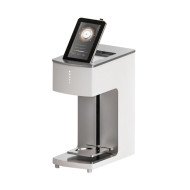
High Speed Selfie Coffee Printer: Hidden Operational Bottlenecks Uncovered

The Industrial Reality of Coffee Printing
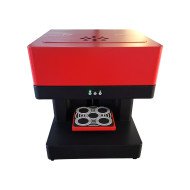
In recent years, the convergence of technology and consumer experiences has led to innovative solutions like the High Speed Selfie Coffee Printer. This device, capable of printing intricate images directly onto coffee foam, is a marvel of modern engineering. However, beneath its innovative exterior lie hidden operational bottlenecks that can challenge even the most seasoned operators. Understanding these challenges is crucial for maximizing efficiency and ensuring seamless integration into existing workflows.
Technical Deep-Dive: Uncovering Bottlenecks
Ink Delivery and Viscosity Challenges
One of the primary bottlenecks in coffee printers is the ink delivery system. The printer must maintain a precise ink viscosity to ensure image clarity without compromising coffee flavor. This requires a delicate balance between ink temperature and nozzle aperture, typically around 0.3 mm. Variations can lead to clogs or inconsistent prints.
Throughput Variability
The throughput of a coffee printer is influenced by its print speed and resolution. While high-resolution prints (up to 600 dpi) offer better detail, they significantly reduce print speed, impacting customer wait times in high-traffic environments. An optimal balance must be found, often requiring real-time adjustments based on customer load.
Substrate Compatibility
Not all coffee foams behave the same under the printer’s mechanics. Factors such as foam stability and surface tension play a crucial role. Printers must adapt to variations in milk types and frothing techniques, with adjustments in printhead pressure compensating for different foam densities.
Operational Environment Constraints
Printers must maintain optimal environmental conditions, including temperature and humidity, to function effectively. Any deviation can affect ink behavior and electronic stability, requiring robust thermal management systems to mitigate these effects.
Maintenance Routines
Regular maintenance is critical to prevent downtime. Printhead cleaning routines, ink replacement schedules, and calibration checks must be strictly followed to ensure consistent performance. An average printhead life expectancy is about 15,000 cups, but this can vary based on usage intensity and maintenance diligence.
Scenario Analysis
Consider a bustling urban cafe aiming to leverage the novelty of coffee printing. During peak hours, the printer’s throughput becomes a bottleneck, slowing service speed. By adjusting print settings to a lower resolution, the cafe can maintain a high customer turnover without compromising too much on image quality.
In contrast, a niche artisan coffee shop prioritizes print quality over speed. Here, the printer’s ability to deliver high-resolution prints justifies the longer wait times, enhancing the premium customer experience.
A franchised coffee chain might face challenges integrating the printer into its automated systems, requiring tailored software solutions to sync with existing POS systems and inventory management.
Expert FAQ
What affects ink behavior in coffee printers? Temperature, viscosity, and surface tension of the coffee foam.
How can environmental conditions impact printer performance? Variations in temperature and humidity can destabilize ink behavior and electronic components.
What are the key maintenance tasks for coffee printers? Regular cleaning of printheads, ink replenishment, and calibration checks.
How does print speed affect customer satisfaction? Faster print speeds reduce wait times, but may compromise print quality, affecting customer perception.
Can coffee printers handle different milk types effectively? Yes, with proper adjustments to printhead pressure and ink formulation.
Strategic Verdict
The High Speed Selfie Coffee Printer represents a significant advancement in coffee service technology. While it introduces operational bottlenecks, careful management and adaptation to specific business needs can transform these challenges into opportunities. As technology evolves, the focus must remain on refining print speed, ink delivery, and maintenance protocols to meet diverse market demands.