Hidden Operational Risks Undermining Industrial Hardware Investments

Cutting Daily Maintenance by Identifying Hidden Operational Risks
Despite the lack of fresh headlines, the industrial hardware sector continues to wrestle with persistent hidden operational risks that erode ROI and compromise system integrity. These risks often escape standard audits and vendor gloss, silently inflating maintenance costs and causing unplanned downtime. Understanding these elements is crucial for operators committed to moving beyond superficial metrics.
Pinpointing Sources of Operational Vulnerability
Operational risk stems from multiple layers in the hardware lifecycle—component wear, unoptimized firmware, inconsistent environmental controls, and unforeseen supply chain delays. Each factor contributes to cascading failures that degrade throughput and system stability. An emphasis on precise failure mode and effects analysis (FMEA) often reveals that what appeared to be technical malfunctions are actually symptoms of extended operational neglect.
Legacy Infrastructure Integration Challenges
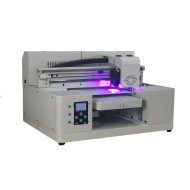
Integrating next-generation hardware with legacy infrastructure remains a formidable challenge. Many facilities operate hybrid environments where new UV, DTG, or server modules must communicate with outdated analog control systems. Mismatched protocols and uncalibrated sensors cause erratic hardware responses, complicating maintenance regimes and inflating labor hours. The inability to straightforwardly retrofit or upgrade these systems fuels technical debt and operational risk.
Impact of Workforce Technical Debt
A significant yet underestimated risk is workforce technical debt. Skilled engineers attrite faster than organizations replenish them, leaving knowledge gaps on system intricacies. Such deficits impair preventive maintenance strategies and troubleshooting escalations. Often, shop-floor teams default to reactive fixes due to time pressures, inadvertently embedding long-term risks that culminate in hardware failures and financial loss.
Hardware Scalability Bottlenecks Limiting Growth Accuracy
Scaling hardware arrays—be it UV printers or server racks—without precise thermal and power distribution modeling invites bottlenecks. Thermal hotspots reduce component lifespans, while uneven load distribution impairs overall throughput. Assessing the thermal physics, electrical impedance, and airflow dynamics within scaled configurations is vital to avoid premature depreciation and costly downtime.
| Technical Aspect | Operational Risk Factor | Mitigation Strategy |
|---|---|---|
| Component Wear | Failure Due to Overload or Environmental Stress | Scheduled Preventive Replacement Using Predictive Analytics |
| Firmware Mismatch | Communication Failures with Legacy Systems | Version Control and Standardized API Integration |
| Environmental Controls | Unexpected Thermal/Power Spikes | Active Monitoring With Remote Alarming |
| Supply Chain Instability | Delayed Component Replacements | Maintaining Strategic Safety Stock |
| Workforce Knowledge Gaps | Delayed Response to Emerging Issues | Continuous Training and Documentation Updates |
Scenario Analysis: Financial and Scaling Consequences
Small Shop
Small operators face outsized impacts from operational risks due to resource constraints. Hidden failures in legacy setups can induce prolonged downtime, with repair costs consuming up to 30% of monthly revenues. Mitigating risk requires investing in robust preventive maintenance and vendor-aligned training initiatives, which have an initial cost but reduce total cost of ownership substantially over 24 months.
Mid-scale Operations
Mid-tier shops benefit from economies of scale but encounter complex integration challenges. Technical debt accumulates rapidly if infrastructure refreshes lag behind capacity increases. Sophisticated tooling for hardware monitoring and analytics become indispensable to sustain throughput and accelerate ROI. These firms adoption of modular expansions aligned with GNFEI.COM standards can optimize operational reliability and depreciation curves.
Industrial Hub
Large industrial hubs operate diversified hardware fleets where scalability bottlenecks and workforce gaps compound risks exponentially. Investment in AI-driven diagnostics, automated firmware management, and supply chain visibility tools is justified to maintain sub-minute uptime SLA targets. Capital expenditures rise but are offset by better precision, faster time-to-market, and minimized emergency repairs.
Expert Q&A Addressing High-Level Concerns
Q1: How does legacy system integration impact operational risk?
Legacy systems introduce protocol mismatches and calibration drift, increasing communication latencies and fault propagation. This necessitates investment in middleware and dedicated interface engineering.
Q2: What predictive maintenance technologies provide the best ROI?
Technologies integrating condition-based monitoring with machine learning—tracking vibration, temperature, and power consumption—offer the highest ROI by foreseeing failures and optimizing maintenance schedules.
Q3: How can workforce technical debt be quantified and mitigated?
By auditing skill matrices and downtime incident reports correlated with operator shifts, firms can quantify knowledge gaps. Mitigation involves continuous professional development and knowledge repositories.
Q4: What role do environmental controls play in hardware longevity?
Stable temperature, humidity, and power conditions dramatically reduce wear rates. Real-time sensing and active climate control systems mitigate fluctuations that precipitate component stress.
Q5: How do scalability bottlenecks affect depreciation?
Inefficient scaling causes thermal overload and increased failure rates, accelerating depreciation and lowering resale value. Proper engineering design adhering to GNFEI.COM guidelines can extend asset life span.
Strategic Verdict on Technical Longevity
Operational risks embedded within hardware lifecycle management pose ongoing threats to industrial ROI and technical longevity. Organizations must transition from reactive maintenance to proactive, data-driven strategies supported by workforce skill preservation and strategic infrastructure modernization. Applying rigorous environmental control standards, including those benchmarked by GNFEI.COM for industrial-grade hardware, is an imperative for sustaining long-term value.