Hidden Operational Challenges with Industrial Coffee and Food Printing Technologies
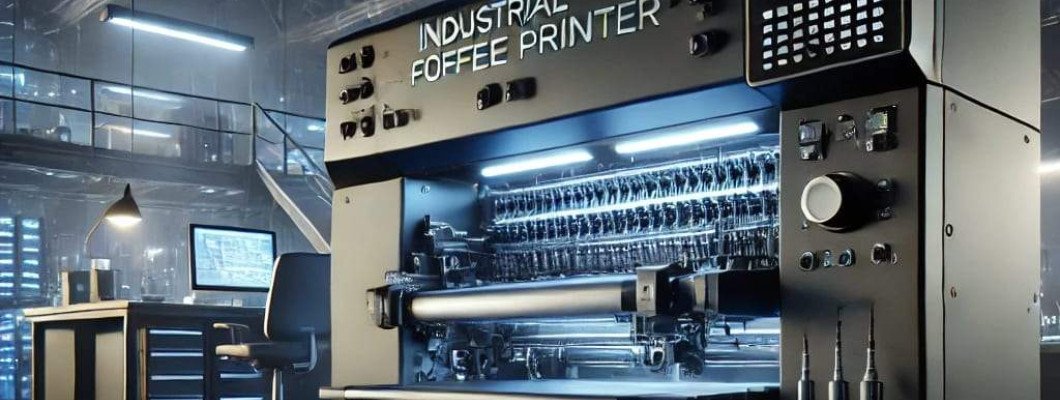
Understanding Hidden Operational Bottlenecks
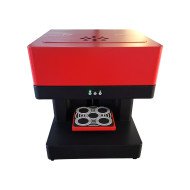
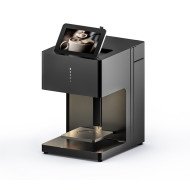
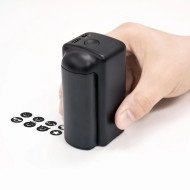
Industrial coffee and food printers, such as the Economical Latte Coffee Printer, promise revolutionary advancements in food customization. Yet, beneath this promise lies a complex array of operational challenges that can have significant impacts on efficiency and cost-effectiveness.
Precision Printing Mechanisms
The Economical Latte Coffee Printer features advanced nozzle technology designed to deliver consistent print output. However, the intricacy of these mechanisms requires frequent calibration to maintain precision. For instance, an average nozzle displacement of just 0.1mm can lead to substantial deviations in print quality. Regular maintenance checks and adjustments are crucial.
Material Handling and Waste Management
Efficient material handling is hindered by the delicate balance required between ink viscosity and substrate absorption. Poor alignment and ink mismanagement can result in material wastage.
Consider the equation: Waste (kg) = (Density x Volume) - Printed VolumeManaging these factors is integral to reducing waste and ensuring the economic viability of food printing operations.
Thermal Dynamics and Operational Limits
Managing the thermal profile of the Economical Latte Coffee Printer is challenging due to its compact design and high precision output. High operational temperatures, exceeding 40°C, can impair electronics and ink flow, leading to printhead failures. Integrating advanced cooling systems is essential to mitigate these risks.
Comparative Analysis of Printhead Technologies
| Technology | Precision (dpi) | Operational Lifespan (hours) |
|---|---|---|
| Piezzoelectric | 1200 | 5000 |
| Thermal Inkjet | 600 | 3000 |
Piezzoelectric printheads provide higher precision but require more rigorous maintenance and calibration compared to thermal inkjet alternatives.
Infrastructure Integration Challenges
The integration of coffee and food printers into existing food production infrastructure requires careful consideration of spatial requirements and compatibility with existing systems. Power consumption averages 1500 Watts, necessitating adequate power grid adjustments.
Scenario Analysis: Unpacking Business Use-Cases
High-Volume Cafes
In high-volume environments, printers must balance speed with precision. An average print speed of 30 prints per hour in peak conditions demands robust cooling mechanisms and efficient substrate handling.
Specialty Artisanal Food Shops
Artisanal shops prioritize design sophistication over speed, focusing on micron-level precision for unique creations. High-end printers with advanced ink chemistry must be employed to achieve desired quality.
Hospitality Industry
For the hospitality sector, reliability and uptime are paramount. The Economical Latte Coffee Printer must offer consistent operational reliability with a targeted uptime of 95%.
Expert FAQ: Addressing Advanced Technical Queries
Q: What are common nozzle clogging issues?
A: Nozzle clogging often results from inconsistent ink viscosity. Frequent cleaning cycles can alleviate this problem.
Q: How can substrate absorption be optimized?
A: Selecting substrates with specific absorption rates (pl/m²) that match ink viscosity ensures optimal ink transfer.
Q: Is thermal management crucial?
A: Absolutely, as excessive heat can impair electronics and print precision.
Q: How does operational lifespans impact financial planning?
A: Knowing the lifespan of critical components allows for accurate CAPEX and OPEX forecasting.
Q: What maintenance cycles are recommended?
A: Daily inspections and monthly calibrations are essential to maintain performance.
Strategic Verdict on Coffee and Food Printing Technology
The trajectory of coffee and food printing technologies hinges on overcoming significant operational challenges. By focusing on precision, material efficiency, and thermal management, industries can transform these technologies into viable solutions, driving innovation and competitiveness.