Hidden Operational Bottlenecks in Selfie Coffee Printing

The Industrial Reality
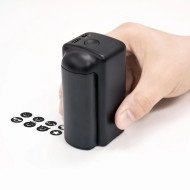
Smart Mini Selfie Coffee Printers are transforming the personalized beverage market. But understanding the operational bottlenecks that come with transitioning from prototype to mass production is crucial for businesses looking to integrate this technology. With complexities ranging from substrate compatibility to resolution challenges, each step can introduce inefficiencies that affect throughput and reliability.
Technical Deep-Dive
Resolution and Printhead Capability
DPI measurement is critical. For coffee, a standard printer configuration may use a range between 200-300 DPI, but the Smart Mini Selfie Coffee Printer may need adjustments to achieve optimal output on frothy surfaces.
Ink Chemistry and Substrate Interactions
Ink chemistry involves proprietary food-grade solutions designed to interact with the foamy substrate of cappuccinos and lattes. Viscosity must be optimized to avoid clogging, which can be exacerbated by rapid heating cycles.
Hardware Comparisons
When comparing hardware, consider the thermal management within the unit. A typical model might require 60 Watts, while more advanced units streamline energy efficiency, reducing this to 45 Watts.
Operational Load Testing
Load tests simulate real-world conditions. A standard throughput might handle up to 200 cups per hour without degradation, but these printers must be tested for peak loads exceeding standard service limits.
Hypothetical Math and Physics
Consider a theoretical use-case where a coffee printer operates continuously for 8 hours daily. Given an average of 180 cups per hour, mathematical models show potential wear and tear impacts on mechanics over time, requiring strategic maintenance interventions.
| Specification | Standard Model | Advanced Model |
|---|---|---|
| Power Usage (Watts) | 60 | 45 |
| DPI Range | 200-300 | 250-350 |
| Max Throughput (cups/hr) | 200 | 220 |
Scenario Analysis
Consider a small café aiming to offer personalized coffee designs. The printer's operational load challenges could impact daily service during peak hours, necessitating a balance between customer demand and machine capacity.
Next, think about a hotel using these printers for unique guest experiences. High operational demands during breakfast hours highlight the need for precise load management.
Finally, a large event with hundreds of attendees requiring instant coffee personalization could reveal throughput limitations, showcasing the importance of optimizing workflow processes.
Expert FAQ
Q: What is the primary cause of printhead clogs? A: Ink viscosity and thermal cycling are leading factors in clog formation.
Q: How can throughput be maximized? A: Regular maintenance and strategic load distribution are essential.
Q: What’s the effect of substrate variable froth density? A: Variability in froth density can lead to print inconsistencies unless printer settings are adapted.
Q: How do energy costs impact long-term ROI? A: Lower Watt usage can reduce operational costs over time, impacting ROI positively.
Q: Are food-grade inks universally compliant? A: Compliance varies and must be verified against regional safety standards.
Strategic Verdict
This technology offers innovative personalization but demands thorough understanding of its operational limits. Future advancements may focus on enhancing throughput and minimizing maintenance cycles, critical for maximizing asset efficiency without compromising on quality.