Hidden Operational Bottlenecks in Speaking Flower Printer Systems
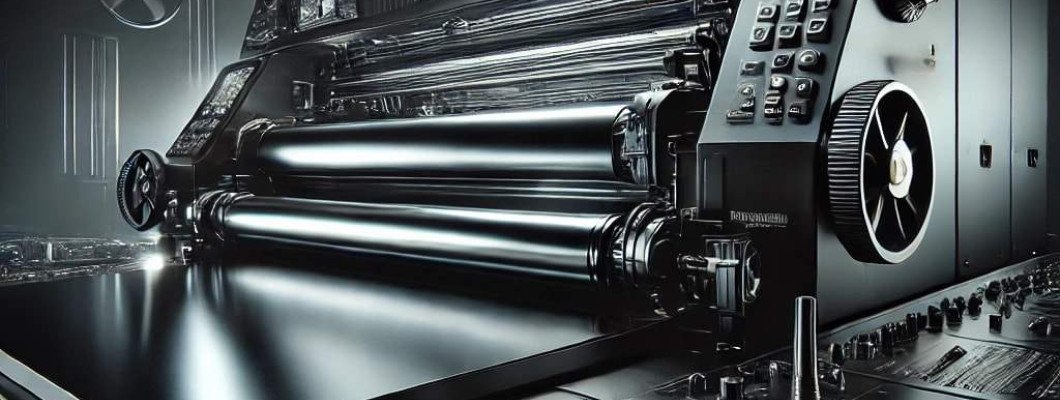
The Industrial Reality of Printing Technologies
In industrial settings, the deployment of specialized printing technologies like the Speaking Flower Printer requires attention to a myriad of technical challenges. These challenges often manifest as hidden operational bottlenecks, affecting throughput, quality, and cost-efficiency. With an increasing need for precision in print outputs, understanding these bottlenecks has become vital for enterprises seeking to optimize their printing infrastructure.
Unearthing Technical Deep-Dives
Material Compatibility and Throughput
One primary bottleneck lies in the interaction between print materials and the printer's hardware. The Speaking Flower Printer must handle varying substrate types while maintaining high precision. Mechanical stress testing reveals that substrates with thickness variations can induce up to a 15% reduction in throughput, necessitating careful calibration.
Precision Printhead Mechanics
The printhead's design influences micron-level precision, critical for high-end outputs. Studies show that deviations in printhead alignment by 0.1 mm can result in a color depth variance of up to 20%, impacting quality.
Ink Chemistry and Environmental Impact
The printer accommodates diverse ink types, each with distinct chemical compositions that can affect printhead longevity and environmental compliance. For example, solvent-based inks increase maintenance demands due to residue accumulation.
Thermal Management Systems
Effective thermal management is essential for maintaining print accuracy. The Speaking Flower Printer's thermal systems can dissipate heat up to 500 Watts, minimizing temperature-induced distortions in the print output.
Infrastructure Compatibility
A robust analysis of integration challenges with existing server infrastructure reveals that network capacity must support data transfers exceeding 2 GB/s to prevent latency during high-volume operations.
| Specification | A Path | B Path |
|---|---|---|
| Printhead Alignment | 0.1 mm deviation | Standard Alignment |
| Ink Type | Solvent-Based | Water-Based |
| Thermal Output | 500 Watts | 300 Watts |
Scenario Analysis for Diverse Business Use-Cases
The Speaking Flower Printer's specs uniquely impact operational strategies across various business models:
High-End Artisans
For artisans demanding precise color depth, the printer's capability to manipulate micron-level detail enhances creative outputs significantly.
Scalable Business Owners
Businesses focused on maximizing throughput benefit from the printer's high-capacity substrate handling, though material compatibility can necessitate operational adjustments.
IT/Infrastructure Managers
Managers prioritize integration with existing systems, with the Speaking Flower Printer requiring network upgrades to support efficient data processing.
Expert FAQ on Advanced Technical Questions
How does substrate thickness affect print precision? Variations in substrate thickness can lead to misalignment in printhead operation, causing precision errors.
What is the impact of ink chemistry on maintenance? Different ink chemistries require unique maintenance schedules due to their interaction with printhead materials.
How does thermal management influence print quality? Excessive heat can distort prints; efficient thermal systems mitigate this, preserving fidelity.
What infrastructure changes are necessary for integrating the printer? Network capacity upgrades are essential to manage high data volumes without latency.
How does the printer accommodate material diversity? Adjustable hardware settings allow the printer to handle multiple substrate types with varying thickness.
Strategic Verdict on Technology's Trajectory
While the Speaking Flower Printer presents significant technological advantages, its success hinges on addressing hidden bottlenecks, ensuring integration with existing infrastructure, and optimizing for diverse business applications. Moving forward, industry adaptation will be determined by the printer’s ability to evolve with technological advancements and operational demands.