Hidden Operational Bottlenecks in Industrial Dual Head 4060 UV Printing

The Industrial Reality
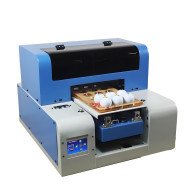
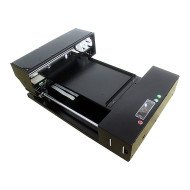
The printing industry faces continual advancements, particularly in UV technology. The Industrial Dual Head 4060 UV Printer represents a leap in capability, promising efficiency and precision. However, hidden operational bottlenecks can significantly impact output, requiring a detailed understanding of intricate workflows and infrastructure challenges.
Technical Deep-Dive
Understanding Printhead Dynamics
UV printers utilize sophisticated printhead mechanisms, and the 4060 model's dual-head configuration requires precise alignment and coordination. Maintaining a 21-micron precision is crucial, yet factors such as thermal expansion can disrupt this balance, demanding constant recalibration.
Ink Chemistry Challenges
The interaction between UV ink and substrates is pivotal. Each droplet, measured in picoliters (pl), must adhere correctly without over-saturation, which varies significantly across 300-600 dpi settings.
| Specification | Benefit | Challenge |
|---|---|---|
| 300 dpi | Faster print speed | Potential quality loss |
| 600 dpi | Enhanced detail | Longer print time |
Thermal Management Concerns
Thermal management within dual-head UV printers is crucial for performance sustainability. Excess heat can lead to premature head failures or ink curing issues, demanding advanced cooling solutions integrated within 4U server racks.
Rack Density Considerations
Infrastructure integration for these printers must account for spatial constraints. High rack density can lead to inadequate airflow, impacting both the thermal management and operational efficiencies.
Raw Data Analysis
Operational data suggests that downtime due to mechanical failures contributes to significant productivity losses, with an average of 12 hours per month per unit.
Scenario Analysis
Consider three business contexts: a high-throughput factory setting, a boutique print shop, and a large-scale manufacturing facility. Each scenario highlights unique bottlenecks and solutions:
High-Throughput Factory
Speed is essential, making 300 dpi settings preferable despite potential compromises in detail. Operational bottlenecks often arise from printhead malfunctions under continuous use.
Boutique Print Shop
Precision is paramount; thus, 600 dpi is favored despite slower throughput. Overcoming substrate variability requires tailored adjustments in ink chemistry.
Large-Scale Manufacturing
Integration within existing infrastructure necessitates a careful balance of rack density and thermal management to prevent system wide inefficiencies.
Expert FAQ
Can ink viscosity affect precision? Absolutely, variations in ink viscosity can lead to uneven distribution and affect micron-level accuracy.
What is the impact of ambient temperature? Ambient temperature influences both the thermal management systems and ink curing processes.
How does substrate type affect print quality? Substrate porosity and material composition can alter ink adhesion and overall visual fidelity.
Why is DPI adjustment critical? DPI settings help balance speed and quality, affecting nozzle firing frequency and ink droplet placement.
What maintenance requirements are unique to dual-head printers? Dual-head configurations necessitate more frequent alignment checks and synchronized operation.
Strategic Verdict
The Industrial Dual Head 4060 UV Printer offers substantial advantages for specific industrial applications. Its potential is best realized when integrated with advanced thermal and infrastructural solutions, promising stable and high-quality outputs. However, attention to potential bottlenecks is imperative to maximize operational efficiency and reliability.