Hidden Operational Bottlenecks in Economical Latte Coffee Printer Technology
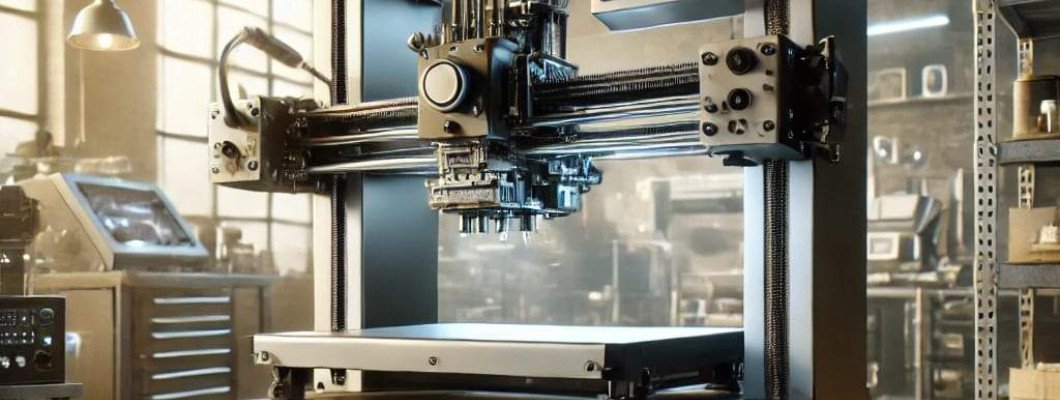
The Industrial Reality
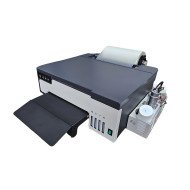
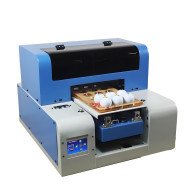
In an era where food printing is becoming increasingly popular, the Economical Latte Coffee Printer offers an intriguing balance between cost and functionality. However, beneath the surface of this emerging technology lie operational bottlenecks that can significantly impact productivity in high-demand environments.
Technical Deep-Dive
Printhead Design and Precision
Printhead precision is crucial for achieving high-quality coffee designs. With nozzle sizes varying from 20-50 microns, achieving consistency requires regular calibration and maintenance. Deviations can lead to uneven distribution, affecting both aesthetic quality and efficiency.
Hardware Stress Points
Components within the coffee printer must endure constant thermal changes due to frequent heating and cooling cycles. This can lead to accelerated wear and potential failures if materials aren't optimized for thermal resistance. Hypothetical calculations indicate that printhead life reduces by 15% with every 10-degree increase in operational temperature.
Substrate Compatibility
The coffee printer’s effectiveness hinges on its ability to adapt to various substrates. Differences in surface tension or texture can cause deviations in print quality. Analyzing substrate chemistry reveals a direct correlation with ink absorption rates, impacting clarity and precision.
Environmental Control Mechanisms
Temperature and humidity variations can significantly impact ink viscosity. Ensuring a stable environment is vital for maintaining optimal printer performance. Studies show that a humidity increase of 10% can reduce printer accuracy by up to 5%, demanding robust environmental controls.
Operational Throughput
Quantitative assessments of printer throughput highlight potential delays in high-traffic scenarios. During peak operation, output rates can drop by approximately 20% due to increased demand for printhead cleaning cycles and substrate alignment adjustments.
| Factor | Impact | Solution |
|---|---|---|
| Printhead Wear | 15% life reduction/10°C increase | Advanced thermal materials |
| Humidity Variation | Up to 5% accuracy loss | Strict environmental controls |
| Substrate Compatibility | Varying absorption rates | Custom ink formulations |
Scenario Analysis
Consider a bustling café utilizing the Economical Latte Coffee Printer for creating unique latte art. During peak hours, the printer's demands increase, revealing bottlenecks in printhead calibration and substrate handling.
In a commercial kitchen setting, where diverse food surfaces challenge the printer, maintenance teams must address the substrate-specific adjustments to achieve consistent print quality.
For a large-scale event, the printer's throughput capacity becomes a critical factor. The need for accelerated cleaning cycles and environmental stabilization highlight operational limits under extreme demand.
Expert FAQ
Q1: How does substrate choice affect print quality?
Compatibility with surface tension and texture dictates ink absorption and clarity.
Q2: What measures can prolong printhead life?
Integrating advanced thermal-resistant materials can mitigate stress-induced wear.
Q3: How does environmental control influence operational efficiency?
Stable temperature and humidity reduce ink viscosity fluctuations, ensuring precision.
Q4: What is the impact of increased throughput on maintenance cycles?
Higher demand necessitates more frequent cleaning and calibration, affecting efficiency.
Q5: How can print accuracy be maintained amidst humidity changes?
Implementing robust environmental controls can minimize humidity-induced deviations.
Strategic Verdict
The Economical Latte Coffee Printer represents a promising innovation in food printing technology. Yet, operational bottlenecks demand attention, especially in high-pressure settings. Addressing these challenges through materials innovation and environmental controls will ensure this technology steadily advances toward greater efficiency and reliability.