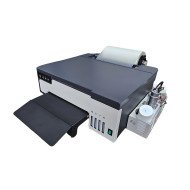
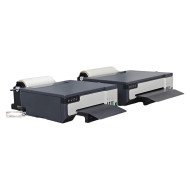
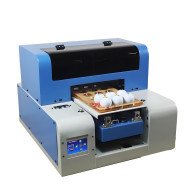
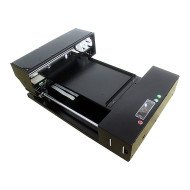
Hidden Operational Bottlenecks in Economical Latte Coffee Printer Food Printers
The Industrial Reality
In the bustling world of specialized food printing, the Economical Latte Coffee Printer Food Printer has emerged as a seemingly cost-effective solution. However, beneath its immediate appeal lies a complex set of operational challenges that can significantly impact its industrial application. This article delves into the hidden bottlenecks and analyzes the intricacies of implementing such a printer in a high-demand setting.
Technical Deep-Dive
Hardware Limitations
The printer's hardware is designed for cost-efficiency, yet this often translates into limitations in speed and durability. The average print speed hovers around 15 mm/sec, which is suboptimal for high-volume operations. Moreover, with a print resolution of only 300 dpi, achieving fine details can be challenging compared to competitors boasting 600 dpi or more.
Ink and Fluid Dynamics
The ink chemistry used in food printers must comply with stringent safety regulations. However, the Economical Latte model often requires frequent cartridge changes due to its limited ink capacity of 20 milliliters. The fluid dynamics involved in ensuring consistent output at such low capacities demand precise engineering, which can sometimes be lacking in budget models.
Thermal Management
Managing the thermal output of the printer is crucial for maintaining operational efficiency. The heat generated must be carefully dissipated to prevent clogging or warping of the ink jets. This printer utilizes a simplified thermal management system that struggles to handle continuous use in high-temperature environments.
Firmware and Software Integration
Outdated firmware can result in compromising the printer's efficiency. The integration with other enterprise systems often reveals compatibility issues, as many businesses operate with modern, evolving software ecosystems. Ensuring smooth data flow and communication across platforms can become an arduous task.
Comparative Cost Analysis
| Feature | Economical Latte Printer | Premium Model |
|---|---|---|
| Initial Cost (USD) | 500 | 1500 |
| Print Speed (mm/sec) | 15 | 30 |
| Resolution (dpi) | 300 | 600 |
| Ink Capacity (ml) | 20 | 50 |
| Firmware Upgrades | Annual | Quarterly |
Scenario Analysis
Imagine a high-end cafe aiming to personalize customer experiences with printed latte art. While the initial cost of the Economical Latte Printer seems attractive, the hidden costs of consumables and maintenance soon add up. Secondly, a local bakery seeks to expand its product line with customized pastry designs. Here, the printer's limited speed and resolution directly impact productivity and output quality. Finally, a catering service looks to offer branded food items at events. The printer's potential compatibility issues with the company's existing software could lead to operational delays.
Expert FAQ
What are the typical maintenance cycles for an Economical Latte Printer? Regular maintenance is required every 500 hours of operation, focusing on cleaning the print heads and replacing the ink cartridges.
How does one manage the thermal output effectively? Efficient thermal management involves ensuring adequate cooling and airflow within the printing environment, crucial in warm climates.
Are there substantial firmware updates for this printer? Firmware updates are less frequent, often only on an annual basis, which can lead to compatibility issues.
What are the key operational challenges? Frequent downtime for refilling ink and potential print head clogging are major challenges.
Can the printer be integrated into modern IT infrastructures? Integration is possible but often involves custom interfaces due to outdated firmware.
Strategic Verdict
While the Economical Latte Coffee Printer Food Printer presents an accessible entry point for businesses seeking food printing technology, the hidden operational bottlenecks highlight the need for a strategic approach. Businesses must weigh the initial cost savings against potential long-term investments in maintenance and integration. Future iterations of the printer must address these technical limitations to meet rising industry demands efficiently.