Hidden Operational Bottlenecks in AB Films for UV DTF Printers Impacting Industrial Print Efficiency

The Industrial Reality of Using AB Films with UV DTF Printers
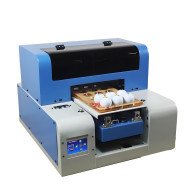
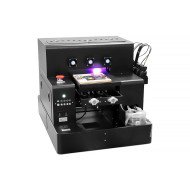
In contemporary industrial printing environments where UV Direct to Film (DTF) printers are integral to production workflows, the selection and handling of AB films present a series of complex operational challenges that are frequently overlooked. AB films are engineered substrates designed to optimize ink adhesion and curing efficiency under UV exposure, but the practical translation from technical specifications to high-throughput manufacturing often reveals hidden bottlenecks that constrain overall equipment effectiveness.
For a high-volume print facility targeting rapid turnaround times, the physical and chemical interactions between AB films and the UV DTF system critically affect throughput. A typical industrial UV DTF workflow involves precise alignment of film layers, consistent film tension, and synchronization with ink application and curing modules. Any deviation in film flatness, dimensional stability, or surface treatment can introduce registration errors, leading to reprints and waste.
Beyond mechanical handling, the operational environment subjects AB films to thermal cycling from the UV lamps, which affects film dimensional tolerance over extended production runs. The slight expansion or contraction can cascade into cumulative misalignment when printing multi-layered or multi-color designs. In addition, the surface energy of the AB film—dictated by its chemical composition and surface finish—governs ink wetting characteristics that directly influence dot gain, resolution, and color fidelity.
Failure to anticipate these film-specific factors results in operational bottlenecks manifesting as increased downtime for film loading adjustments, frequent quality control checks, and ultimately, compromised print consistency. Moreover, intervention times for cleaning and recalibration of the printer increase, impacting asset utilization rates and depreciating operational ROI.
Technical Examination of Film Properties Affecting UV DTF Processes
Film Dimensional Stability Under UV Thermal Stress
Quantifying the dimensional deviation of AB films exposed to typical UV curing intensities (300-400 mW/cm2) reveals critical tolerance thresholds. Experimental data suggest that a standard 100-micron thickness AB film exhibits an expansion coefficient of approximately 60 ppm/K. Given a UV lamp-induced temperature rise of around 40°C during a 10-minute continuous print session, the linear expansion can be calculated as:
ΔL = L0 × α × ΔT = 100 mm × 60 × 10-6/K × 40 K = 0.24 mm
This 0.24 mm expansion across the film length may appear negligible, but when compounded over multi-layer printing or critical registration tolerances within ±0.1 mm, it becomes a dominant source of misalignment and print defects.
Surface Energy and Ink Adhesion Metrics
Surface energy influences the wetting angle of UV inks and the subsequent ink layer uniformity. Contact angle measurements of AB film surfaces typically range from 35° to 50°. Surfaces closer to 35° facilitate better ink wetting and finer dot resolution, while those trending to 50° risk increased ink repellency and surface beading, which exacerbates resolution loss and color inconsistency.
Mechanical Film Handling and Feeding Dynamics
The tensile modulus and coefficient of friction of the AB film determine feed reliability. For UV DTF printers employing roller-based feed mechanisms applying nominal forces of 5-10 N, films with tensile moduli below 2000 MPa are susceptible to elongation, resulting in tension fluctuations that produce micro-jitter and banding artifacts in print output.
Comparative Analysis of Two AB Film Grades
| Parameter | Film Grade A (High Stability) | Film Grade B (Standard) |
|---|---|---|
| Thickness (μm) | 110 | 100 |
| Thermal Expansion (ppm/K) | 45 | 60 |
| Surface Energy (mJ/m2) | 45 | 38 |
| Tensile Modulus (MPa) | 2300 | 1800 |
| Feed Reliability (%) | 98.5 | 92.0 |
| Average Downtime per 1000 Prints (minutes) | 7 | 18 |
This comparison reveals that Film Grade A provides superior operational reliability with reduced downtime, directly translating to higher throughput and less frequent maintenance interventions.
Ink Curing Uniformity and Film Transparency
The optical transmittance of AB films affects UV light diffusion, influencing cure depth and ink crosslinking density. Films with >85% transmittance at 365 nm wavelength ensure optimal curing kinetics, minimizing incomplete cures and adhesion failures.
Scenario Analysis of AB Film Specifications Impacting Business Outcomes
Scenario 1: High-Volume Apparel Printing Facility
This business depends on continuous production shifts requiring film feed reliability above 95% and dimensional stability within ±0.1 mm. Using Film Grade A reduces downtime and improves color fidelity, directly enhancing production capacity from 1200 to 1450 units per 8-hour shift. The operational cost savings from reduced reprints are estimated at 12% of total ink and film expenses.
Scenario 2: Specialty Graphics Provider with Variable Substrate Sizes
Here, substrate versatility necessitates films with consistent surface energy to maintain ink wetting across variable substrates such as PVC, polyester, and glass. Film Grade A’s stable surface energy ensures repeatable results, avoiding costly trial-and-error adjustments in ink dosing and curing profiles.
Scenario 3: Prototype and Short Run Artisan Setup
For low-volume but precision-dependent workflows, minor registration errors are critical. The slight dimensional shifts in Film Grade B result in increased manual intervention times and quality control rejections, which, when quantified, add approximately 15 minutes per run in labor overhead.
Expert FAQ on AB Films in UV DTF Printing Environments
What causes the dimensional instability of AB films under UV curing?
Dimensional instability arises mainly from thermal expansion caused by UV lamp heating and hygroscopic swelling if environmental humidity is uncontrolled. The polymeric matrix in films reacts to temperature and moisture, leading to measurable expansion or contraction.
How do surface treatments affect ink adhesion on AB films?
Surface treatments such as corona discharge or plasma modify the film's surface energy, impacting the ink’s ability to wet and adhere uniformly. Insufficient surface energy reduces ink bonding strength, while overly aggressive treatments can degrade film integrity.
Can film thickness variation influence print quality?
Yes, thickness variation affects optical path length for UV curing and mechanical feed systems. Thicker films may require higher energy doses for complete curing, altering cycle times. Conversely, thinner films can reduce mechanical stiffness, affecting feed stability.
How critical is the coefficient of friction for feeding AB films?
The coefficient of friction directly impacts feed consistency and tension control. Films with low friction reduce slippage risks but may challenge tension force application, while high friction can cause feeding jams and alignment problems.
What maintenance routines can mitigate AB film-related operational bottlenecks?
Regular calibration of feed rollers, environmental controls for temperature and humidity, and frequent surface cleanliness checks minimize film handling issues. Predictive maintenance on UV lamp output stability also ensures consistent curing, reducing film-related defects.
Strategic Verdict on AB Films in UV DTF Industrial Settings
AB films for UV DTF printers represent a specialized substrate class whose physical and chemical parameters decisively influence operational throughput, print quality, and maintenance burden. Recognition of hidden bottlenecks such as thermal dimensional instability, surface energy variability, and mechanical feed challenges enables facilities to make informed film grade selections aligned with specific production demands. The incremental capital expense associated with higher-specification films can be offset by tangible reductions in downtime, waste, and labor intervention hours. Future material innovations targeting lower thermal expansion coefficients and enhanced surface uniformity will likely further elevate the reliability of UV DTF print lines, driving incremental gains in asset utilization and product consistency.