Hidden Operational Bottlenecks in A4 Roll DTF Printers Revealed Through a Clinical Lens
The Industrial Reality
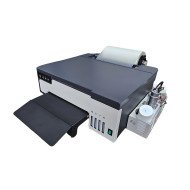
Deploying an A4 Roll Direct-to-Film (DTF) printer in an industrial printing environment often uncovers subtle yet impactful operational bottlenecks that impede throughput and final quality. Consider a mid-sized textile printing facility transitioning from manual screen printing to roll-fed DTF technology for faster turnaround and richer color gradients. Initial enthusiasm quickly faces friction when the printer’s film feed alignment drifts millimeters off after continuous shifts, causing registration errors spanning multiple meters of fabric. These microscopic misalignments translate to significant rework, wasted ink, and substrate spoilage. This challenge compounds when various film batches from different manufacturers show slight variability in thickness and coating uniformity, increasing tension inconsistencies along the roll path. Additional unexpected delays arise from the printer’s ink drying module, which, designed to operate at a calibrated 60°C thermal profile, struggles to maintain consistent temperature under ambient conditions fluctuating between 18°C and 28°C with variable humidity. The result is partially cured prints prone to smudging or insufficient adhesion during heat pressing. Operational bottlenecks of this nature rarely manifest as outright hardware failures; instead, they subtly erode uptime and escalate consumable expenses, complicating production scheduling and labor utilization. Understanding these deficits requires a rigorous breakdown of mechanical tolerances, thermal dynamics, and material-specific properties integrated within the A4 Roll DTF printer’s ecosystem.
Mechanical Film Feed and Register Accuracy
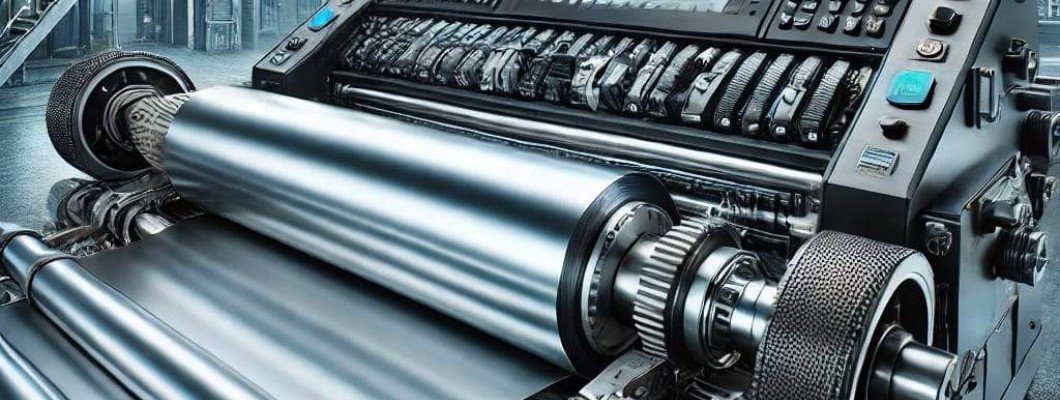
At the core of bottleneck analysis is the film feed mechanism's precision. The typical feed roller systems operate with a feed pitch accuracy tolerance of ±0.2 mm per revolution. Over a continuous print length of 10 meters, even a 0.1 mm per meter misfeed accumulates to a 1 mm shift downstream, enough to cause visible misalignment on high-resolution prints designed at 600 dpi (dots per inch). Given 600 dpi equates to 42.3 dots per millimeter, a 1 mm shift means a displacement of over 40 dots, a critical error in layered multi-color applications.
Comparisons between belt-driven and direct-drive roller systems show that direct-drive rollers minimize slip-induced errors by up to 50%, thanks to lower backlash effects. However, direct-drive systems require more robust motor controllers and introduce complexity in synchronization with printheads.
Ink Drying Thermal Management Under Variable Ambient Conditions
The ink drying module commonly employs infrared (IR) heating elements calibrated for a nominal 60°C output. However, the actual substrate temperature depends on ambient temperature, airflow, and humidity. Thermal fluctuation can be modeled by the equation T_substrate = T_IR - k × (T_IR - T_ambient), where k is a heat transfer coefficient typically between 0.3 and 0.5 in uncontrolled environments.
For example, at 60°C IR temperature and 18°C ambient with k=0.4, substrate temperature reduces to approximately 46.8°C, insufficient for full ink curing within the designated dwell time. This causes adhesion failures requiring additional heat pressing time, lowering throughput and increasing energy consumption. Active temperature control using closed-loop feedback is essential to stabilize curing performance.
Consumable Variability Impact on Process Stability
Film and ink chemistry consistency significantly affect machine stability. Variations in film thickness (±5 µm from nominal 50 µm thickness) cause tension changes modeled as ΔTension = E × A × (ΔThickness/Thickness_nominal), where E is the Young’s modulus (~1500 MPa for PET film) and A is the cross-sectional area. Changes as small as 5 µm can shift tension by several Newtons, altering feed behavior and printhead gap clearance. Ink viscosity variations due to temperature shifts further influence droplet size and placement, directly affecting print accuracy and color saturation.
Maintenance Cycle Burden from Micron-Level Debris Accumulation
Daily uptime frequently suffers from debris accumulation on printhead nozzles and film guides. Micron-scale particulate matter from ink pigment flocculation or environmental dusts causes intermittent nozzle clogging. Analytical scanning electron microscopy reveals blockage particles in the 1-10 µm range, necessitating frequent cleaning cycles. Maintenance frequency inversely correlates with filtration efficiency in the ink supply and environmental control, directly impacting productive runtime and labor costs.
Comparative Table of Key Configuration Parameters
| Parameter | Belt-Driven Feed System | Direct-Drive Feed System |
|---|---|---|
| Feed Accuracy Tolerance | ±0.2 mm/rev | ±0.1 mm/rev |
| Temperature Stability (Without Feedback) | ±7°C around 60°C | ±5°C around 60°C |
| Film Thickness Variability Handling | Low tolerance | Moderate tolerance with tension adjustments |
| Maintenance Interval (Nozzle Cleaning) | Every 8 hours | Every 12 hours |
| System Complexity | Lower | Higher |
Scenario Analysis
Scenario 1 Small-Scale Artisan Workshop
In a small artisan setting prioritizing color precision over volume, bottlenecks in feed consistency cause disproportionately high rejection rates. The absence of an integrated temperature feedback loop results in variable ink adhesion, necessitating manual intervention and extended curing times. A direct-drive feed system mitigates registration errors but raises cost and maintenance complexity, challenging small operators with limited technical resources.
Scenario 2 Mid-Level Production Facility
A regional apparel manufacturer migrating to the A4 Roll DTF printer for batch runs of 500–1000 units contends primarily with ambient humidity fluctuations affecting ink drying and film tension. Implementing active thermal regulation combined with real-time tension monitoring extends uptime from 18 to 22 hours per day, improving OEE (Overall Equipment Effectiveness). However, consumable cost rises by ~12% due to higher-grade films required for consistent feed quality.
Scenario 3 High-Volume Industrial Plant
For a high-volume operation producing thousands of meters daily, bottlenecks revolve around maintenance cycle optimization and printhead lifespan. Investing in advanced filtration and automated cleaning reduces nozzle downtime by 30%, while centralized environmental controls stabilize temperature and humidity within ±1°C and ±5% RH. System integration with MES (Manufacturing Execution Systems) enables predictive maintenance scheduling, dramatically lowering unexpected stoppages but increasing CAPEX upfront by ~15%.
Expert FAQ
What are the primary mechanical failure modes in the A4 Roll DTF feed system under continuous operation?
Common failure modes include roller bearing wear leading to eccentricity and runout, sensor misalignment causing erroneous tension readings, and motor controller drift impacting synchronization. These factors cumulatively generate feed inaccuracies, which degrade print registration and increase waste.
How does ambient humidity interfere with ink curing chemistry in DTF printing?
Humidity alters solvent evaporation rates in water-based and hybrid inks, influencing polymer crosslinking kinetics. Elevated humidity slows curing, causing tacky prints vulnerable to damage, while low humidity can lead to premature drying, affecting adhesion and color vibrancy.
Can direct-drive feed systems fully mitigate film tension variability issues?
Direct-drive systems reduce slip and backlash but do not eliminate tension variability from consumable inconsistencies. Complementary tension sensors and closed-loop control are necessary to offset dynamic film property changes effectively.
What maintenance strategies minimize printhead clogging in high-throughput environments?
Periodic ultrasonic cleaning cycles, use of inline ink filtration systems down to 1 µm particulate size, and environmental cleanroom protocols reduce clogging risk. Additionally, pressurized air pulses between print runs help dislodge particulate buildup.
How does the energy cost scale with active thermal management implementations in ink drying modules?
Energy consumption increases by approximately 20-30% due to continuous heater modulation and feedback sensors. However, this cost is offset by decreases in rework and faster line speeds enabled by stable curing conditions.
Strategic Verdict
The current generation of A4 Roll DTF printers reveals hidden operational bottlenecks primarily rooted in mechanical feed precision, thermal management, and consumable consistency. While design advancements like direct-drive feed systems and closed-loop temperature control alleviate many constraints, persistent challenges remain in balancing system complexity with uptime demands. Future development trajectories will likely emphasize integrated sensor networks and AI-driven process control to predict and compensate for material and environmental variability in real time. These technological inflections will be essential for scaling from artisanal workshops to industrial batch production without sacrificing quality or efficiency.