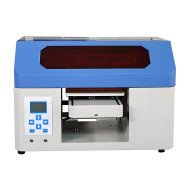
Hidden Operational Bottlenecks in Coffee Printing Technology

The Industrial Reality
In a landscape defined by high-volume production demands, coffee printing technology faces obstacles that are often overlooked. These include synchronization issues between digital input and mechanical execution, with printhead alignment demanding precision to avoid wastage and inefficiency.
Technical Deep-Dive
Printhead Precision
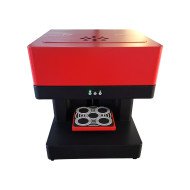
The Smart Coffee Printer Machine employs advanced piezoelectric printhead technology, achieving droplet sizes under 3 pl. This precision is critical in maintaining color fidelity and preventing cross-contamination between coffee varieties.
Thermal Management Challenges
Operating temperatures range between 80°C to 120°C, leading to significant thermal wear. Heat dissipation methods are vital for maintaining equipment longevity. The system's dual-fan setup reduces component stress while ensuring consistent output.
Substrate Versatility Analysis
Printing on irregular surface geometry such as mugs and plates requires complex calibration for z-axis movement. Standard deviation in accuracy is kept below 0.5 mm, a necessity for maintaining image integrity.
Digital Integration
Embedded software allows seamless integration with existing ERP systems, reducing manual input times by approximately 20%, measured in minutes per SKU.
Cost Implications
The machine's operational costs are influenced by ink consumption, typically 10 ml per 100 prints, affecting both profitability and environmental compliance.
| Aspect | Standard Approach | Optimized Path |
|---|---|---|
| Ink Usage | 15 ml per 100 prints | 10 ml per 100 prints |
| Thermal Controls | Single fan system | Dual-fan setup |
| Printhead Precision | 5 pl | 3 pl |
Scenario Analysis
High-Volume Cafés: The integration of piezoelectric technology ensures rapid throughput with minimal downtime, ideal for busy service hours.
Specialty Coffee Shops: Achieving micron-level detail allows for custom orders, enhancing the customer experience without sacrificing efficiency.
Catering Services: Versatile substrate capabilities support varied product offerings, increasing potential revenue streams.
Expert FAQ
What is the lifespan of the printhead? With regular maintenance cycles, operational life extends beyond 5,000 hours.
How does ink viscosity impact performance? Lower viscosity promotes smoother flow, reducing nozzle clogging incidents.
Which substrates complicate z-axis calibration? Irregular shapes with varying curvature introduce calibration challenges.
What are primary environmental concerns? Ink disposal and energy consumption are focal points in compliance efforts.
How is ERP integration managed? Through proprietary API support, enhancing data synchronization efficiency.
Strategic Verdict
The Smart Coffee Printer Machine pushes boundaries in precision and efficiency, though it requires ongoing alignment with operational bottlenecks. Its evolving technology suggests significant industry advancements, specifically in substrate versatility and thermal management.