Food Printing Revolution Meets Industrial Scale: A Technical Analysis

The Industrial Reality
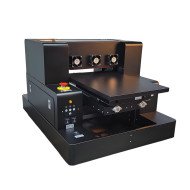
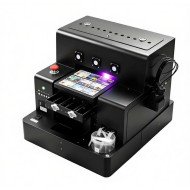
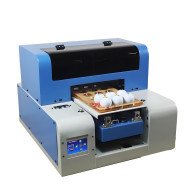
Imagine a bustling commercial kitchen where high-end culinary precision meets cutting-edge tech innovation. The introduction of the 4 Cups Coffee Printer Selfie Photo Food Printer revolutionizes the landscape, offering unprecedented capabilities in personalized edible imaging. Yet, this innovation brings forth industrial challenges, particularly in integrating such niche technology within a high-output environment.
Technical Deep-Dive
Printhead Engineering and Ink Chemistry
The printhead of the food printer employs advanced thermal and piezoelectric mechanisms to achieve micron-level precision. The choice of edible ink presents unique technical challenges, requiring stability under thermal stresses and compliance with food safety standards. Printhead longevity, measured in millions of droplets (pl), becomes crucial to maintain operational uptime.
Operational Bottlenecks and Infrastructure Integration
Integrating this device into existing kitchen infrastructure demands careful planning. Electric requirements (Watts), space considerations (mm), and network connectivity (RU) pose significant concerns. The printer's demands for high-speed data processing challenge traditional kitchen setups, necessitating upgraded IT support.
Lifecycle Maintenance Costs
Assessing the lifecycle costs reveals hidden expenses, including ink replenishment cycles, printhead replacements, and routine maintenance. Tracking these costs over a typical depreciation period can be illustrated through a detailed financial audit:
| Component | Cost Over 4 Years |
|---|---|
| Ink Replenishment | $3,200 |
| Printhead Replacement | $1,500 |
| Preventive Maintenance | $800 |
Performance vs Practical Limits
Despite the promise of precision, real-world application reveals constraints. Throughput rates, directly correlated to dpi and pl efficiency, must be balanced with accuracy. The hypothesis asserts that while technical limits offer 1200 dpi perfection, practical limits often result in slight deviations.
Environmental and Safety Compliance
Beyond operational metrics, environmental compliance becomes paramount. Adhering to food safety regulations requires continued audits of ink components and emissions management.
Scenario Analysis
Exploring three distinct business cases shows how varying specs impact outcomes:
High-End Restaurant: Demands flawless execution of intricate designs on gourmet dishes, where precision and substrate versatility are crucial.
Event Catering: Requires rapid throughput to accommodate large-scale demands, balancing speed with quality.
Artisanal Bakery: Focuses on color depth and delicate imagery, where precision and ink chemistry dictate success.
Expert FAQ
What limits the printer's dpi? Physical constraints of the printhead's micro-manufacturing define the dpi ceiling.
How does substrate variability affect performance? Ink absorption rates vary, influencing image clarity and printer calibration.
What is the typical maintenance cycle? Monthly printhead cleaning and quarterly ink audits are standard to ensure print quality.
Are there specific environmental controls needed? Yes, maintaining humidity and temperature levels are critical for ink performance.
Can the printer integrate with existing POS systems? With updated network protocols, integration is feasible, requiring IT oversight.
Strategic Verdict
The 4 Cups Coffee Printer represents a paradigm shift in food imaging technology, balancing high precision with industrial demands. As the technology evolves, it promises new culinary horizons, albeit requiring robust infrastructure adaptation. Its trajectory hints at increased adoption in high-end and mass-market settings alike, driven by innovation in ink chemistry and hardware integration.