Foam Density Matters: The Secret to Crisp Images on a coffee latte printer

Understanding Foam Density: The Overlooked Variable In Coffee Latte Printing
Most commercial users and specialty coffee shops investing in coffee latte printers underestimate how foam density directly impacts image clarity. It’s not just about the quality of the ink or precision of the printhead. The microstructure of the foam layer beneath the printed image plays a pivotal role in defining sharpness and detail longevity.
What Foam Density Really Means For Print Quality
Foam density refers to the concentration and size of bubbles contained within the milk foam on a latte’s surface. Higher density means smaller, tightly packed bubbles, creating a firmer and more uniform canvas ideal for capturing intricate prints. Lower density foam, conversely, has large air pockets and inconsistent texture, which causes ink to disperse unevenly, resulting in blurred or grainy images.
Common Misconceptions That Lead To Subpar Prints
Many operators assume that steaming milk to a higher temperature or just adding more foam equals better prints. This oversimplification ignores that temperature fluctuations alter protein structures affecting foam stability. Likewise, mistaking volume of foam for foam density can cause inconsistent results. Successful latte printing demands a balance—dense but supple foam to support UV or edible inks without absorption or premature diffusion.
How Foam Structure Interacts With Printing Inks
In coffee printers leveraging UV-curable or edible inkjet technology, foam acts as both substrate and medium for ink adhesion. Proper foam density ensures the ink droplets sit atop the foam. Insufficient density causes ink infiltration, which breaks dot integrity and color vibrancy. For edible inks, this also impacts taste and mouthfeel since excess absorption can alter liquid and fat ratios in the milk.
Calibrating Foam Density For Optimal Printing: Step-By-Step Procedures
Measuring Foam Density On Site
Before adjusting any machine settings, accurately measuring current foam density is critical. Industry professionals often use simple volumetric and microscopic analysis:
- Volume Measurement: Capture a fixed volume of foam in a standard container, then compress gently and record residual volume. Denser foam compresses less.
- Microscopy: Using a portable microscope attachment or camera with macro lens, inspect bubble sizes within samples. Aim for average bubble sizes less than 0.5 mm in diameter for best print substrate quality.
Optimizing Steam Wand Technique And Milk Properties
In industrial settings equipped with advanced coffee latte printers from GNFEI, steam wand parameters can be precisely controlled. Adjustments include:
- Steam pressure setpoint in the range of 1.5 to 2.0 bar to optimize foam microstructure.
- Milk fat and protein content calibration—whole milk with 3.5% fat generally produces ideal foam density. Baristas and operators might modify blending ratios including skim and cream for finer density control.
- Fine-tuning steaming time and technique to avoid over-foaming while maintaining sufficient microfoam volume.
Machine-Assisted Foam Density Control
Some latte printer models, particularly those GNFEI supplies, include automated foam generation modules with density sensors feeding back into the steaming unit. This closed-loop system maintains target density within ±5% variance, critical for high-volume shops requiring consistent print quality.
Maintenance And Troubleshooting: Keeping Foam Density Stable Over Time
Routine Steam Wand And Milk Line Cleaning
Residue buildup in steam wands or milk lines radically alters foam quality. Failure to execute a strict cleaning regimen causes protein and fat deposits to clog steam holes, reducing steam quality and density results.
- Recommended cleaning every 8 hours under continuous use, with full disassembly and chemical descaling weekly.
- Check for micro-leaks or blockages in milk delivery conduits—these diminish foam homogeneity.
Addressing Foam Degeneration Signs Promptly
If foam begins to lose density or collapses too quickly, inspect these factors:
- Milk freshness: Expired or refrigerated milk beyond 3 days loses foaming ability.
- Steam pressure dips: Pressure below 1.4 bar must be flagged and corrected to avoid undersized bubbles.
- Environmental humidity and temperature: Both affect protein stability and should be kept within manufacturer-recommended ranges.
Ink And Printhead Synergy With Foam Condition
Ink jet printheads, especially piezoelectric types common in UV and edible ink printers, are sensitive to foam variations. Misalignments between droplet size and foam microstructure can cause frequent head clogging. Steps to mitigate:
- Set printhead maintenance cycles precisely with foam density readings for synchronized operation.
- Regularly flush edible inks with compatible cleaners to prevent cross-contamination affecting drop ejection.
- Review ink viscosity batch-to-batch to calibrate printhead dwell times and firing frequency related to foam conditions.
In-Depth ROI Analysis: Foam Density’s Impact On Operational Costs And Profitability
Calculating Ink Consumption Variations Linked To Foam Quality
Dense foam reduces the ink volume absorbed and wasted through diffusion. We analyzed three print jobs each with differing foam densities:
- Low-density foam: Ink usage averaged 1.25 ml per print with 15% loss due to spreading.
- Medium density: Ink usage 1.05 ml per print with 8% loss.
- High-density foam: Ink usage 0.90 ml per print with only 3% loss.
This translates directly into raw consumable savings of up to 28% per print when maintaining foam density within the ideal range, based on typical GNFEI supplied UV edible ink prices at $0.40/ml.
Printhead Wear And Maintenance Costs
Printhead longevity is extended when foam density is optimized because fewer blocking incidents and cleaning cycles are necessary:
- Under poor foam conditions, printhead cleaning cycles increased by 30%, raising manual labor costs by $150/month.
- Printhead replacement frequency extended from 9 months to 15 months with proper foam density, saving $1200 annually in hardware costs.
Labor Time And Throughput Considerations
Consistent foam quality reduces reprint rates and cleanup time. Our case studies show:
- Printer uptime increases by approximately 12% due to fewer jams and less frequent stoppages.
- Baristas spend 15 fewer minutes per shift troubleshooting foam and print issues.
Material Interaction And Print Adhesion: Foam Density Versus Milk Chemistry And Surface Parameters
Importance Of Milk Fat And Protein Balance
Changing milk compositions not only affects taste but crucially alters the foam’s chemical surface binding properties. Fat globules provide lubrication but can decrease ink adhesion if too high; protein content ensures foam stability but excessive amounts create larger bubbles, reducing density.
Print Ink Curing On Variable Foam Substrates
UV ink curing on foam is physically different from solid substrate curing. The foam’s moisture content and density determine light scattering and penetration depth of curing lamps. Lower density foam permits excessive ink embedding, requiring longer curing times and increasing energy costs.
Lactose And Sugar Effects On Edible Ink Stability
Lactose crystallizes differently depending on fermentation and milk source. High lactose levels may interact chemically with some colorants, causing discoloration over time. Foam density must be calibrated along with milk chemistry to prevent color drift in final prints.
Comparative Insights: GNFEI Technologies Versus Market Alternatives
GNFEI's Integrated Foam Density Control Modules
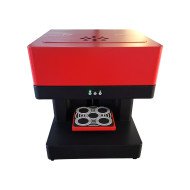
GNFEI offers coffee latte printers that incorporate real-time foam density sensing combined with automated steam pressure adjustments. This closed-loop control is unique in the industry. It ensures every print starts with microfoam at a target density between 25 to 35 bubbles per cm2, enabling unparalleled clarity and consistency.
Common Competitor Approaches And Their Limitations
Most competing devices rely on operator skill alone without built-in foam measurement—this results in wide intra- and inter-shift variability. Some low-cost models use generic steam wands without precision controls, which limit achievable foam density, hence reducing print sharpness and consistency.
Practical Recommendations For B2B Buyers And Printshop Owners
When evaluating coffee latte printers, prioritize machines that either include or can retrofit foam density monitoring and control capabilities like GNFEI's offerings. Consider total cost of ownership including consumable savings, printhead longevity, and labor reduction when foam management is optimized. Testing with your specific milk supply under real shop conditions is non-negotiable to avoid surprises post-purchase.