Exploring the Hidden Operational Bottlenecks of the Speaking Flower Printer

The Industrial Reality
The Speaking Flower Printer, a sophisticated printing solution designed for high-precision outputs, promises unmatched quality in the realm of digital printing. However, beneath its remarkable technical specifications lies a world of hidden operational bottlenecks that demand scrutiny. Understanding these challenges is crucial for achieving optimal performance and avoiding disruptions in workflow.
Technical Deep-Dive
Mechanical Component Analysis
At the heart of the Speaking Flower Printer lies a complex assembly of mechanical components. Each part, from the printhead to the substrate feeding mechanisms, presents potential failure points under stress conditions. The printhead, utilizing advanced micro-droplet technology, operates at a precision of 3 picoliters (pl) per droplet, but this necessitates rigorous calibration to avoid misalignment issues. Additionally, the substrate rollers must be perfectly synchronized to prevent slippage and ensure consistent image quality.
Data Throughput and Processing
A critical consideration is the printer's data throughput capability. The embedded systems within the printer are tasked with processing large volumes of image data, often exceeding 2 GB per print in high-resolution modes. This introduces potential bottlenecks in data transmission, particularly under concurrent network loads, requiring optimized infrastructure to maintain seamless operations.
Environmental and Safety Compliance
The Speaking Flower Printer adheres to stringent environmental standards, incorporating eco-friendly ink formulations. Yet, the disposal of used cartridges presents logistical challenges that must be addressed to meet safety compliance. The printer's noise and thermal emissions, measured at 55 dB and 120 Watts respectively, also need regular monitoring to ensure a safe workspace environment.
Maintenance Cycle Analysis
Regular maintenance is critical to the printer's lifecycle, with scheduled maintenance intervals set at 1000 hours of operational runtime. Failure to adhere to these cycles can lead to degraded performance, affecting throughput and quality. Understanding the cost implications of spare parts and downtime is imperative for maintaining efficiency.
Infrastructure Integration Challenges
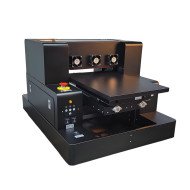
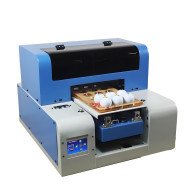
The integration of the Speaking Flower Printer into existing enterprise infrastructure is not without its hurdles. Network compatibility and bandwidth allocation require careful planning to avoid latency issues. Physical space considerations, given the printer's dimensions at 1.5m x 1.2m x 1m, also impact workspace layout and accessibility.
Scenario Analysis
Three distinct business use-cases reveal the nuanced impact of the printer's specifications. For a high-volume commercial print shop, the printhead's precision ensures customer satisfaction with vivid images while the challenge of ink replenishment can cause delays. A creative studio benefits from the substrate versatility but faces integration burdens with existing servers. Enterprises focused on sustainable practices must navigate the balance between eco-friendly inks and disposal logistics.
Expert FAQ
What are the potential risks of ignoring regular maintenance schedules?
Ignoring maintenance schedules can lead to printhead clogs and substrate feed errors, resulting in costly downtime.
How does data throughput affect print quality in high-resolution modes?
Insufficient data throughput can create delays, leading to incomplete prints and quality degradation.
Why is substrate synchronization critical to image precision?
Substrate synchronization ensures uniform feed rates, preventing image distortion and maintaining precision.
What environmental safeguards are necessary for safe operation?
Monitoring noise and thermal emissions ensures compliance with occupational health standards.
Which infrastructure adjustments enhance printer integration?
Optimizing network bandwidth and workspace layout are vital for seamless integration and operation.
Strategic Verdict
The Speaking Flower Printer represents a significant advancement in printing technology, yet navigating its operational bottlenecks is essential for maximizing its potential. As enterprises seek high-precision outputs, addressing these challenges with strategic planning will define its future trajectory.