Exploring the Hidden Operational Bottlenecks in Food Printing

The Industrial Reality
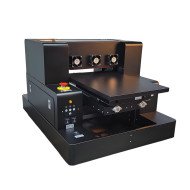
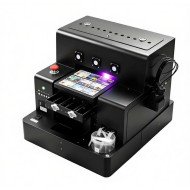
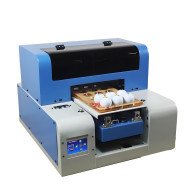
Food printing technology, specifically the Economical Latte Coffee Printer, represents a cutting-edge solution with potential operational bottlenecks. As industries shift towards innovative food production methods, understanding these challenges becomes imperative.
Technical Deep-Dive
Food Printer Mechanics
At the core of the Economical Latte Coffee Printer lies a series of intricate mechanical systems optimized for precise food printing. With a print resolution of up to 2400 dpi, it offers high-definition culinary output, yet requires careful alignment and maintenance to prevent clogging.
Material Handling Efficiency
The printer manages substrate versatility effectively, handling a range of materials from liquid to semi-solid states. The gear mechanisms must endure high operational demands, raising concerns of wear and tear.
Thermal Management Challenges
Integrated heating elements ensure accurate temperature control but necessitate advanced thermal management to prevent overheating and ensure consistency.
Power Consumption Analysis
The system operates at 500 Watts, demanding efficient energy management strategies to minimize operational costs.
Comparison of Printheads
| Printhead Type | Precision | Maintenance Cycle |
|---|---|---|
| Piezoelectric | High | Monthly |
| Thermal | Moderate | Bi-weekly |
Piezoelectric printheads offer higher precision but require longer maintenance cycles compared to thermal options.
Scenario Analysis
Consider the deployment in a high-volume café. The ability to produce intricate latte designs draws customers but demands rigorous upkeep to avoid downtime. In contrast, in a small-scale artisan setup, substrate versatility allows experimentation with various flavors but requires careful monitoring of operational costs. For event catering, speed and reliability are paramount, showing the need for optimized workflow integration.
Expert FAQ
- Q: How does printhead type impact food quality? A: Piezoelectric printheads offer fine control over droplet placement, enhancing detail but require higher maintenance.
- Q: What are the main operational costs? A: Energy consumption and maintenance cycles are significant contributors, with the printer operating at 500 Watts.
- Q: Can overheating be managed? A: Yes, advanced thermal management strategies are critical for sustained operation.
- Q: How versatile is the printer across different substrates? A: It handles a range of consistency efficiently, enhancing application potential.
- Q: Is there a risk of printhead clogging? A: Regular cleaning and appropriate material handling can mitigate this risk.
Strategic Verdict
The Economical Latte Coffee Printer is poised to redefine food production paradigms. While it presents operational challenges, strategic management of these issues promises enhanced productivity and innovation, particularly in environments that prioritize quality over quantity.