Exploring Hidden Operational Bottlenecks in A3 UV Varnish DTF Printing

The Industrial Reality
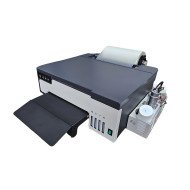
The A3 UV Varnish DTF Printer Machine Label Printer presents complex hidden operational bottlenecks within printing processes. In high-volume settings, even minor inefficiencies can culminate in significant disruptions. Understanding these bottlenecks requires a deep dive into machine specifications and operational pathways.
Technical Deep-Dive
Examining Printhead Precision
Printheads are the nerve center of any DTF printer. They determine output quality and speed. In the A3 UV Varnish model, the precision must be calibrated to a micron-level, affecting ink flow and substrate adhesion.
UV Varnish Application Challenges
The application of UV varnish involves specific energy wavelengths, measured in nanometers (nm), to cure the ink efficiently. Misalignment can lead to incomplete curing, impacting print durability.
Substrate Versatility Constraints
Substrates vary widely, demanding adjustments in pressure settings and ink composition. The printer must accommodate diverse materials like vinyl and polyester.
Mechanical Stress Points
Continuous operation introduces mechanical stress, impacting gears and belts. Regular stress testing and replacement are critical, particularly for heavy-duty cycles.
Impact of Temperature Fluctuations
Thermal management, measured in Watts, affects print quality and equipment longevity. Effective cooling systems are essential to prevent overheating and subsequent downtimes.
| Aspect | Effect | Solution |
|---|---|---|
| Printhead Precision | Micron-Level Accuracy | Regular Calibration |
| UV Varnish Application | Energy Wavelengths (nm) | Proper Alignment |
| Substrate Versatility | Material Compatibility | Pressure Adjustment |
| Mechanical Stress | Gear and Belt Wear | Routine Maintenance |
| Temperature Fluctuations | Thermal Integrity (Watts) | Efficient Cooling |
Scenario Analysis
High-Volume Printing Environment
In a large-scale factory setting, operational inefficiencies can lead to delayed outputs and increased maintenance costs. By optimizing the thermal management system, these bottlenecks could be mitigated.
Artisan Workshop Applications
For high-end artisans, substrate versatility is key. The ability to alternate between materials without recalibration saves time and reduces operational complexity.
Infrastructure Integration Challenges
Integration into an existing server infrastructure requires attention to communication protocols. Compatibility issues could lead to data transmission delays.
Expert FAQ
What are the key maintenance points? Regular printhead cleaning and calibration ensure micron-level precision.
How does thermal management affect print quality? Fluctuations in temperature (Watts) can degrade print quality; efficient cooling is crucial.
Can UV varnish curing be inconsistent? Yes, if energy wavelengths are misaligned, leading to uneven curing.
How can substrate versatility impact operations? Inadequate pressure settings can lead to poor adhesion and increased waste.
What integration challenges can be anticipated? Existing IT infrastructure must support the printer’s communication protocols.
Strategic Verdict
The A3 UV Varnish DTF Printer Machine Label Printer offers high precision and versatility. However, identifying and resolving hidden operational bottlenecks ensures optimal performance. As technology progresses, these challenges are expected to evolve, demanding ongoing assessment and improvement.