Examining Infrastructure Integration Challenges in A3 UV Varnish DTF Printer Machines for IT and Infrastructure Managers

The Industrial Reality of Integrating A3 UV Varnish DTF Printer Machines
Organizations seeking to incorporate A3 UV Varnish Direct-to-Film (DTF) printer machines into their existing IT and infrastructure environment face multifaceted challenges. Unlike conventional label printers, the hybrid nature of UV varnish application combined with DTF technology demands advanced environmental, power, and data infrastructure considerations. An IT or infrastructure manager responsible for ensuring seamless integration must navigate physical installation constraints, thermal management, network protocols, and compliance with electrical and safety standards.
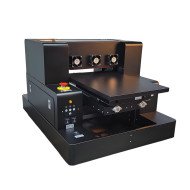
Consider a mid-sized enterprise labeling production line adopting an A3 UV Varnish DTF printer for enhanced product customization. Physically, the printer's footprint exceeds standard label printers, typically requiring 1.2 m width and 0.85 m depth with an approximate weight of 120 kg. This necessitates reinforced flooring and adequate clearance for maintenance access, impacting space utilization in existing production halls.
Thermal management emerges as a critical factor. UV varnish curing employs high-intensity ultraviolet LEDs generating localized heat. Without proper ventilation or cooling infrastructure, ambient temperatures may exceed the printer’s operational threshold of 35°C, accelerating component wear and raising the risk of downtime. IT managers must assess HVAC capacity and consider supplemental cooling solutions to maintain optimal thermal equilibrium.
Network integration presents another layer of complexity. The A3 UV Varnish DTF printer typically supports Gigabit Ethernet with TCP/IP protocols to interface with print servers, requiring precise IP addressing and firewall settings to ensure uninterrupted data flow. In high-density rack environments, electromagnetic interference (EMI) and cabling latency can degrade print job transmission, necessitating shielded twisted-pair cables and potential network segmentation.
Power infrastructure must accommodate the printer’s peak consumption of approximately 600 Watts, with stable voltage and surge protection to prevent hardware faults. The integration also implicates compliance with regional electrical safety standards such as IEC 62368-1, and UV exposure safety regulations, mandating enclosed operator zones and emergency shutoff mechanisms.
Hardware Architecture and Thermal Physics of UV Varnish DTF Printers
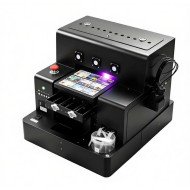
The A3 UV Varnish DTF printer combines precision inkjet modules with UV LED curing arrays. Inkjet printheads typically operate at 600 dpi with droplet volumes around 6 picoliters, requiring precise electrostatic control and piezoelectric actuators for material ejection. The UV varnish curing employs LED arrays emitting at 395 nm wavelength, which on activation produce thermal hotspots measured up to 50°C on the curing platen surface.
Hypothetically, assuming a continuous print cycle of 40 minutes for 100 A3 sheets, the cumulative heat load amounts to approximately 5000 Wh. Without efficient heat dissipation, conductor resistance and semiconductor junction temperatures in printhead driver ICs rise, accelerating electromigration and risking failure. Integrating heat sinks and forced-air cooling maintains junction temperatures below 85°C, extending operational lifespan.
Comparatively, standard solvent-based label printers operate at lower temperatures (~25°C ambient), without the need for UV curing, thus simplifying cooling requirements but sacrificing the durability and gloss finish that UV varnish provides.
Network and Data Protocol Considerations for High-Density Print Environments
Data throughput demands for high-resolution A3 printing can reach 1 Gbps under peak conditions. The network must support real-time raster image processing and job queuing, minimizing latency that leads to buffer underruns and print artifacts. Layering VLAN segmentation to isolate printer traffic reduces packet collision risks in shared Ethernet infrastructures.
Protocol compatibility includes support for IPP (Internet Printing Protocol) and proprietary RIP (Raster Image Processor) communications. Integration into enterprise print management systems requires compatibility with SNMP (Simple Network Management Protocol) for real-time status monitoring. IT managers should provision dedicated network switches near the printer to maintain isolated high-speed connections, avoiding bottlenecks due to shared bandwidth.
Power Supply Stability and Safety Compliance Challenges
Power fluctuations are a leading cause of unexpected printer failures. The UV LED curing arrays induce instantaneous current spikes upon activation. A typical LED driver circuit demands a regulated 48V DC supply isolated from main printer logic boards to avoid cross-circuit interference. An uninterruptible power supply (UPS) with line conditioning capability rated at 1 kVA or higher protects against voltage sags and surges.
Additionally, electromagnetic compatibility (EMC) standards such as EN 55032 mandate controlled levels of radiated and conducted emissions, which often require integrated EMI filters. From a safety compliance perspective, IEC 62471 photobiological safety ratings are critical for UV-emitting devices, specifying user exposure limits and necessitating interlocks that disable UV LEDs when access panels open.
Maintenance and Infrastructure Impact on Lifecycle Costs
Infrastructure provisioning directly affects mean time to repair (MTTR) and lifecycle costs. Integrating remote diagnostic interfaces over SNMP and web protocols facilitates predictive maintenance by monitoring ink viscosity, printhead health, and UV LED output levels. Environmental sensors (temperature, humidity) connected to the control system ensure printing conditions remain within valid thresholds.
Routine maintenance involves printhead cleaning cycles of approximately 20 minutes every 48 hours of operation, requiring printer downtime planning compatible with production schedules. Infrastructure managers must budget electrical and cooling resource overheads, as well as spares inventory for UV LEDs, ink cartridges, and printheads—all of which bear high replacement costs impacting Total Cost of Ownership (TCO).
| Infrastructure Aspect | Standard Label Printer | A3 UV Varnish DTF Printer |
|---|---|---|
| Thermal Output | Low (~25°C ambient) | High localized heat (up to 50°C) |
| Power Consumption | 300 Watts | 600 Watts |
| Network Throughput | 100 Mbps | 1 Gbps |
| Weight and Footprint | 60 kg, 0.7m x 0.5m | 120 kg, 1.2m x 0.85m |
| Safety Compliance | Electrical only | Electrical + UV photobiological |
Scenario Analysis of Business Use Cases for IT and Infrastructure Managers
Use Case 1 Industrial Packaging Manufacturer
This manufacturer integrates the A3 UV Varnish DTF printer into a high-throughput production line adding variable UV varnish effects for brand differentiation. The challenge lies in scaling network infrastructure to avoid print queue backups caused by raster data size spikes reaching over 120 MB per job. Implementation of dedicated 10 Gbps uplinks and isolated VLANs resolved latency issues, ensuring throughput maintains a strict 120-second print cycle per label without interruption.
Use Case 2 Pharmaceutical Labeling Facility
Stringent environmental regulations require tight control over temperature and particulate contamination. The printer resides in a cleanroom with HVAC calibrated for ±1°C stability. Auxiliary cooling systems connected to the printer dissipate UV LED heat, while an isolated UPS with surge protection ensures compliance with IEC 60601 electrical safety standards. Integration with SNMP enabled predictive alerts for ink supply depletion, preventing production downtime.
Use Case 3 Mid-Sized Apparel Brand
The apparel brand uses the printer primarily for limited runs of UV-varnished labels with complex branding. The IT manager faced challenges integrating the printer into a mixed OS environment with Windows and Linux print servers. Deployment of a dedicated RIP server running a Linux-based queue management system bridged compatibility gaps and reduced print errors. Power conditioning devices prevented damage linked to frequent brownouts common in their regional grid.
Expert FAQ Addressing Nuanced Technical Questions
Q1: What are the thermal thresholds beyond which UV LED arrays risk premature failure?
A1: UV LED arrays typically specify maximum junction temperatures at 85°C. Exceeding this during prolonged use leads to lumen depreciation and eventual diode failure.Q2: How does network packet loss affect print quality in high-resolution UV varnish printing?
A2: Packet loss causes raster data corruption, leading to banding, incomplete varnish application, or layer misalignment, degrading print fidelity.Q3: What power conditioning equipment is recommended for stable operation in unstable grids?
A3: Double-conversion UPS units with automatic voltage regulation (AVR) and harmonic filtering provide optimal protection for sensitive print electronics.Q4: Are there particular ink cartridge storage temperature ranges critical to preserve UV varnish chemistry?
A4: Yes, storage between 15°C and 25°C with less than 60% relative humidity preserves ink viscosity and photoinitiator stability.Q5: How do electromagnetic compatibility standards impact printer layout and cabling?
A5: Compliance requires shielding, grounding, and separation of power and data cables to mitigate interference that could corrupt digital print commands.
Strategic Verdict on the Integration Pathways and Future Trends
The A3 UV Varnish DTF printer represents a convergence of advanced printhead technology with UV curing, demanding elevated infrastructure standards compared to traditional label printers. Its operational success hinges on rigorous integration of thermal, network, power, and safety systems. Infrastructure managers must anticipate increased electrical loads, implement robust network segmentation, and comply with UV safety norms.
Looking forward, improvements in LED efficiency and modular cooling systems will reduce thermal footprint and energy consumption. Enhanced digital print data compression and RIP optimization promise to lower network burdens. Integration of IoT-enabled monitoring will allow near-real-time predictive maintenance, minimizing downtime and operational risks.
Overall, while the technical and infrastructure demands are substantial, the resultant print quality, durability, and functional labeling elevate the business value, provided facility upgrades and operational protocols are executed precisely.