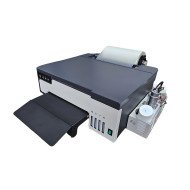
Evaluating Wash Fastness: The Real Test for Your dtf printer Output

Understanding Wash Fastness in DTF Printing: Why It Matters More Than You Think
Many buyers and print shop operators mistakenly assume that once a DTF printer outputs vibrant colors, the job is done. Wash fastness is frequently overlooked or treated as a secondary concern. However, it stands as the ultimate litmus test for your product's quality and customer satisfaction. What good is a brilliant print if it fades, cracks, or peels after a single wash cycle? Understanding the real-world behavior of DTF prints against laundering stress is essential because this directly impacts your brand reputation, reprint costs, and long-term profitability.
Decoding Wash Fastness: What It Really Measures
Wash fastness evaluates the durability of a print's color and adhesion when subjected to water, detergents, and mechanical agitation typical of washing machines. It essentially measures how well the pigments, binders, and adhesive layers interact with textile fibers under stress. Standardized tests such as ISO 105-C06 or AATCC 61 simulate multiple laundering cycles to quantify fading, bleeding, and physical degradation.
For DTF (Direct to Film) prints, this involves additional complexities due to the transfer process and the nature of the adhesive powder used. Therefore, each stage—printing, curing, powdering, heating—can influence wash fastness in distinct ways.
Common Misconceptions About Print Durability
A prevalent fallacy is equating brighter or sharper prints with better wash fastness. In reality, some ultra-vibrant inks may possess weaker adhesion or strip away faster because of their pigment chemistry. Another mistake is overlooking the substrate's role; while many assume cotton is a uniform standard, factors like fiber type, weave density, and pre-treatment drastically affect the final wash endurance of prints.
Ignore these nuances, and even the most costly DTF machinery won’t guarantee durability. This highlights why evaluation needs a 360-degree approach encompassing materials, capacity of curing units, ink formulation, and operational consistency.
Step-by-Step Troubleshooting for DTF Print Wash Fastness Issues
Identifying Key Problem Areas in Your Workflow
To isolate wash fastness deterioration, tracking down the root cause within your print production workflow is vital. It can stem from poor ink adhesion, incorrect curing times, inconsistent powder application, or faulty heat press parameters. Here is a systematic approach:
- Step 1: Evaluate Ink and Film Compatibility—Check if the ink is certified for the specific PET films used. Improper pairing can cause premature delamination during washing.
- Step 2: Calibrate Curing Parameters—Temperature and time must be tailored for each ink brand. Under-curing results in soft prints prone to washing out; over-curing can make them brittle.
- Step 3: Monitor Powder Dosing—Excess powder causes uneven adhesion; too little leads to weak bonding. Regularly weigh powder per print or implement controlled dosing systems.
- Step 4: Adjust Heat Press Settings—Time, temperature, and pressure influence ink fusion. Frequent machine checks mitigate deviations due to wear or environmental changes.
Maintenance Procedures to Enhance Wash Fastness Reliability
One overlooked aspect is printer maintenance, especially concerning Epson printheads common in DTF printers. White ink sedimentation is a notorious cause of clogging, negatively impacting print consistency and subsequent adhesion.
- Daily Head Cleaning Routines: Use cleaning fluids designed for white ink systems every 6 hours of operation. Pay attention to spitting errors and nozzle outs.
- Scheduled Deep Cleans: Once a week, perform soak cleaning methods with ultrasonic baths or dedicated cleaning cartridges to dislodge hardened ink deposits.
- Temperature and Humidity Control: Maintain room conditions ideally between 20-25°C and 40-60% RH to prevent ink drying anomalies affecting head performance.
By combining these actions, print output surfaces are more consistent, allowing stable adhesion essential for resistance to wash cycles.
Material-Specific Wash Fastness: How Fabric and Substrate Alter Print Durability
Natural Fibers: Cotton, Linen, and Their Challenges
Pure cotton remains the most commonly used fabric in DTF printing because it accepts inks well and provides comfort. However, natural fibers are porous and prone to shrinkage, which can stress the print layer.
- Effect on Adhesion: Cotton's moisture-wicking property can cause powder and ink to penetrate deeper but risks impacting bond strength if curing is insufficient.
- Wash Aging: The fabric shrinks while prints expand under heat, creating micro-cracks after repeated washes.
- Pre-treatment Importance: Using textile softeners and pre-washing cotton garments can reduce distortion and improve print retention.
Blended Fabrics: Poly-Cotton and Performance Results
Poly-cotton blends introduce synthetic fibers like polyester, altering the surface energy and texture drastically. DTF ink interacts differently depending on poly content.
- Adhesion Dynamics: Polyester fibers are smoother and less absorbent, resulting in ink sitting more on the surface and requiring precise curing to avoid flaking.
- Fastness Variability: Higher polyester concentration generally boosts wash fastness due to reduced fabric shrinkage and stretching, but ink flexibility becomes a concern.
- Testing Protocols: Manufacturers should run side-by-side wash trials on 50/50 versus 70/30 blends to quantitatively assess fading, color change, and edge cracking.
Non-Textile Surfaces: Glass, Metal and Their Special Considerations
Though DTF printing targets fabric, certain custom products use films transferred onto glass or metal. Wash fastness testing shifts focus to mechanical abrasion and cleaning solvents rather than water washes.
- Ink Adhesion on Non-Porous Substrates: Surface treatment like sandblasting or primer application drastically affects bonding.
- Curing Techniques: UV curing or thermal post-processing parameters dictate resilience to detergents and solvents.
- Evaluation Methods: Laboratory abrasion testers alongside harsh detergent soak tests mimic real usage scenarios beyond laundry.
Advanced Analytical Techniques for Quantifying Wash Fastness
Standardized Laundering Tests and Their Interpretation
Reliable wash fastness evaluation requires adherence to industry standards to provide reproducible and comparable data. ISO 105-C06 involves subjecting printed samples to simulated domestic laundering using standardized detergents and mechanical action.
Results are graded on a scale from 1 (poor) to 5 (excellent) for color change and staining on adjacent fabrics. Print shops can leverage these tests to benchmark ink formulations and fine-tune process variables.
Instrumental Assessments: Spectrophotometry and Microscopy
Beyond visual grading, spectrophotometers precisely measure colorimetric parameters (Delta E values) before and after washing cycles. This quantitative data can be correlated with client satisfaction and warranty claims metrics.
Microscopic examinations reveal micro-cracks, surface roughness, or ink layer disruption imperceptible to the naked eye, offering insights to improve powder application uniformity and curing profiles.
In-House vs. Third-Party Testing: Balancing Cost and Objectivity
While in-house tests provide immediate feedback, they may suffer from operator inconsistency or equipment limitations. Third-party laboratories furnish high credibility and traceability for critical client projects but entail higher costs and longer turnaround times.
For industrial print shops purchasing from suppliers like GNFEI, constructing a hybrid approach by running initial tests internally and periodic external audits delivers cost efficiency and quality assurance.
Cost-Benefit Analysis: Calculating ROI of Improved Wash Fastness Practices
Ink Consumption and Cost Precision
Ink constitutes a major part of consumables expenditure. For instance, a typical CMYK DTF print on a standard size shirt consumes approximately 15 ml of ink with white ink usage about 10 ml per print. Given ink prices averaging $120 per liter, the ink cost per shirt is roughly $3.00.
Poor wash fastness leading to higher reprint rates triggers additional ink and labor costs. Improving adhesion and reducing print failures even by 5% can mean thousands saved annually.
Printhead Wear and Maintenance Expenses
Epson printheads, widely used in DTF printers, have variable lifespans depending on maintenance diligence. Average lifespan may be around 1.5 million prints; however, neglecting white ink stabilization and cleaning cycles accelerates head failure, costing up to $1,200 per replacement.
Scheduling routine maintenance—daily cleaning, weekly soak cycles—extends printhead life by 30-40%, balancing maintenance time (~15 min/day) versus costly downtime.
Labor and Operational Efficiency Gains
Optimizing powdering stations, curing units, and heat presses to maintain consistent wash fastness reduces manual reworks and inspection time by an estimated 20%. Assuming a labor cost of $15/hr, saving 1 hour daily equates to $3,900 per year per operator.
Combining improved reliability with strong brand reputation generates repeat business and potential for premium pricing, a non-direct quantifiable advantage but critical in long-term viability.
GNFEI’s Role as a Strategic Partner in Wash Fastness Excellence
Comprehensive Equipment Support Services
GNFEI offers not just DTF printers but full-spectrum technical consultancy on optimizing wash fastness, including training on powder application standards, curing parameter settings, and maintenance regimes. Their global presence ensures reliable parts supply and fast service response.
Product Selection Aligned with Durability Standards
GNFEI rigorously tests inks and consumables in collaboration with industry laboratories to approve only those meeting stringent wash fastness benchmarks. This commitment helps buyers avoid pitfalls associated with subpar consumables flooding the market.
Building Sustainable Printing Operations
As environmental concerns rise, GNFEI supports transitioning to eco-friendly inks and energy-efficient curing technologies without sacrificing durability. They assist customers in balancing sustainability goals with cost and performance, vital for forward-looking businesses.