Evaluating Maintenance Realities of the PrintInd Ultra Portable Handheld Inkjet Printer
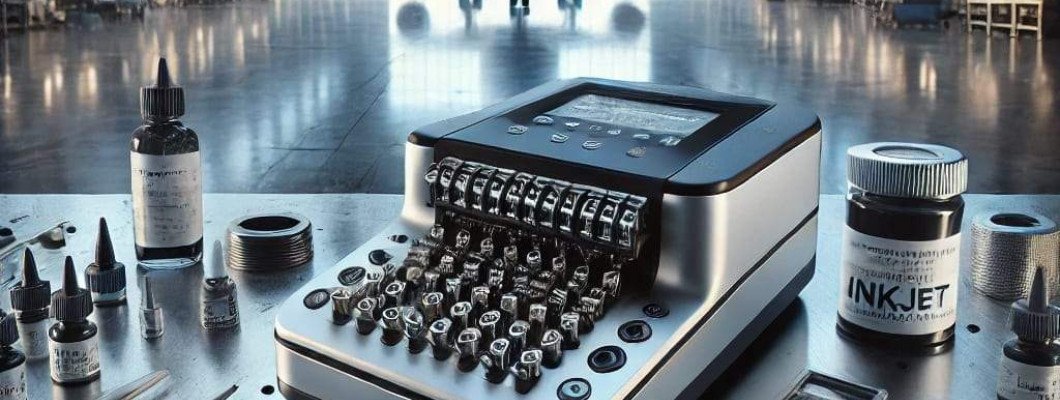
The Industrial Reality of PrintInd Portable Inkjet Maintenance
The PrintInd Ultra Portable Handheld Inkjet Printer promises flexibility by enabling printing on diverse substrates across varied environments. However, from a maintenance lead’s viewpoint, the complexities of printhead physics and ink chemistry present substantial operational challenges. The handheld form factor, while enhancing portability, constrains internal component robustness and cooling infrastructure. Consequently, daily uptime depends heavily on intricate interactions between printhead wear, ink viscosity stability, and environmental factors such as ambient temperature and humidity.
Consider a scenario where an industrial maintenance team integrates PrintInd devices into a garment manufacturing line to mark production codes on fabric rolls. The inkjet nozzles operate in highly variable conditions involving dust, fluctuating temperatures, and mechanical vibrations from conveyor movements. Without proactive daily calibration and preventative cleaning, nozzle clogging can lead to partial print failures. This triggers reactive maintenance cycles, increasing downtime and reagent consumption, which adversely impacts throughput and operational expenses.
Moreover, printhead degradation due to cavitation effects during high-frequency droplet ejection introduces micro-fractures in piezoelectric crystals or thermal resistors, thus reducing achievable droplet resolution over extended use. In handheld designs where printhead modular swaps might be limited by compactness, prolonged repair intervals could create bottlenecks in production continuity.
Printhead Physics and Ink Chemistry Dynamics
The PrintInd model appears to employ a thermal inkjet mechanism, inferred from typical portable inkjet printers prioritizing simplicity and cost-effectiveness. Thermal inkjet technology uses rapid localized heating to vaporize ink and eject droplets typically in the 10 to 30 picoliters (pl) range. The thermal pulses reach approximately 300–400°C within microseconds. While efficient, this heating cycle stresses ink formulations and printhead materials.
Hypothetically, assuming a printhead nozzle diameter of 20 µm and a firing frequency of 10 kHz, over a 12-hour operation cycle, the nozzle ejects roughly 432 million droplets. This volume subjects the heater resistor elements to intense cyclic thermal stress, accelerating fatigue. Printhead lifetime might be rated in tens of millions of pulses before degradation affects droplet size consistency and nozzle integrity.
Ink chemistry must balance fluid viscosity (typically 2–5 mPa·s), surface tension (around 30–40 mN/m), and drying rate to prevent nozzle clogging or feathering on substrate surfaces. Portable units face additional constraints in ink reservoir size, limiting ink volume to approximately 5–10 ml. Frequent refilling increases contamination risk, while evaporation alters solvent concentration, affecting print quality and printhead reliability.
Hardware Reliability Compared to Industrial Counterparts
When juxtaposed with industrial-scale handheld inkjet systems from established manufacturers, the PrintInd’s compact design trades off several maintenance-favorable features. For instance, advanced industrial models integrate automated printhead cleaning stations employing ultrasonic or solvent flushing, which drastically reduce manual cleaning labor and downtime.
A detailed comparison table highlights this divergence:
| Feature | PrintInd Ultra Portable | Industrial Handheld Model X |
|---|---|---|
| Printhead Type | Thermal Inkjet | Piezoelectric Inkjet |
| Nozzle Count | 64 nozzles | 128 nozzles |
| Maintenance Automation | Manual Cleaning Only | Automated Ultrasonic Cleaning |
| Ink Reservoir Capacity | 5–10 ml | 50 ml with Refill Alerts |
| Printhead Replaceability | Limited Modular Options | Field Replaceable Modules |
| Thermal Management | Passive Cooling | Active Cooling with Heat Sinks |
The thermal inkjet printhead’s passive cooling under sustained operation risks thermal build-up, accelerating component aging. In contrast, industrial models’ active cooling extends printhead lifespan and reduces maintenance frequency.
Ink Supply Chain and Consumable Maintenance Costs
Consumable availability and cost profoundly influence maintenance budgets. The PrintInd’s reliance on specialized ink cartridges optimized for handheld portability may lead to higher per-milliliter costs compared to bulk industrial inks. Additionally, the smaller ink volume necessitates more frequent cartridge replacement, increasing downtime and supply chain dependency.
Given the handheld target segment, ink quality consistency becomes vital since variations in pigment dispersion or solvent ratios can exacerbate nozzle clogging risk. Maintenance teams must monitor ink batch variations rigorously. Failures in forecasting ink consumption or quality degradation due to environmental exposure during storage can trigger unexpected maintenance events.
Daily Uptime Realities and Calibration Protocols
Operational uptime estimation must factor routine calibration cycles to maintain print accuracy and nozzle function. Unlike large industrial inkjet printers with integrated self-calibration sensors, handheld devices like PrintInd rely on manual operator intervention. Staff must execute daily printhead purges and alignment checks to ensure consistent droplet placement, a repetitive labor-intensive task prone to human error.
Assuming a 5-minute calibration and cleaning window per shift per device, for a fleet of 10 units, this accumulates to nearly 50 minutes of indirect labor daily. Over a year, this non-productive time can inflate operational costs significantly, an often overlooked aspect in handheld printer deployments. Consequently, maintenance teams must incorporate these variables into throughput planning and lifecycle cost models.
Scenario Analysis on Business Use Cases
Use Case 1: Retail Inventory Marking
The PrintInd’s portability is advantageous for marking diverse retail packaging on the sales floor. However, the frequent handling and variable ambient conditions increase maintenance load. The limited ink capacity demands multiple cartridge swaps in high-volume scenarios, potentially disrupting continuous inventory tagging workflows.
Use Case 2: Construction Site Material Coding
Construction environments are challenging due to dust, temperature swings, and rough handling. PrintInd’s passive cooling and manual cleaning regime may lead to accelerated printhead degradation and increased downtime, risking schedule delays. Maintenance protocols must be rigorously enforced to avoid clogging and reduced print clarity.
Use Case 3: Artisan Small Batch Packaging
For artisanal producers requiring substrate versatility and micron-level print precision, PrintInd offers flexibility. Yet manual calibration demands skilled operators to maintain quality. The lack of automated maintenance features may introduce variability in print consistency, necessitating focused training and maintenance scheduling.
Expert FAQ on PrintInd Maintenance Complexities
Q1 What causes cavitation wear in handheld inkjet printheads and how can it be mitigated?
The rapid heating and cooling cycles in thermal inkjet nozzles generate vapor bubbles causing micro-cavitation. Mitigation involves using ink formulations with optimized boiling points and implementing controlled firing frequencies to reduce thermal shock.
Q2 How does ink viscosity variation impact nozzle clogging frequency?
Ink viscosity affects fluid flow through microscopic nozzles. Higher viscosities reduce droplet ejection velocity causing residue build-up. Maintaining ink within 2-5 mPa·s ensures optimal droplet formation and reduces clogging.
Q3 What are best practices for daily printhead calibration in portable devices?
Standard practice includes pre-shift purging, nozzle functionality tests via test print patterns, followed by realignment using substrate-specific templates to ensure precise droplet placement.
Q4 Can passive cooling on handheld inkjets sustain prolonged high-frequency printing?
Passive cooling is limited; overheating risks exist during extended high-frequency use, accelerating printhead failure. Active cooling or intermittent duty cycles enhance longevity.
Q5 How do environmental contaminants influence handheld inkjet maintenance?
Dust and particulates obstruct nozzle openings and degrade ink chemistry. Employing protective covers and clean storage environments mitigates these effects, extending maintenance intervals.
Strategic Verdict on PrintInd Maintenance Trajectory
The PrintInd Ultra Portable Handheld Inkjet Printer encapsulates a trade-off between mobility and maintenance complexity. While its compact design suits diverse surface marking needs, the absence of automated maintenance systems, limited thermal management, and constrained ink volume translate into increased manual upkeep. Maintenance leads must prepare for frequent daily calibration, potential printhead wear accelerated by high-frequency operation, and ink chemistry-related nozzle clogging risks.
Future iterations incorporating active cooling, modular printhead replacement, and automated cleaning cycles would align closer to industrial reliability standards. Until such advancements arrive, the PrintInd’s deployment should be cautiously matched to operational contexts where rapid portability outweighs maintenance overheads.