Evaluating Lifecycle Maintenance Costs of PrintPods Handheld Printers on Absorbent Surfaces
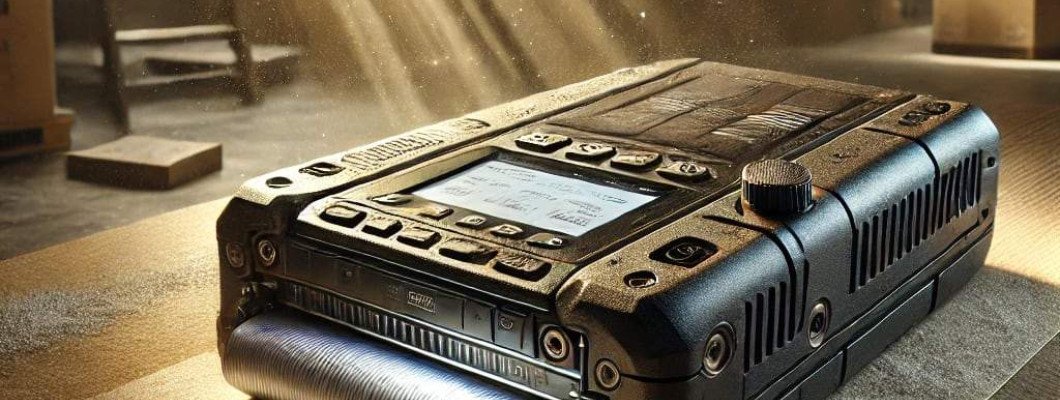
The Industrial Reality of PrintPods in Sustained Operations
In high-throughput industrial environments where handheld printing onto absorbent surfaces is routine, maintaining operational consistency while controlling lifecycle costs presents a significant challenge. For instance, consider a packaging facility requiring traceability and batch coding directly on corrugated fiberboard or kraft paper sacks. The operational environment subjects handheld printers like PrintPods to constant handling stress, ink absorption variability, and rapid printhead wear due to abrasive substrates. The invisible but cumulative factors—such as frequent printhead clogging, battery degradation, and ink cartridge replacement cycles—compound to elevate total cost of ownership beyond mere upfront capital expenditure.
Operators often experience downtime not due to device failure per se but from maintenance delays triggered by subtle performance degradation. The absorptive nature of substrates increases ink dry time unpredictably, requiring adjustments in print settings and more regular printhead cleanings. Moreover, ambient conditions such as humidity amplify ink spread variance on fibrous surfaces, necessitating iterative calibration. These factors contribute to a hidden maintenance burden often overlooked in financial assessments but critical to lifecycle cost management.
Under such conditions, PrintPods handheld printers face accelerated wear rates in comparison to flat, non-absorbent substrates, imposing higher intervention frequency and consumable replacement. Thus, understanding this lifecycle maintenance cost dynamic becomes essential for operational planners seeking reliable ROI and acceptable mean time between failures (MTBF) in line with production targets.
Technical Deep-Dive into Lifecycle Maintenance Costs
Printhead Wear and Ink Chemistry Interaction
PrintPods use piezoelectric printheads optimized for solvent-based inks formulated for absorbent materials. The abrasive fibers of cellulose substrates accelerate the erosion of nozzle plates, reducing effective nozzle lifespan. Assuming a nozzle lifetime in standard conditions of approximately 100 billion firings, exposure to coarse, fibrous surfaces decreases this figure by nearly 20%. Mathematically, if a nozzle fires 10,000 droplets per print cycle, the operational lifespan L can be approximated as:
L = (100x10^9) / 10,000 × (1 - 0.20) = 8x10^6 print cycles
The degraded lifespan directly impacts printhead replacement intervals, a major cost driver.
Ink Cartridge Consumption Rates Versus Absorption Efficiency
Ink absorption spirals differently between substrates. Studies show that absorbent substrates require 25-40% more ink volume to maintain print density due to ink soak-in, increasing per-unit consumable costs. For PrintPods calibrated at 600 dpi resolution, typical ink consumption averages 0.6 ml per 1000 prints on non-absorbent substrates, rising to 0.8 ml on absorbent surfaces.
Battery Performance and Thermal Management
Handheld printers must balance battery size for extended runtime with heat dissipation constraints. PrintPods incorporate lithium-ion packs roughly 20 Wh capacity. Under continuous operation, power draw averages 5 W, yielding 4 hours runtime. However, maintenance intervals to cool internal sensors and enable printhead drying extend effective cycle times, increasing labor-linked downtime.
Consumables Replacement Frequency and Cost Comparison
| Consumable | Standard Environment Cost (USD) | Absorbent Surface Cost (USD) |
|---|---|---|
| Printhead Replacement | 350 | 420 |
| Ink Cartridge (per 1000 prints) | 12 | 16 |
| Battery Replacement (every 500 cycles) | 60 | 60 |
Notably, battery replacement costs remain stable as energy demands do not substantially increase with substrate type but contribute to cumulative maintenance downtime.
Firmware and Calibration Complexity
PrintPods require frequent firmware updates and calibration routines to optimize ink jetting parameters for varying absorbency and environmental stability. Each calibration cycle requires approximately 15 minutes of operator time, translating to a notable indirect cost when scaled.
Scenario Analysis of PrintPods Use Cases and Maintenance Costs
Packaging Industry with High Absorption Corrugated Boxes
In high-volume packaging, PrintPods deliver functional marking but absorbent corrugated surfaces demand frequent printhead replacements every 6 months instead of 8, increasing downtime and material cost by ~17%. Elevated ink consumption leads to 30% higher consumable expenses annually.
Textile Labeling with Natural Fiber Tags
Textile substrates increase risk of printhead clogging from fiber particulates, requiring more frequent cleaning cycles and calibration. Maintenance labor costs rise, and annual consumable expenditure shifts upward by approximately 22% compared to synthetic substrates.
Logistics and Warehousing for Absorbent Paper Sacks
Environmental humidity fluctuations in warehouses impact ink drying time, forcing longer operational pauses and impacting throughput. Lifecycle maintenance planning must account for these factors to avoid production bottlenecks.
Expert FAQ on Technical Maintenance Cost Challenges
How does substrate texture affect PrintPods printhead lifespan?
Coarse textures accelerate mechanical wear and ink residue buildup, shortening nozzle lifetime by nearly 20-25% depending on fiber roughness metrics.
What maintenance protocols minimize downtime on absorbent surfaces?
Scheduled printhead cleaning every 1000 prints and recalibration every 5000 prints optimize performance and prevent premature failures.
Does ink drying time impact battery consumption?
Indirectly. Longer drying requires heat cycles and sensor activations, modestly increasing power usage and thermal load.
Are there scalable firmware solutions for multi-substrate operation?
Advanced firmware profiles support dynamic adjustments but require operator expertise and increase calibration overhead.
What is the ROI impact of increased consumable consumption on operational budgets?
Consumable cost inflations of 20-40% significantly compress margins unless throughput or pricing models adjust correspondingly.
Strategic Verdict on Lifecycle Maintenance Costs
PrintPods handheld printers tailored for absorbent surfaces reveal a maintenance cost structure heavily influenced by substrate interaction and operational environment. While the handheld form factor enables flexibility and targeted printing, lifecycle expenses including printhead replacement and ink consumption escalate appreciably. Effective planning must integrate these technical realities, balancing throughput demands against predictable maintenance cycles. Future iterations optimizing printhead materials and enhancing ink formulations could mitigate these costs, but current deployments should prioritize rigorous maintenance scheduling and operator training to maintain operational reliability. This nuanced understanding is critical for precision budgeting and maximizing asset longevity in industrial applications using absorbent substrates.