Evaluating Hidden Operational Bottlenecks in A4 Flatbed T-shirt Printers from a Clinical Perspective

The Industrial Reality of Operating A4 Flatbed T-shirt Printers
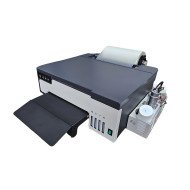
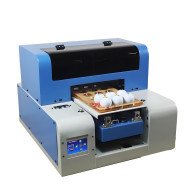
Across specialized printing environments focusing on garment customization, the adoption of compact A4 flatbed T-shirt printers represents an attractive proposition for on-demand, low-volume output. However, beneath the streamlined appearance and advertised rapid print cycles lurk operational intricacies that become critical at scale. The compact print area of just 210 mm by 297 mm (A4 size) limits throughput per cycle, forcing either increased machine counts or fine-tuned process timing to meet moderate batch demands. At the same time, the physical constraints of the flatbed mechanism impose challenges for substrate handling, pressure uniformity, and ink layer curing—each segment requiring exacting precision to avoid print artifacts or premature component wear.
Consider a mid-sized apparel customization workshop running multiple daily shifts. The potential inability to queue prints efficiently due to the A4 bed's limited size and typical single-head system introduces wait states that cascade into operator idle time or accelerated machine cycling, increasing wear. Furthermore, ink drying and UV curing modules integrated into these systems, designed for low-volume use, may generate thermal hotspots, inadvertently accelerating material degradation on both the substrate and printer components. The result is subtle but costly downtimes and maintenance demands that are often underestimated in initial investment analyses.
In addition, the interplay between printhead precision and the mechanical flatbed raises issues when printing multi-color or high-detail designs. Even nominal misalignment on a 300 dpi printhead at such a small format can produce visible artifacts. This requires frequent calibration routines that disrupt operational uptime. The handling mechanisms for textile placement and removal must maintain flatness without introducing micro-sleeves or substrate shifting, which is non-trivial on flexible materials like cotton blends.
Technical Deep-Dive into Core Operational Bottlenecks
Printhead Precision and Alignment Stress Points
The A4 flatbed printers typically employ piezoelectric inkjet printheads with native resolutions around 300-600 dpi. The translation of nozzle firing timing into physical droplet placement is vulnerable to micro-vibrations from mechanical actuators and thermal expansion, especially during long print runs or rapid cycle repetitions. Thermal variation of just 1°C in the printhead or substrate bed can cause droplet misregistration on the order of 10-15 micrometers, which at 300 dpi (~85 micrometers per dot) becomes significant enough to degrade color fidelity and edge sharpness. Calculating the thermal expansion δL = α * L * δT, where α for aluminum bed is ~23x10^-6 / °C, bed length L is 210 mm, and δT is 1°C, yields δL = 4.83 micrometers, contributing to cumulative alignment errors in multi-pass prints.
Ink Chemistry and Drying Kinetics Under Operational Load
Printing on textiles demands inks with optimal adhesion, color fastness, and flexibility. UV-curable inks dominate in flatbed systems due to rapid set time; however, their polymerization kinetics depend heavily on both UV intensity and irradiance uniformity. Typical onboard LED UV modules deliver ~100 mW/cm2, but uneven irradiation areas can cause partial curing, leaving softer, uncured resin regions prone to smudging and surface tack. Extended operation elevates bed temperature above 40°C, accelerating ink solvent evaporation and risking nozzle clogging if humidity is uncontrolled.
Substrate Handling Constraints and Mechanical Stress
The flatbed mechanism must secure the textile without causing elastic deformation or fiber displacement. The clamping force, typically between 10-15 N over the bed area, distributes unevenly due to textile weave irregularities, potentially causing localized stress concentrations exceeding the elastic limit of fibers (~0.5-1% strain). This micro-distortion leads to registration errors, especially noticeable in fine line or detailed vector graphics. Moreover, repetitive loading cycles introduce wear on conveyor guides and vacuum hold-down systems, requiring precise maintenance to maintain operational tolerance.
Thermal Management and Component Longevity
The integrated curing lamps and electronics generate waste heat that, if not dissipated efficiently, raises component temperatures beyond recommended thresholds. Printhead operating temperature ceilings are often around 50°C; exceeding this accelerates piezo element degradation and ink volatilization. Efficient heat sinks and forced airflow designs are mandated, but spatial constraints in compact A4 printers limit radiator sizes, forcing a reliance on high-RPM fans that introduce acoustical noise and potential particulate contamination to optical sensors.
Cycle Time Calculations and Throughput Bottlenecks
Typical print times for an A4 flatbed T-shirt printer vary from 2 to 5 minutes per print, factoring in print passes, head retraction, and curing phases. Assuming a 3-minute average print cycle and a standard 8-hour shift, one unit can theoretically produce 160 prints per day. However, realistic uptime factoring in 15% downtime for calibration, substrate loading, and cleaning reduces effective throughput to approximately 136 shirts per shift. Scaling to a 500-shirt order requires multiple printers or extended shifts, increasing labor and energy consumption non-linearly.
| Parameter | Compact A4 Flatbed Printer | Industrial A3 Flatbed Printer |
|---|---|---|
| Print Area (mm) | 210 x 297 | 320 x 450 |
| Printhead Resolution (dpi) | 300-600 | 600-1200 |
| Typical Cycle Time (min) | 2-5 | 5-10 |
| Thermal Management | Compact fan-cooled, limited heat dissipation | Advanced liquid cooling and heat sinks |
| Operational Throughput (shirts/8h) | ~136 (accounting for downtime) | ~300 (optimized load balancing) |
Scenario Analysis of Specific Business Use-Cases
Case 1: Boutique Personalized Apparel Start-up
For start-ups specializing in intricate customization of small runs or one-off items, the A4 flatbed printer meets technical needs by enabling high-precision, micron-level detail on varied substrates. However, the limited print area constrains product size and batch scalability. Operational bottlenecks like frequent recalibration and drying times require dedicated operator focus, increasing labor intensity.
Case 2: Mid-Scale Event Merchandise Production
In event merchandise production requiring moderate throughput but flexible design changes, the A4 printer imposes throughput ceilings. Multiple units or shift-extension are necessary to meet 400-500 unit orders within tight deadlines. Bottlenecks in substrate handling and curing cycles drive up maintenance and energy costs, impacting operational margins.
Case 3: Industrial Screen Printing Supplement
Within large-scale printing houses using screen printing as the primary process, an A4 flatbed printer serves as a supplementary asset for sample proofs or limited runs. Operational bottlenecks limit its direct contribution to bulk production but provide flexibility for high-detail proofs. Integration challenges arise with workflow synchronization and data throughput to prevent bottlenecking the production line.
Expert FAQ on Advanced Technical Challenges
What is the impact of substrate thermal expansion on print registration accuracy?
Thermal expansion shifts substrate dimensions during curing, potentially causing misregistration between print passes. For cotton blends with a coefficient of thermal expansion approximately 10x10^-6 / °C, temperature swings beyond 5°C can induce dimensional changes of about 10 micrometers over the A4 bed length, jeopardizing print precision.
How does ink viscosity variation affect nozzle performance?
Ink viscosity fluctuations, driven by temperature or solvent evaporation, alter droplet formation and firing frequency. A viscosity increase of 10% can reduce firing reliability, increasing nozzle clog rates, thereby necessitating frequent head cleaning cycles and impacting uptime.
Can vibration dampening improve print output quality?
Yes, isolating the flatbed and printhead assembly using rubber mounts or active dampers reduces micro-vibrations below 5 micrometers. This improves droplet placement consistency, critical at 300-600 dpi resolutions, reducing banding artifacts.
What maintenance schedules optimize printhead lifespan?
Daily automated cleaning, weekly nozzle health checks, and monthly recalibration optimize printhead life expectancy. Extending intervals increases the probability of partial clogging, which accelerates piezo element stress and failure.
How does environmental humidity influence drying and print quality?
High humidity slows solvent evaporation, causing ink pooling and poor adhesion, while low humidity accelerates drying, risking nozzle clogging. Maintaining 45-55% relative humidity optimizes the curing kinetics and nozzle reliability.
Strategic Verdict on the Technology's Operational Future
A4 flatbed T-shirt printers cater effectively to niche demands where precision and format compactness outweigh throughput. However, hidden operational bottlenecks such as thermal management limitations, substrate handling constraints, and ink curing kinetics impose practical ceilings on scalability. Without substantive engineering advances in integrated cooling, automated workflow management, and ink chemistry refinement, these printers remain best suited for controlled, small-batch environments rather than broader industrial production. Future iterations must focus on extending continuous run times, enhancing mechanical stability, and integrating predictive maintenance analytics to reduce downtime and operational variability. Only through such targeted improvements can this technology bridge the gap between artisanal precision and scalable manufacturing.