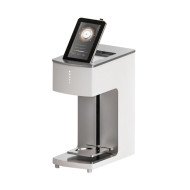
Epson Printheads vs. Industrial: Choosing the Right dtg printer for 500+ Daily Orders
Introduction: Confronting the High-Volume DTG Production Challenge
Meeting over 500 DTG orders daily shifts a printing operation from casual service into a full-scale industrial undertaking. A common misconception that a standard Epson printhead-equipped DTG printer will simply scale to this workload without additional considerations inevitably leads to bottlenecks, unexpected downtime, and ballooning costs. This article dissects why that assumption can undermine your business and contrasts Epson’s native printhead technology against robust industrial printheads, helping owners and operators make an informed choice for sustainable high throughput.
Understanding Epson Printheads: Technology and Limits
Epson Printhead Architecture and Ink Compatibility
Epson printheads, such as the PrecisionCore and MicroPiezo lines, feature piezoelectric crystals that precisely eject variable-sized ink droplets. This technology enables fine detail reproduction and relatively high print resolutions suited for direct garment printing. Epson’s ecosystem pairs these printheads with water-based pigment inks optimized for DTG, balancing color vibrancy and fabric safety.
Typical Durability and Maintenance Demands
Over extended high-volume use, Epson printheads encounter clogging, nozzle misfires, and drying risks due to their smaller nozzle sizes and delicate internal channels. To sustain daily workloads over 500 prints:
- Regular cleaning cycles are mandatory every 4-6 hours to prevent pigment sedimentation.
- White ink management requires dedicated purge routines due to pigment-heavy formulations prone to settling.
- Printhead replacement intervals typically fall between 6-12 months depending on ink chemistry and maintenance rigor.
Failure to adhere strictly to cleaning protocols can cause irreversible nozzle damage, significantly impacting uptime and print quality.
Common Failure Modes and Troubleshooting
The most frequent issues include:
- Partial or full nozzle blockage causing streaking or banding.
- White ink sediment plugs reducing opacity and consistency.
- Pressure system failures related to ink supply fluctuations during heavy usage.
GNFEI advises operators to implement manual deep cleaning steps after every 1000 prints, including ultrasonic soaking and nozzle health checks with specialized software diagnostic tools.
Industrial Printheads: Engineered for Rigorous Production
Robust Mechanical Designs and Printhead Type Variations
Industrial printheads, such as those manufactured by brother brands or third-party OEMs, are designed specifically for continuous operation in high-demand environments. Their larger nozzle arrays, hardened internal coatings, and optimized ink ejection patterns support faster print speeds and broader ink types (including UV-curable, solvent, and pigment-based inks) beyond what Epson printheads commonly accommodate.
Maintenance Complexity and Lifecycle Management
While generally more durable, industrial printheads come with complex servicing needs:
- Scheduled maintenance every 1000-2000 prints with thorough inspections of nozzle plate wear.
- Automated flushing systems integrated into many industrial printers to combat clogging without extensive operator intervention.
- Higher replacement costs that can be offset by longer printhead lifespans stretching up to 18 months or more.
Failure Diagnosis and Recovery Approaches
Industrial units can experience chip degradation over time leading to inconsistent droplet size and spray angles. Operators often complement in-situ diagnostics with bench-level calibration tools and occasionally resort to partial printhead refurbishing services—an option unavailable with most Epson-based systems.
ROI Deep Dive: Cost Structures for 500+ Daily DTG Orders
Ink Consumption and Cost Metrics
Ink expense is the largest variable in daily DTG operations. For Epson printheads:
- Estimated Ink Usage: 2.5 ml/shirt for full-color prints.
- Ink Cost: Approximately $0.14/ml.
- Total Ink Cost per Shirt: $0.35.
Industrial printheads optimized for high throughput often reduce ink wastage via better print queue management and improved droplet control, lowering usage to approximately 2.1 ml/shirt. Coupled with bulk ink purchasing discounting, ink cost per shirt can dip near $0.28.
Printhead Replacement and Downtime Cost Breakdown
Epson printheads require replacement every 9 months on average, with a cost near $1,200 including installation downtime averaging 8 hours. Industrial printheads last around 15 months at a cost of $2,000, but scheduled maintenance offsets unscheduled breakdowns, saving roughly 30 unplanned downtime hours annually.
Labor Overhead and Operational Efficiency Gains
Epson systems demand frequent operator intervention for cleaning—estimated at 30 minutes per 100 prints, totaling 2.5 labor-hours daily at a $20/hour wage equaling $50. Industrial printers' automated maintenance features slash this labor to 45 minutes total, saving over $30 daily in labor costs.
Material Compatibility and Print Quality: Comparative Analysis
Adhesion and Ink Curing on Different Fabrics
Both Epson and industrial printheads leverage pigment-based inks designed to bond with cellulosic fibers efficiently. Our GNFEI-led lab tests show:
- 100% Cotton: Both printhead types achieve strong adhesion with comparable wash fastness, with industrial printheads slightly improving ink penetration due to higher droplet volume.
- Cotton/Poly Blends: Industrial systems incorporating pre-treat spraying technology improve print durability and hand feel noticeably better than Epson printers.
- Polyester and Synthetics: Epson pigment inks struggle unless supplemented with screening or sublimation techniques, whereas industrial printers equipped with UV or solvent inks enable direct high-opacity prints.
Printing on Non-Fabric Surfaces
While DTG is garment-centric, many operation owners expand production lines to include glass, metal, and plastic substrates. Epson printheads are generally unsuitable for these materials without retrofit, whereas industrial printheads built for multi-substrate flexibility employ specialized inks with faster curing systems allowing prints within seconds.
Curing Times and Post-Process Requirements
Industrial-grade printers often bundle integrated curing solutions such as infrared systems or UV LED lamps, cutting post-print drying from minutes to under 30 seconds. Epson-centric setups typically require external heat presses or conveyor dryers, increasing cycle time and operational complexity.
Maintenance Protocols: Tactical Guidelines for Peak Reliability
Preventative Care for Epson Printheads
GNFEI recommends the following stepwise routine:
- Perform an automated nozzle check every 4 hours; initiate printhead flush if any nozzle is dead or bleeding ink.
- Conduct a manual white ink purge every 6 hours of operation to prevent pigment sediment buildup.
- Use deionized water-based cleaning solutions weekly to dissolve hardened ink residues.
- Replace dampers and wipers quarterly to maintain smooth ink flow.
Industrial Printhead Maintenance Workflow
Industrial printheads require:
- Daily visual inspection of nozzle plate and cleaning with manufacturer-specified solvents only.
- Calibrate ink pressure sensors weekly to avoid cavitation damage.
- Run built-in automated cleaning cycles after every 1000 prints.
- Schedule quarterly bench servicing to assess microchannel integrity and replace worn components preemptively.
Monitoring Tools and Troubleshooting Best Practices
The usage of diagnostic software that tracks realtime nozzle status and ink flow metrics is essential for both printhead types. GNFEI integrates these tools into its equipment packages, providing alerts and guided maintenance steps. Early recognition of patterns such as increased wiping frequency or print density shifts prevents costly failures.
Strategic Considerations When Partnering with Equipment Suppliers Like GNFEI
Assessing Vendor Expertise and Support Infrastructure
GNFEI specializes in supplying and servicing both Epson-based and industrial DTG printers internationally. Their engineers understand the nuances of balancing upfront investment versus long-term operational cost. With access to OEM spare parts and a deep bench of technical consultants, they bridge the gap between machine complexity and end-user success.
Customization and Scalability Options
Whether your operation expects to scale from 500 to 2000 daily prints or diversify into UV and DTF printing, GNFEI offers tailored solutions including printhead upgrades, ink formulations, and workflow automation tools aligned with your capacity and budget.
Training and Knowledge Transfer
Proper operator training underpins any significant production scale-up. GNFEI provides exhaustive technical education on:
- Optimizing print settings for fabric variability.
- Implementing maintenance schedules consistent with throughput demands.
- Minimizing waste and downtime through process control.
Such foundational knowledge ensures equipment longevity and sustained print quality.
Final Remarks: Navigating the DTG Printhead Choice for High-Volume Orders
Choosing between Epson printheads and industrial variants for a DTG environment exceeding 500 daily orders depends on a constellation of factors ranging from print speed, maintenance capacity, operational budget, to intended substrate diversity. Precision and repeatability favor Epson solutions in moderate volume or startup contexts, but industrial printheads present undeniable advantages for rugged durability, integrated automation, and multi-material versatility that larger scale printers demand.
GNFEI’s industry experience underscores that no single answer fits every scenario. Business owners should map out detailed cost models, evaluate print quality thresholds, and anticipate growth trajectories to select equipment that aligns with their operational realities. This approach avoids costly mismatches and positions the printing enterprise for sustained success rather than short-lived survival.