Edible Ink Safety 101: What You Need to Know About Food Printer Certifications

Understanding Edible Ink and Its Safety Challenges
The Chemical Composition of Edible Inks
The starting point to grasp edible ink safety is a detailed inspection of its chemical ingredients. Unlike traditional industrial inks loaded with volatile organic compounds (VOCs) and heavy metals, edible inks must be FDA-approved food-grade substances—primarily composed of water, food colorants, binders, and preservatives. Given the direct consumption route, any deviation from these standards risks acute toxicity or long-term health hazards.
For example, many edible inks leverage certified FD&C dyes, but substandard ink may contain non-food safe pigments like industrial-grade pigments or metallic particles that pose serious health concerns. B2B buyers sourcing edible inks for food printers cannot afford to overlook the supplier’s certification claims without thorough validation.
Common Misconceptions in Edible Ink Safety
A prevailing error in the market is the assumption that all food printer inks labeled "edible" automatically comply with safety standards worldwide. Regulatory compliance varies drastically by geography. For instance, an ink certified by the FDA in the US might not meet EFSA (European Food Safety Authority) regulations. This mismatch causes export complications for printing businesses.
Another frequent misunderstanding relates to the cross-contamination risks in dual-use printers. Ink residues meant for paper or textile can cross-contaminate edible substrates during improper cleaning or misconfigured print modes. Such contamination is not just a safety issue but also a legal liability.
Step-by-Step Ink Safety Validation at the Industrial Level
To ensure edible ink safety for mass production, industry leaders like GNFEI recommend a multi-tiered validation cycle including the following steps:
- Request and analyze the Certificate of Analysis (COA) from the ink manufacturer detailing all chemical components.
- Cross-verify compliance against local regulations—FDA, EFSA, or CFDA depending on market jurisdiction.
- Conduct in-house migration tests to check for leachable components by simulating temperature and humidity ranges typical during packaging and storage.
- Implement printer calibration protocols to avoid over-saturation, which could lead to excess ink deposits and potential allergen ingestion.
These steps systematically reduce risks in high-throughput edible printing operations.
Essential Certifications and Standards for Food Printers
Decoding FDA Approval and Its Scope
The US Food and Drug Administration’s regulations cover not only the ink composition but often extend to the equipment used for edible printing. FDA Title 21 CFR parts 175-180 provide guidance on indirect food additives, including inks. However, the FDA’s approach is ingredient- and usage-based, not equipment prescriptive. This means the printer manufacture itself is typically not FDA-certified, but the inks used must meet rigorous FDA standards.
Practically, B2B buyers must ensure their edible ink suppliers provide FDA-compliant certificates and that their printed food products fall within the FDA’s permissible use guidelines regarding colorant concentration and application methods.
Understanding ISO 9001 and ISO 22000 in Printing Context
These ISO certifications sometimes confuse consumers and business buyers alike. ISO 9001 focuses on quality management systems (QMS), ensuring a production or manufacturing process follows standardized procedures and quality checks. ISO 22000 specifically addresses food safety management, crucial for indirect components like printers.
Companies like GNFEI supply printers manufactured in ISO 9001-certified facilities, combined with ISO 22000-certified ink production, establishing a robust traceability and safety assurance framework. This dual compliance is increasingly demanded by large-scale food packaging clients.
Exploring FDA, EFSA, and CFDA: Global Regulatory Variations
When operating at an international scale, it’s vital to comprehend which regulatory body governs your target market:
- FDA (United States): Ensures safety of inks used in food contact surfaces under Title 21.
- EFSA (European Union): Applies more conservative migration limits and requires Declarable Substances List adherence for inks.
- CFDA (China Food and Drug Administration): Incorporates detailed testing for toxic metals and microbiological contaminants often stricter than US guidelines.
Given these differences, GNFEI personnel recommend automated compliance tracking systems integrated with print production management software for enterprises operating across these multiple jurisdictions.
Materials Compatibility and Print Quality vs. Safety Balance
Surface Compatibility: Glass, Metal, and Edible Films
The interaction between edible inks and substrate materials significantly impacts print adhesion, curing times, and by extension, safety. For instance, printing edible ink onto glass requires special surface preparation to enhance retention without residual leaching of binders. Metal surfaces, especially those with anodized coatings, can react chemically with certain ink formulations, raising concerns over metal ion migration.
In contrast, edible films—commonly used for cake decorations—typically absorb inks more cleanly but risk quick degradation if the ink formulation is inappropriate. GNFEI's R&D team conducts in-depth adhesion and migration tests on each material type to ensure reliability.
Print Curing Technologies and Their Safety Impact
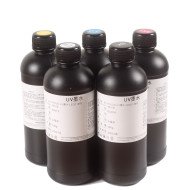
UV-curable edible inks offer rapid drying and enhanced shelf stability but require careful wavelength calibration. Excessive UV exposure not only degrades ink pigments but potentially creates unwanted photochemical byproducts. Traditional water-based inks avoid these risks but have increased drying times, risking smudging and microbial contamination.
Industrial buyers must weigh the increased throughput from UV technology against potential regulatory scrutiny over photoinitiator residues and byproducts. Generally, GNFEI supports hybrid systems enabling switchable curing modes for maximum safety and efficiency.
Textile vs. Food Surface Differences in Ink Adhesion
While DTG and DTF printers focus on fabric substrates, edible printing involves highly distinct physicochemical surface properties. For example, cotton fabrics absorb liquids into the fibers deeply, whereas edible icing sheets present a smooth, often moisture-sensitive, layer.
Ink formulations optimized for textiles typically contain additives like fixatives that are unacceptable for ingestion. Mixing these two domains without strict process segregation invites contamination risks. GNFEI manufactures specialized UV and edible ink printheads designed exclusively for food-safe applications, minimizing cross-domain hazards.
Operational Challenges and Maintenance of Edible Food Printers
Printhead Clogging and White Ink Sedimentation: Real-World Troubleshooting
White edible inks are notoriously prone to pigment settling and clogging due to their high titanium dioxide content. This often manifests as inconsistent droplet size and interrupted print signals. A regular maintenance schedule is non-negotiable in professional edible printing environments:
- Daily: Perform automated and manual nozzle checks to detect missing jets immediately.
- Weekly: Conduct ultrasonic cleaning of the printhead subsystems to dissolve pigment aggregates.
- Monthly: Replace ink filters and purge the ink lines to prevent microbial buildup.
GNFEI printers come with a configurable ink recirculation system that mitigates sedimentation but users must still adhere to strict cleaning intervals. Failure often results in damaged nozzles requiring expensive head replacements.
Calibration and Color Consistency: Precision Beyond Aesthetics
Reproducible color matching is a cornerstone of professional edible printing. Given tight food safety tolerances, the ink deposition must stay below defined thresholds to avoid colorant overexposure. This requires frequent calibration using colorimeters and densitometers tailored for food-safe inks.
A leading practice taught by GNFEI involves using an ICC profile created from combined measurements, helping maintain uniformity even under varying ambient conditions common in bakery or confectionery factories.
Cost Analysis: Ink Consumption, Printhead Wear, and Labor
An underappreciated aspect of edible printing safety relates to economic balancing. The ROI for food printers is complex:
- Ink Cost: Edible inks typically run $120-$180 per liter, substantially higher than industrial non-edible inks.
- Printhead Replacement: Average printhead lifetime under edible ink exposure is roughly 12,000 printing hours, shortened by sediment buildup and cleaning frequency. Replacements cost upward of $1,500 each.
- Labor: Skilled operator time for cleaning, calibration, and quality assurance constitutes approximately 25% of total operational cost.
When these costs are precisely tracked, enterprises can calculate per-unit consumption metrics, e.g., $0.045 per edible print in raw materials, excluding labor, helping refine pricing models.
Choosing GNFEI: Trusted Partner for Certified Edible Printing Solutions
GNFEI’s Commitment to Safety and Compliance
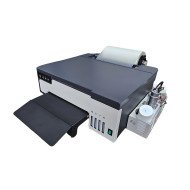
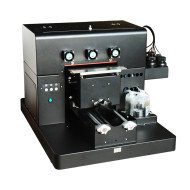
The global rise in edible printing demands experienced suppliers committed to compliance. GNFEI offers certified UV and aqueous food printers, coupled with inks tested against stringent FDA, EFSA, and CFDA standards. Their modular equipment enables printhead replacements and servicing aligned with industrial hygiene regulations.
Moreover, GNFEI invests heavily in R&D to optimize ink recirculation systems and automated cleaning sequences, addressing typical sedimentation and clogging problems.
Integrating Compliance into Your Production Workflow
Buying a certified printer only solves part of the equation. GNFEI consults on end-to-end workflow design—including printer placement, ink storage conditions, cleaning protocols, and cross-contamination safeguards—to build sustainable food-safe printing operations.
Future-Proofing with Innovation and Support
Edible printing technology is rapidly evolving. Advanced certifications, such as third-party allergen-free validation and blockchain traceability for printed food products, will become standard in coming years. GNFEI actively participates in these initiatives, enabling buyers to stay ahead with seamless upgrades and compliance auditing support.
For printing professionals and entrepreneurs invested in consumable goods customization, this foresight enhances both market competitiveness and consumer safety assurance.