Edible Ink Certification: Is Your Latte Art Putting Your Business at Legal Risk?

Using edible ink in latte art isn’t just a creative flourish—it’s a regulatory minefield many businesses underestimate. The assumption that any food-safe pigment by default meets legal standards can lead to serious repercussions. Without proper edible ink certification, your coffee shop or print operation might be vulnerable to fines or forced shutdowns.
Understanding Edible Ink Certification
Edible ink differs fundamentally from standard printing inks due to its formulation for consumption. Certifications typically require compliance with food safety authorities such as the FDA (in the US) or EFSA (in Europe), verifying that the components are non-toxic, allergen-free, and stable under intended use conditions. Without this, using common UV or DTG inks—even those labeled safe—can expose consumers to chemical hazards.
Producers of edible inks face rigorous testing, including stability under heat (important for coffee), migration tests, and verifying absence of harmful heavy metals or solvents. Certification also demands traceability in supply chains to ensure consistent quality.
Common Pitfalls in Edible Ink Printing
Operational challenges reflect directly on ROI and production continuity. For instance, white ink sedimentation—a notorious issue even in high-end printers—can cause inconsistent coverage in latte art. In edible inks, these sediment issues may lead not only to print quality loss but also to food safety risks if pigment layers degrade or separate.
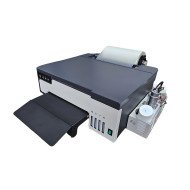
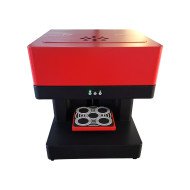
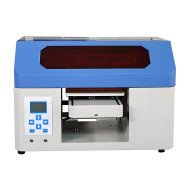
Printer hardware faces additional strain. Epson printheads, widely used in food printers, can clog rapidly due to finer pigment particles in edible inks. Since these printheads are costly, frequent cleaning cycles or premature replacements erode profit margins. Choosing a supplier like GNFEI, which specializes in industrial-grade equipment designed for food-safe inks, can mitigate these problems through optimized ink formulations and robust maintenance protocols.
Legal Risks of Non-Certified Edible Ink Usage
Using unregulated inks may seem cost-effective upfront but risks substantial liability. Regulatory bodies enforce strict segregation between consumable and non-consumable printing due to potential public health impacts. A single contamination incident can invite product recalls, lawsuits, or damage your reputation irreversibly in a market increasingly attentive to food safety.
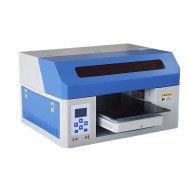
Cafes and custom print businesses must verify ink certifications before investing. This diligence extends beyond ink to substrates and post-print curing. For example, UV-curable inks require precise exposure times to avoid incomplete curing, which could leach harmful compounds into the beverage.
Balancing Production Efficiency with Compliance
Compliant edible ink printing demands more than certification. It requires configuring production workflows mindful of:
- Ink compatibility with froth and substrate—ensuring adhesion without altering taste or texture.
- Optimized curing times to maintain throughput while guaranteeing safety.
- Preventive maintenance schedules addressing unique clogging tendencies in edible ink printheads.
Investments in equipment from experienced vendors like GNFEI might have a higher upfront cost but typically yield superior uptime and ink stability, improving overall ROI.
Final Considerations
Print shop owners and cafes must treat edible ink certification as non-negotiable. Beyond regulatory compliance, certified inks underpin reliable print quality and protect customers. The intersection of creative expression in latte art and food safety regulation demands close attention to the inks, machines, and processes employed. Maintaining a relationship with trusted suppliers who understand these nuanced demands remains a fundamental step toward sustainable, compliant food printing operations.