Detailed Hardware Capability Challenges Versus Practical Operational Limits of A3 Dual Head UV Printer Support Rotary and UV DTF Printing
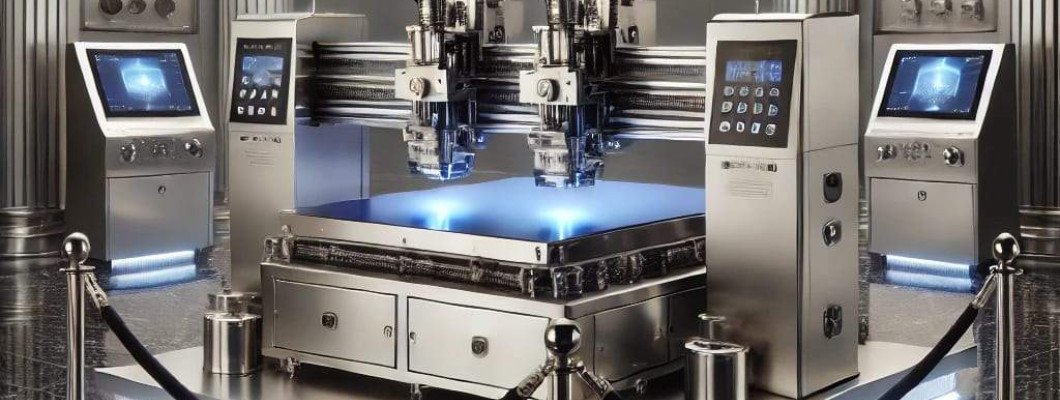
The Industrial Reality of Merging Dual Head UV Printing with Rotary and DTF Technologies
Operating an A3 dual head UV printer designed to support both rotary and UV direct-to-film (DTF) printing introduces complex challenges rarely evident at first inspection. Fusion of rotary capability with UV DTF functionality significantly complicates mechanical synchronization, ink curing precision, and substrate handling. Consider an industrial production environment where fast throughput and substrate versatility are non-negotiable. The dual head system, while promising increased speed by parallelizing print passes, risks print quality degradation from misalignment. The rotary mechanism, necessary for cylindrical objects, demands tight shaft concentricity within 0.02 mm to avoid ghosting or double images. Meanwhile, UV DTF printing requires meticulous pre-treatment and ink layering to maintain adhesion without compromising curing speed.
From a technical maintenance standpoint, dual head systems impose challenges in printhead calibration and thermal management. Each head’s piezoelectric nozzles emit droplets with volumes typically in the 5 to 20 pl range; matching droplet size and firing frequency between two independent heads without cross-interference is demanding. The tight thermal envelope needed for UV LED lamps to cure inks instantly while preventing substrate warping adds another layer of operational complexity. Scheduled downtime for printhead cleaning is amplified as both heads require synchronized maintenance to minimize throughput loss.
In sum, the industrial reality converges on balancing ambitious multi-functionality with the mechanical, electronic, and software constraints inherent in combining rotary and UV DTF printing within an A3 dual head format. Failure to address these leads to hidden bottlenecks affecting output consistency and production efficiency.
Understanding Printhead Dynamics and Dual Head Synchronization
Each printhead in the A3 dual head configuration operates as an independent piezoelectric array firing UV-curable inks. The theoretical firing frequency can reach upwards of 30 kHz, with droplet sizes adjustable from 5 pl to 20 pl depending on print mode. However, achieving exact temporal alignment between heads is essential to prevent banding and overlap errors.
Synchronizing two heads firing at 20 kHz each effectively implies a combined theoretical throughput of 40 kHz droplet deposition events per second. Yet, micro-vibrations, mechanical jitter from the rotary assembly, and electrical latency introduce phase shifts which can cause inconsistent droplet placement. This problem intensifies in rotary mode where cylindrical substrates rotate at speeds between 100 and 500 mm/s, necessitating real-time printhead positional adjustments with a precision of at least 10 microns.
Thermal expansion also affects printhead-to-substrate distance, influencing print resolution which typically targets 600 to 1200 dpi for fine detail. Variations greater than 0.1 mm degrade image sharpness. Therefore, closed-loop feedback systems employing laser displacement sensors and thermal compensation algorithms become crucial in maintaining print integrity.
Ink Chemistry Constraints and UV Curing Kinetics
UV-curable inks used in this printer support DTF printing on various substrates, including flexible films and rigid objects. Ink polymerization kinetics dictate the required UV dose, typically 300 to 500 mJ/cm2, delivered by UV LED lamps in the 385-405 nm range. Over-curing generates excessive heat risking substrate deformation, while under-curing leads to poor adhesion and mechanical instability.
The dual head configuration demands that curing units synchronize with print passes to ensure that UV exposure coincides precisely with ink droplet deposition. This is challenging in rotary mode where curved surfaces alter the distance and angle of UV light incidence, reducing effective irradiance by up to 25%. Adjustments in lamp power output and dwell time are necessary to compensate, increasing system complexity.
Mechanical Engineering Challenges in Rotary Integration
Incorporating rotary printing capability expands the printer’s usable substrate range but introduces mechanical engineering challenges. The rotary chuck system must maintain concentric rotation with radial runout below 0.02 mm. This precision averts print misregistration, especially critical for high-resolution images requiring 600 to 1200 dpi.
Rotational speeds of 100-500 mm/s translate into angular velocities dependent on object diameter, requiring variable motor control with positional feedback. Balancing torque, minimizing vibrations, and ensuring swift acceleration/deceleration cycles impact the printer’s throughput and maintenance cycles. Wear on bearings and couplings in rotary mechanisms is accelerated, necessitating predictive maintenance protocols to avoid catastrophic downtime.
Comparative Table of Single Head Versus Dual Head A3 UV Printers in Mixed Mode
| Feature | Single Head A3 UV Printer | Dual Head A3 UV Printer with Rotary and DTF |
|---|---|---|
| Max DPI | 1200 dpi | 1200 dpi, potential misalignment risks |
| Max Throughput | Up to 6 m2/hr | Up to 10 m2/hr (theoretical doubling) |
| Rotary Capability | Often absent | Integrated, supports cylindrical objects 20-150 mm diameter |
| Maintenance Complexity | Lower - single printhead | Higher - dual printheads, synchronization required |
| Thermal Management | Moderate UV lamp heat | Higher heat load from dual heads and rotary motor |
| Ink Usage Efficiency | Standard | Potential over-deposition due to misalignment |
Scenario Analysis for Business Applications
Case 1 Industrial Packaging Manufacturer
For packaging lines requiring cylindrical container printing with fast turnarounds, the dual head rotary UV printer can theoretically double throughput as it prints front and back simultaneously. However, the critical factor is precise synchronization to avoid brand image distortion. Margins for error in alignment are 0.1 mm for container diameter of 75 mm at 300 dpi print resolution. Continuous motor feedback and periodic calibration increase operational complexity and technical labor requirements.
Case 2 Customized Promotional Products
Promotional items like mugs and bottles often require UV DTF printing on curved surfaces. The dual head printer's adaptability supports multi-color gradients and high dpi detail. However, smaller batch volumes and frequent substrate changes impose downtime for recalibration. The synergy between rotary speed control and UV curing intensity needs to be finely tuned to avoid ink adhesion failure.
Case 3 Small Scale Artisanal Production
Artisan print shops prioritizing color depth and surface finish may confront challenges with dual head drying uniformity and substrate temperature sensitivity. Dual head usage can improve throughput but might degrade micron-level precision if thermal management is insufficient, particularly with sensitive flexible films. Maintaining printhead health during frequent color profile changes requires dedicated maintenance workflows.
Expert FAQ on Dual Head UV Printer Operational Details
Q1 How does dual head synchronization compensate for mechanical jitter in rotary mode?
The system employs high-resolution encoders coupled with predictive algorithms that adjust print timing dynamically within microsecond ranges to counteract phase shifts caused by mechanical jitter.
Q2 What is the impact of printhead nozzle size variation on droplet placement accuracy?
Variations above 0.5 pl can cause inconsistent droplet coalescence affecting edge sharpness, demanding routine nozzle health monitoring and purging cycles.
Q3 How is thermal expansion accounted for in printhead-to-substrate gap control?
Laser displacement sensors provide real-time data feeding into servo mechanisms that adjust head position, compensating for positional drift due to temperature fluctuations exceeding 2°C.
Q4 What maintenance intervals are recommended to sustain dual head operational uptime?
Scheduled cleaning every 8 hours of operation combined with monthly nozzle replacement optimizes uptime, with rotary bearings requiring lubrication every 500 operational hours.
Q5 How does UV LED power modulation influence ink curing on cylindrical surfaces?
Adaptive power modulation based on substrate curvature and rotation speed maintains uniform dose delivery, compensating for irradiance loss up to 25% on convex surfaces.
Strategic Verdict on Dual Head UV Printer Technology Trajectory
The integration of dual head UV printing with rotary and UV DTF capabilities challenges industrial operators to balance ambitious throughput goals with the mechanical and thermal realities of complex multi-axis systems. Although the theoretical benefits include doubled output and substrate versatility, real-world operational limits manifest as synchronization complexities, increased maintenance demands, and ink curing variability on curved substrates. Future refinements will likely center on advanced sensor integration, real-time adaptive control algorithms, and modular printhead designs to mitigate mechanical drift and thermal stress. The technology appears poised to serve niche high-mix production workflows where substrate diversity justifies operational complexity rather than broad volume-driven deployments.