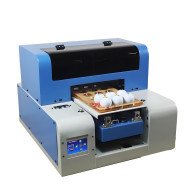
Decoding Edible Food Ink for Industrial Printing Challenges

The Industrial Reality
In the high-stakes realm of industrial food printing, edible food ink emerges as a pivotal technological asset. Understanding its integration and operational challenges is key for enterprises seeking precision and efficiency. This analysis explores the hidden operational bottlenecks that businesses confront when incorporating edible ink into industrial-grade processes.
Technical Deep-Dive
Understanding Ink Composition
Edible food ink fundamentally differs from standard printing inks due to its chemical composition, designed to be safe for consumption. A typical formulation includes water, ethanol, food-safe dyes, and stabilizers, ensuring it complies with stringent food safety regulations.
Viscosity and Printhead Compatibility
The viscosity of edible ink plays a crucial role in printhead function. Low-viscosity inks can lead to clogging, reducing uptime. A mathematical analysis reveals that viscosity levels between 3-5 centipoise are optimal for seamless operation in most industrial printheads, balancing flow and precision.
Substrate Interaction
Substrate selection impacts ink adhesion and color fidelity. High-gloss surfaces often exhibit superior color depth but may require special coating treatments to ensure edibility. For instance, using a biopolymer coating can enhance ink bonding while remaining food-safe.
Operational Bottlenecks
Operational challenges often revolve around maintenance and cleaning cycles. Edible ink can contribute to accelerated wear of printheads, necessitating frequent maintenance. A comparison shows that monthly maintenance cycles can improve longevity and operational efficiency.
Regulatory Compliance and Safety
Compliance with food safety standards such as FDA or EU regulations is non-negotiable. Businesses must ensure batch traceability and ingredient purity, requiring sophisticated tracking systems integrated into the printing infrastructure.
| Factor | Standard Ink | Edible Food Ink |
|---|---|---|
| Viscosity | 2-4 Centipoise | 3-5 Centipoise |
| Color Precision | High | Moderate |
| Safety Compliance | N/A | Mandatory |
| Maintenance Frequency | Quarterly | Monthly |
Scenario Analysis
Large-Scale Bakery Operations
In large-scale bakeries, the integration of edible ink printers can revolutionize custom product offerings. However, equipment downtime due to ink maintenance presents a bottleneck that impacts throughput.
Artisanal Chocolate Manufacturing
For high-end chocolatiers, edible ink offers design precision yet demands meticulous substrate preparation. The impact on product quality can be significant if substrate compatibility is not adequately addressed.
Packaged Food Customization
In the packaged food sector, edible ink provides a unique selling proposition but requires robust compliance mechanisms to ensure consumer safety, impacting operational workflows.
Expert FAQ
Q1: How does edible ink affect printhead longevity?
A1: Frequent maintenance is essential due to potential clogging and wear.
Q2: What are the regulatory considerations?
A2: Compliance with food safety standards is mandatory and requires rigorous documentation.
Q3: How can viscosity be managed?
A3: Implementing precise control mechanisms can optimize flow and reduce clogging risk.
Q4: What substrates work best?
A4: High-gloss and biopolymer-coated surfaces provide optimal results.
Q5: Are there challenges in color fidelity?
A5: Yes, particularly on porous substrates which may require additional treatment.
Strategic Verdict
Edible food ink represents a significant advancement in industrial printing, yet integrating it effectively requires overcoming operational challenges and regulatory hurdles. The ongoing developments in ink formulation and printer technology suggest a promising future, though businesses must remain vigilant in adapting processes to fully utilize its potential.