Decoding Asset Longevity and ROI for Heat Press Machines
The Industrial Reality
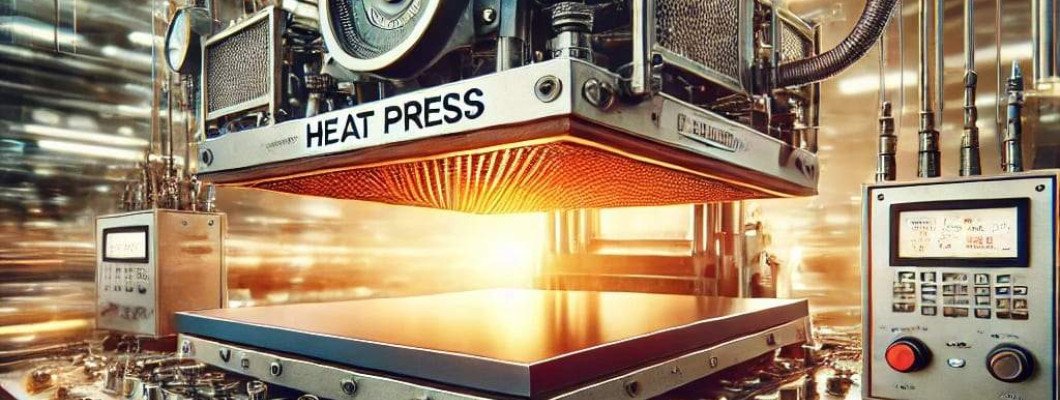
In the realm of specialized printing technologies, the 40*60CM heat press machine is a pivotal piece of equipment, often overlooked in discussions about industrial asset longevity and return on investment (ROI). For scalable business owners, maximizing throughput and minimizing labor costs are key considerations. Yet, a deep dive into the economic and operational facets reveals a complex scenario, challenging preconceptions about the lifecycle and viability of such machinery.
Technical Deep-Dive
Understanding the Core Mechanics
The 40*60CM heat press machine operates on basic principles of thermodynamics. It utilizes a heating element designed to achieve uniform temperature distribution across the platen surface, typically within a range of 100°C to 200°C. Variances in thermal conductivity can significantly affect the machine's efficiency and lifespan.
Asset Depreciation Analysis
For business owners, the depreciation rate of heat press equipment is a critical factor. Over a five-year period, assuming regular usage, a typical machine might depreciate at approximately 20% per annum. This rate can vary based on usage intensity, maintenance quality, and technological advancements.
Comparative Maintenance Costs
Maintenance costs are another facet of operational expenses. The following table compares projected costs for standard vs. high-end models over a three-year lifecycle:
| Model Type | Annual Maintenance Cost (USD) | Longevity (Years) |
|---|---|---|
| Standard Model | 300 | 3 |
| High-End Model | 200 | 5 |
Sustainability in Heat Press Machines
Environmental compliance is a growing concern. Modern heat press machines are often built with energy-efficient components. However, achieving true sustainability requires integrating these machines with eco-friendly practices, such as low-energy operation modes and recyclable materials.
ROI Calculation: Hard Numbers
Calculating ROI requires a stringent evaluation of all economic inputs and outputs. Assuming a machine cost of $5,000 with annual revenue generation from output at $10,000, and factoring in depreciation and maintenance, ROI can be computed as follows:
ROI = [(Revenue - Cost - Depreciation - Maintenance) / Cost] * 100
This formula underscores the quantitative evaluation necessary for a clear financial picture.
Scenario Analysis
Consider three business use-cases: A small-scale printing firm focuses on custom apparel production; a medium-sized establishment leverages bulk operations; and a large-scale enterprise values high throughput and technological integration. Each scenario demands a tailored approach to machine selection and financial predictions, impacting ROI observed.
Expert FAQ
Q1: What are the risks of thermal inconsistency?
A1: Thermal inconsistency can result in uneven print quality, affecting both customer satisfaction and product waste.
Q2: How does platen size impact output?
A2: Larger platen sizes allow for greater surface area coverage, potentially increasing batch sizes significantly.
Q3: Can energy-efficient models reduce costs substantially?
A3: Yes, they can lower operational expenses, especially in high-usage scenarios over prolonged periods.
Q4: What are the advanced maintenance protocols?
A4: Regular calibration, cleaning, and component inspection are vital for maintaining optimal functionality.
Q5: Is there a market shift towards integrated systems?
A5: Increasingly, businesses are adopting integrated systems for enhanced efficiency and data tracking.
Strategic Verdict
Analyzing the trajectory of heat press technology reveals a landscape where precision engineering, economic viability, and sustainable practices converge. As market dynamics shift, adopting a strategic outlook on asset management and technological integration ensures continued relevance and profitability.