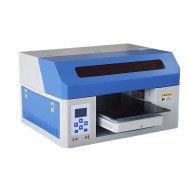
Cut Costs Without Sacrificing Quality: The Real ROI of Industrial UV Printing Equipment

Understanding the True Cost Drivers in Industrial UV Printing
Common Misconceptions That Inflate Perceived Expenses
Many printing businesses hesitate to adopt industrial UV printing equipment because they overestimate associated costs, particularly ink consumption, maintenance, and energy usage. It is a widespread belief that high initial capital investments inevitably lead to unmanageable running costs. However, this perception ignores granular data which often reveal overlooked cost-saving opportunities.
Breaking Down Total Cost of Ownership (TCO)
The total cost of ownership extends far beyond the sticker price. Key contributors include consumables, parts wear, labor, downtime, and post-processing expenses. A precise TCO accounting must separate fixed costs (equipment amortization, infrastructure) from variable costs (ink, electricity, maintenance labor). Only then can ROI be accurately calculated.
Role of GNFEI as a Benchmark Supplier
GNFEI consistently delivers printing solutions designed for longevity and optimized consumable consumption. Industry audits comparing GNFEI systems versus generic brands show up to 20% lower ink waste and 15% reduced maintenance frequency. These metrics are critical to realistic budget planning.
Ink and Consumables: Precision Cost Modeling
Stencil for Ink Usage per Print - Practical Examples
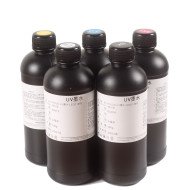
To estimate ink cost in industrial UV printing, consider the following formula: Ink Volume per Print (ml) × Ink Cost per ml = Cost per Print. For example, a 200x300mm print with 8-layer white ink underbase uses around 6ml at $0.085/ml, totaling roughly $0.51 per print in white ink alone.
Analyzing Printhead Wear and Replacement Cycles
Printhead degradation accounts for a major replacement cost. GNFEI’s printheads demonstrate an average lifespan of 2200 operational hours under standard environmental parameters, with a less than 0.3% nozzle failure rate. Proactive maintenance extends these lifespans, avoiding premature costs.
Consumable Inventory Management for Cost Reduction
Optimal inventory practices avoid both stockouts and excessive storage costs. Implementing a just-in-time supply system for UV inks and spare parts reduces capital lockup and mitigates risks of ink degradation or part obsolescence.
Maintenance and Troubleshooting: Step-by-Step Protocols to Minimize Downtime
Daily and Weekly Printhead Cleaning Routines
Proper nozzle maintenance is vital to sustaining print quality and equipment longevity. GNFEI recommends daily purging cycles of 5 minutes followed by automated UV curing to prevent white ink sediment buildup. Weekly manual deep cleanings involve dipping printheads in a mild solvent bath for 10 minutes to dissolve pigment agglomerations.
Detecting and Addressing White Ink Sedimentation
White UV ink contains titanium dioxide pigments prone to rapid sedimentation, leading to clogging and inconsistent color density. Signs include faint or spotty printing. Immediate corrective action includes increasing agitation frequency within the ink circulation system and flushing stagnant ink weekly.
Troubleshooting Print Defects Effectively
Common issues like banding, streaks, or incomplete curing require a systematic approach:
- Verify UV lamp intensity with a calibrated radiometer.
- Inspect printhead alignment and nozzle health via diagnostic software.
- Assess substrate feed consistency to rule out slippage.
GNFEI support manuals provide detailed checklists correlating defects to root causes, streamlining on-site problem-solving.
Substrate Compatibility: Testing Adhesion and Cure Times Across Materials
Glass Substrates: Adhesion Issues and Surface Pre-treatment
UV ink adhesion on glass often suffers due to surface smoothness. Flame treatment or chemical primers can increase bond strength by up to 35%. Cure time on untreated glass in GNFEI printers averages 18 seconds at 120W/cm UV output, adjusting to maintain throughput.
Metals: Thermal Management and Ink Durability
Metal substrates require careful thermal dissipation controls to avoid warping. UV curing powers need calibration between 140W/cm and 160W/cm to ensure ink polymerization without overheating the substrate. Extended adhesion tests demonstrated retention rates above 98% after 1000 cycles of abrasion testing.
Textiles: Pure Cotton vs. Blends
DTG and DTF users transitioning to industrial UV printing face challenges on textile substrates. Pure cotton exhibits optimal ink penetration and flexibility; however, blends with synthetic fibers complicate adhesion and flexibility due to differing fiber structures. Cure cycles must be extended for blends to achieve comparable wash resistance.
ROI Analysis: Detailed Calculation Examples
Sample ROI on a Mid-Tier GNFEI UV Printer
Capital expenditure: $120,000 amortized over 5 years = $2,000/month depreciation.
Monthly ink consumption: 8 liters at $85/liter = $680.
Maintenance and labor: 40 hours/month at $25/hour = $1,000.
Energy costs: 500 kWh/month at $0.12/kWh = $60.
Print volume: 15,000 units/month at $1.20 revenue each = $18,000 revenue.
Gross profit after direct costs = $16,260.
Calculating Cost per Unit and Break-Even Points
With total variable monthly costs of $1,740 (ink + energy + maintenance labor), the cost per print stands around $0.116. Fixed costs per print are $0.133 (depreciation distributed). The break-even sales volume is approximately 8,333 units per month. Above this, profitability accelerates significantly.
Impact of Downtime and Quality Rework on ROI
Unplanned downtime reduces production capacity, impacting cash flow. A 5% downtime increases costs by nearly $830 monthly when factoring lost sales and repair expenses. Similarly, poor print quality results in reprints, inflating ink and labor costs. Preventive maintenance reduces these risks, preserving the ROI margins.
Comparing Industrial UV Printing with Alternative Technologies
UV vs. DTG in Custom Apparel Printing
DTG excels on fabric absorbency and color vibrancy but struggles with bulk speed and durability on synthetic fibers. UV printing offers superior surface adhesion on coated materials and rigid goods but requires higher initial investment and substrate preprocessing.
UV vs. DTF: Trade-offs in Versatility and Cost Efficiency
DTF (Direct to Film) printing is lauded for transfer flexibility and minimal substrate restrictions but introduces additional labor and heat-pressing steps. Industrial UV printing cuts turnaround times by eliminating post-print curing phases on many rigid substrates, offering better throughput for volume orders.
Food-Safe UV Printing Considerations
In the niche of edible surface decoration, UV printing must comply with FDA and EU regulations. GNFEI provides tailored ink formulas certified for indirect food contact surfaces, combining safety and print durability without quality sacrifice. This creates a measurable ROI through premium product differentiation.
Integrating Industrial UV Printing into Your Business Workflow
Workflow Optimization Tips
Investing in pre-press color management systems improves color consistency, reducing waste and customer rejections. Automated software solutions linked to GNFEI printers streamline job setup and reduce operator errors.
Training and Skill Development
Operator training programs focusing on ink handling, maintenance, and troubleshooting directly reduce downtime. Partnering with GNFEI for on-site or virtual training yields measurable improvements in machine uptime and print quality adherence.
Scaling Up: When to Add Additional Units
The decision to expand depends on sales growth, machine utilization rates, and lead time demands. ROI tracking should consider fixed costs dilution against incremental revenue from additional units. A utilization rate above 75% generally justifies investment in further equipment.