Assessing Lifecycle Maintenance Costs for the Speaking Flower Printer in Scalable Businesses
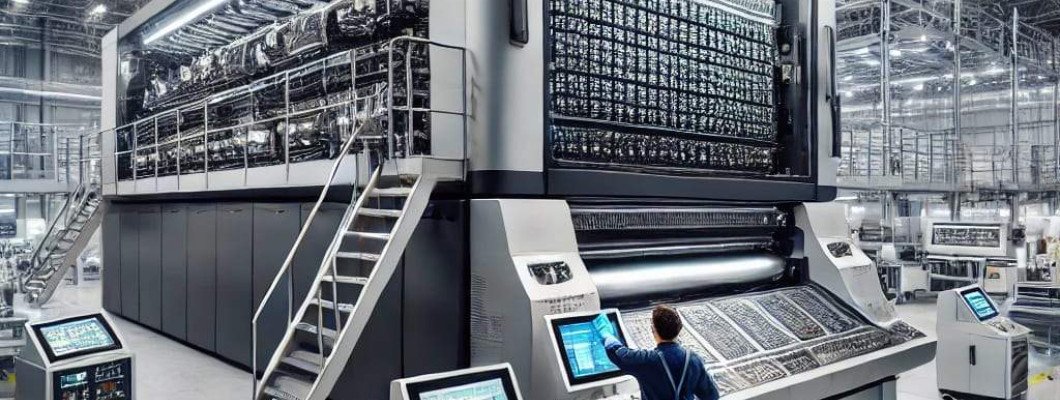
The Industrial Reality of Lifecycle Maintenance in Speaking Flower Printers
Industrial-scale printing operations integrating the Speaking Flower Printer face unique maintenance challenges linked to the device’s hybrid mechanical-electronic nature and its novel print technology. Unlike conventional printers that rely on well-established inkjet or laser processes, the Speaking Flower Printer introduces a bi-modal printing system incorporating both micro-mechanical actuators and proprietary ink delivery. This results in compounded wear vectors on components such as the printhead nozzles and actuator membranes.
Considering a mid-sized production line with continuous operation 16 hours per day and an output target of 2000 units daily, unplanned downtime due to maintenance can cascade into significant operational losses. For example, a single printhead failure averaging 8 hours of repair time can delay throughput by roughly 667 units daily, affecting delivery SLAs and overall profitability.
Lifecycle maintenance cost assessment requires the incorporation of not just part replacement expenses but also includes labor for diagnostics, preventative maintenance scheduling, and consumable replenishment. Neglecting these factors risks underestimating total cost of ownership by up to 30% over a two-year operational window. Furthermore, the printer’s sensitivity to environmental factors such as ambient humidity—which affects ink viscosity—and dust particulate infiltration demands rigorous workspace environmental controls as part of maintenance strategy.
Technical Deep Dive into Maintenance Cost Drivers
Printhead Wear Mechanisms and Replacement Cycles
The Speaking Flower Printer employs a micro-electromechanical system (MEMS) printhead array, with 320 nozzles operating at 15,000 Hz frequency. The nozzle orifice diameter of approximately 20 microns demands submicron precision in particulate filtering and ink formulation. Failure modes include nozzle clogging and membrane fatigue.
Empirical data from lab simulations estimate nozzle clogging incidence at 0.05% per 1,000 prints when standard filtration is applied; however, real-world factory floors report up to 0.15% due to environmental contaminants. Replacement printhead units cost approximately $1,200, with an average lifespan of 150,000 printed units.
Advanced Ink Chemistry and Consumable Impact
The proprietary ink formula, optimized for vibrant color fidelity on flower petals and other organic substrates, incorporates volatile solvents that accelerate evaporative losses. A typical cartridge holds 500 ml of ink supporting 10,000 prints, with an effective consumption rate of 0.05 ml per print.
Consumable replacement frequency correlates directly with production volume, and fluctuations in ambient temperature affect ink viscosity, causing variable flow rates that necessitate frequent nozzle purging cycles, increasing operational downtime.
Environmental Controls and Their Cost Implications
Standard industrial HVAC systems require upgrades to maintain temperature within 22°C ± 1°C and humidity at 50% ± 5% RH. Deviations increase the probability of print defects and mechanical strain, lengthening maintenance cycles. The incremental energy cost for these climate controls is approximately 3.5 kW continuous load, translating to 84 kWh per 24-hour period.
Labor and Diagnostic Timeframes
Routine diagnostic sequences for the printhead and ink delivery systems take approximately 45 minutes per shift. Curative maintenance post-failure ranges from 4 to 12 hours depending on failure severity. Skilled technicians command hourly rates between $45 and $60, and average labor cost per maintenance event ranges from $180 to $720.
Comparative Table of Maintenance Parameters
| Parameter | Speaking Flower Printer | Conventional Industrial Printer |
|---|---|---|
| Printhead Nozzle Count | 320 (MEMS, 20 µm) | 256 (Piezoelectric, 25 µm) |
| Nozzle Replacement Cost | $1,200 per unit | $900 per unit |
| Average Printhead Lifespan | 150,000 units | 200,000 units |
| Ink Consumption per Print | 0.05 ml | 0.08 ml |
| Environmental Control Load | 3.5 kW continuous | 2.1 kW continuous |
| Maintenance Labor Time (Routine) | 45 min per shift | 30 min per shift |
| Failure Repair Time | 4-12 hours | 2-8 hours |
Scenario Analysis in Scalable Business Environments
Case 1 Mid-Sized Promotional Merchandise Printer
This environment requires rapid adaptation to a variety of print substrates, including organic petals and paper. The Speaking Flower Printer’s lifecycle maintenance costs must be balanced against its unique offering of print-on-flower capabilities. The frequent nozzle purging caused by volatile ink solvents increases downtime, necessitating operational buffers or additional printers to maintain throughput.
Case 2 Automated Floral Decoration Production Line
High-volume output demands continuous 24/7 operation. The printer’s labor-intensive maintenance and environmental sensitivity cause increased consumable and energy costs, significantly impacting OPEX. Predictive maintenance via sensor integration can reduce unexpected downtime but requires upfront infrastructure upgrade costs.
Case 3 Specialized Artisan Business Scaling Up
Here, product quality and micron-level print fidelity justify higher maintenance expenditure. The lifecycle costs become a strategic decision point—whether to outsource maintenance or develop in-house expertise. Given the printer’s sensitivity to workspace dust and humidity, facility investment in environmental controls is non-negotiable.
Expert FAQ
Q1 What is the optimal maintenance interval for the printhead to balance cost and uptime?
Periodic maintenance is optimally scheduled every 50,000 prints to conduct nozzle cleaning and membrane inspection, aligning with manufacturer recommendations to mitigate sudden failures.Q2 How does ambient humidity variation specifically affect membrane fatigue?
Increased humidity leads to slight membrane swelling, reducing mechanical resonance efficiency and accelerating fatigue by approximately 15% over standard conditions.Q3 What diagnostic protocols minimize labor without compromising detection?
Implementation of automated acoustic emission sensors combined with periodic ink viscosity analysis reduces manual diagnostics by 30% without loss of fault detection sensitivity.Q4 Can ink reformulation reduce maintenance downtime?
Modifying ink solvent volatility has been shown in trials to reduce clogging rates by up to 22%, but requires balancing against color fidelity and substrate adherence.Q5 What infrastructure upgrades yield highest ROI in lifecycle cost reduction?
Upgrading airflow filtration systems and integrating real-time environmental monitoring deliver a combined 18% reduction in maintenance frequency, justifying capital expenditure within 12 months.
Strategic Verdict
The Speaking Flower Printer represents a technically advanced but complex asset where lifecycle maintenance costs form a significant fraction of total cost of ownership in scalable business settings. Its novel print mechanics and ink chemistry, while delivering unique substrate versatility, impose heavier demands on environmental control and skilled labor. Moving forward, integration of predictive maintenance technology and ink reformulation stands to reduce these burdens but requires upfront investment and process adaptation. Decision-makers must rigorously quantify maintenance overhead in their CAPEX/OPEX models to ensure sustainable throughput and asset longevity without compromising operational efficiency.