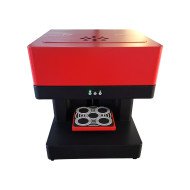
Analyzing the Scaling Challenges in Smart Coffee Printer Machines for Scalable Business Owners
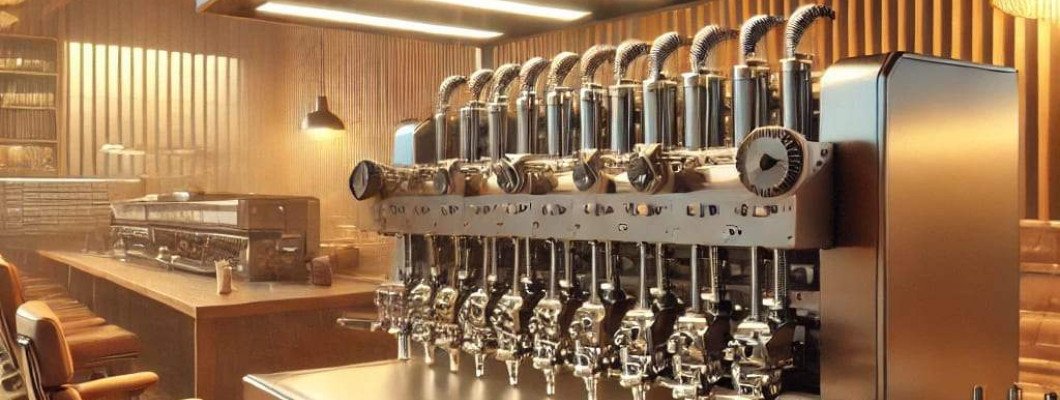
The Industrial Reality of Scaling Smart Coffee Printer Machines
Within the operational landscape of food and beverage service businesses, the integration of Smart Coffee Printer Machines proposes a paradigm shift in customization and customer experience. However, the practical realities of scaling these printers from low-volume bespoke units to high-throughput, automated production lines uncover critical technical challenges. For scalable business owners, throughput demands of 200+ prints per hour impose significant strain on machine components originally engineered for artisanal scale outputs. Key constraints include printhead wear rates, thermal load management, synchronization with automated coffee dispensing workflows, and minimizing labor bottlenecks during maintenance intervals.
Consider the role of print speed, often advertised at 60-90 seconds per cup. Multiplying this by operational hours and peak demand periods reveals a requirement for continuous uptime and minimal failure rates. Unplanned downtime for printhead cleaning or ink cartridge replacement becomes a costly factor given lost revenue per minute. Additionally, the device's mechanical design, such as feeder conveyor precision, ink curing systems, and embedded sensor reliability, directly influences operational consistency. Each element interacts within a tightly controlled environment where temperature and humidity vary. Misalignment here introduces print artifacts or complete failures, disrupting fast-paced service counters.
From an asset management perspective, the depreciation of both mechanical and electronic components under high-load cycles demands anticipation. Printhead lifespan, dictated by nozzle firing cycles often exceeding 10 million drops, requires tactical replacement scheduling to avoid throughput degradation. Moreover, the software and firmware stability under continuous stress conditions need to be analyzed as potential hidden bottlenecks influencing overall system resilience. Business owners must understand these technical parameters beyond surface specifications to align asset acquisition with scalable output goals.
Technical Deep Dive into Scaling Challenges
Printhead Longevity and Failure Modes
The printhead technology embedded within a Smart Coffee Printer typically utilizes piezoelectric inkjet nozzles. Each nozzle fires droplets typically around 20-50 picoliters (pl) in volume, with a print resolution averaging 300 dpi. Under a throughput scenario of 200 cups per hour, assuming average 30 drops per image area, nozzle firing frequency approaches 6000 drops per minute per nozzle.
Hypothetically, if a printhead contains 128 nozzles, total droplet ejection per hour becomes:
128 nozzles * 6000 drops/min * 60 min = 46,080,000 drops per hour.
This high operating rate accelerates nozzle wear via mechanical fatigue and ink-related clogging. Piezoelectric crystals degrade over time due to cyclic stress, reducing firing precision and droplet volume consistency. Failure manifests as misfiring, clustering artifacting, and nozzle dead zones requiring automated or manual maintenance interventions.
Thermal Management and Heat Dissipation
The printed coffee surface demands rapid ink drying or curing to avoid smudging. This requires embedded heating elements or UV curing systems within the printer architecture. Heat generation estimated at approximately 15-25 Watts per curing module can accumulate rapidly across multiple units in a high-density counter environment.
Calculating thermal load for a 4-unit printer array:
4 units * 25 W = 100 Watts continuously dissipated.
Given limited ventilation in compact coffee shops, thermal buildup affects electronic stability leading to sensor drift and accelerated component degradation. Business infrastructure must implement active cooling or airflow management, increasing operational complexity and electrical consumption.
Ink Chemistry and Supply Chain Integration
Specialized edible inks must balance pigment density for image clarity with quick-setting formulations compatible with caffeine-infused substrates. Ink viscosity typically ranges between 5-12 centipoise (cP) at 25°C, optimized to maintain laminar flow through micro-nozzles without clogging.
The supply chain volatility of these inks, subject to cold chain requirements and shelf-life degradation (typically 3-6 months), introduces operational risk. Failure to maintain reagent freshness impairs color fidelity and print reliability, necessitating precise inventory management integrated with ERP systems.
Automation and Workflow Synchronization
Scaling a Smart Coffee Printer requires integrating dispenser timing, cup positioning, and image rendering in real-time. Mechanical conveyance tolerances must adhere to ±0.3 mm alignment precision to avoid print skew or offset.
Software latency in image processing pipelines imposes upper bounds on throughput. A comparative benchmark reveals:
| Parameter | Standard Printer System | Scaled Business Automation |
|---|---|---|
| Print Time per Cup (s) | 60-90 | 20-30 |
| Alignment Precision (mm) | ±0.5 | ±0.3 |
| Maintenance Cycle (hrs) | 8-12 | 4-6 |
| Ink Replace Frequency | Daily | Multiple per Shift |
Maintenance Bottlenecks and Labor Allocation
Increased throughput elevates frequency of maintenance events, forcing manual intervention for nozzle cleaning and mechanical recalibration. Labor costs rise proportionally, challenging the ROI calculations. Deploying automated diagnostics and robotic maintenance subsystems emerges as a potential solution but adds upfront CAPEX and complexity, demanding sophisticated IT infrastructure support.
Scenario Analysis of Business Use-Cases
1. High-Traffic Espresso Bars
These establishments require continuous service during rush hours with demand spikes reaching 300 prints per hour. The Smart Coffee Printer must operate in parallel arrays with precise thermal and ink supply management. Downtime directly translates to lost sales; thus, redundancy and predictive maintenance software are imperative.
2. Boutique Coffee Shops with Custom Artistry
Lower volume but high customization demands precise color calibration and micron-level image fidelity. Throughput is less critical, enabling longer maintenance cycles but requiring superior printhead accuracy and substrate versatility, emphasizing quality over quantity.
3. Automated Franchise Environments
Large chains prioritize minimal labor input and consistent output across multiple locations. Infrastructure challenges include integration with backend inventory and real-time performance monitoring, necessitating robust firmware and scalable cloud-based analytics to optimize maintenance cycles and resource allocation.
Expert FAQ on Advanced Technical Considerations
How does nozzle firing frequency impact printhead lifespan quantitatively?
Nozzle firing frequency correlates directly to piezoelectric actuator fatigue. Empirical models estimate 10 million firing cycles as average lifespan, with accelerated degradation occurring when exceeding 70% duty cycles. Precise monitoring of drops fired per nozzle enables predictive replacement scheduling.
What material properties affect thermal expansion and print registration accuracy?
Substrate thermal expansion coefficients (typically 10-20 ppm/°C) and printer frame material rigidity impact alignment stability. Using composite alloys with low expansion coefficients plus active feedback sensors mitigate drift under variable temperature conditions.
How does ink viscosity alteration influence droplet formation?
Variations in ink viscosity alter jetting velocity and droplet volume. Higher viscosity inks (>12 cP) risk satellite droplets and uneven deposition, whereas lower viscosities (<5 cP) reduce pigment density, degrading image contrast. Optimal viscosity range balances print fidelity and nozzle health.
What firmware protocols ensure real-time synchronization in multi-unit arrays?
Real-time Ethernet-based protocols with time-sensitive networking (TSN) features minimize jitter and latency, maintaining synchronization within ≤5 ms. Custom embedded firmware with deterministic task scheduling is essential for multi-head coordination.
Can predictive maintenance algorithms reduce labor costs effectively?
By integrating sensor data on nozzle pressure, temperature, and drop ejection consistency, machine learning models forecast failure windows. These reduce unplanned downtime by up to 30% and optimize maintenance labor scheduling, improving throughput and lowering operational costs.
Strategic Verdict on the Future Trajectory
Smart Coffee Printer Machines poised for scalable business environments face multifaceted engineering challenges spanning mechanical precision, thermal dynamics, ink chemistry, and workflow automation. Advancements in sensor integration, materials engineering, and cloud-based predictive maintenance will be pivotal in transforming niche artisanal devices into robust, high-throughput assets. Standardizing modular components and developing interoperable firmware platforms remain critical to streamline maintenance and scale operations efficiently. The balance between CAPEX investment and real-world OPEX pressures will govern adoption rates, compelling manufacturers to innovate along both hardware durability and software intelligence vectors.