Analyzing Operational Bottlenecks in Headstone Photo Printing with a Clinical Focus
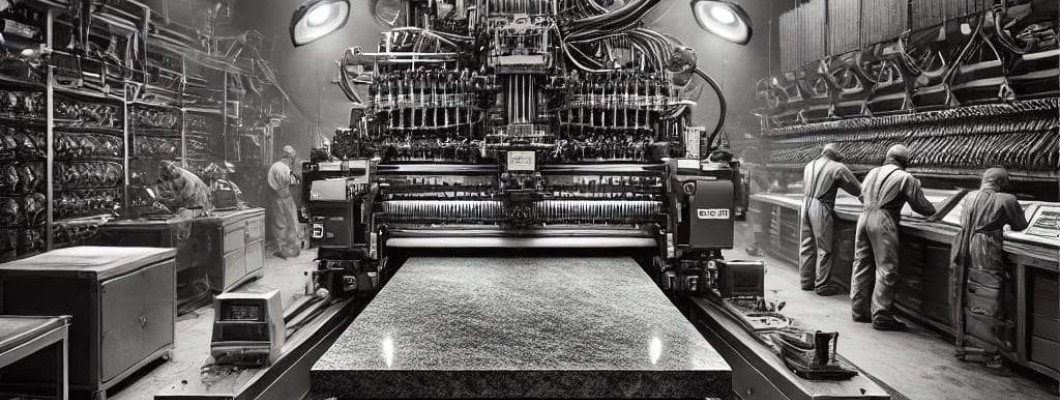
The Industrial Reality of Headstone Photo Printing Operations
In the realm of memorialization, the production of headstone photos demands exceptional consistency and precision. Unlike traditional photo printing, headstone photo printing integrates durability requirements with extreme print fidelity on stone substrates. Operational bottlenecks arise primarily from the unique interaction of printhead mechanics, ink chemistry, and substrate handling challenges. The stone surface’s irregularities and porosity require specialized adaptations in print technology that exacerbate machine wear and throughput limitations.
Consider a mid-sized memorial services provider processing around 200 headstone photo prints monthly. The bottlenecks manifest as frequent printhead clogging due to particulate contamination from stone dust, prolonged ink drying times caused by dense ceramic pigments, and mechanical stress on the platen and feeding system. These factors cumulatively impact machine uptime, maintenance cycles, and ultimately output consistency. Identifying the stages in which these delays occur is critical to optimizing operational flow.
Printhead Dynamics and Clogging Phenomena
Piezoelectric printheads with nozzle diameters in the range of 20-30 micrometers are preferred for stone printing to balance precision and ink viscosity compatibility. However, the abrasive stone dust rapidly accelerates nozzle wear and clogging. The nozzle drying rate (R_d) can be approximated as R_d = A * (C_i * V_i)^0.8 where A is a constant influenced by ambient humidity, C_i the ink pigment concentration, and V_i the droplet velocity. High pigment concentration (typically > 15% wt.) necessary for photo permanence increases R_d, demanding frequent cleaning cycles.
Maintenance data from industrial setups reveal that average printhead clogging events occur every 20 running hours, with cleaning cycles extending downtime by 15 minutes each. A hypothetical increase in operating temperature by 5°C can reduce ink viscosity by 10%, improving droplet ejection but increasing evaporation rates leading to nozzle crusting. Thus, thermal management is a balancing act.
Ink Chemistry and Durability versus Drying Time
Headstone photo inks are composed of ceramic pigments embedded in UV-stable polymer matrices. The drying mechanism relies on absorption and polymer crosslinking rather than sublimation common in standard printing. This leads to drying times upwards of 60 seconds per print area compared to 10 seconds in paper-based printing.
Polymer crosslink density (X_c) correlates with mechanical durability and can be characterized by Fourier-transform infrared spectroscopy (FTIR) but inversely correlates with drying speed (t_d). The relationship t_d ∝ 1/X_c illustrates an engineering trade-off between durability and throughput. Optimizing this parameter is critical in reducing bottlenecks while maintaining longevity of printed images on headstones exposed to weathering.
Substrate Handling and Mechanical Stress Points
Stone slabs vary in thickness from 30 mm to 100 mm, with surface roughness (Ra) often exceeding 10 micrometers. Automated feeding systems must compensate with adaptive gripping and positioning mechanisms capable of handling up to 50 kg slabs without inducing microfractures. Precision positioning errors beyond 0.1 mm cause misalignment of photos leading to reprints.
Material handling bottlenecks occur because of the large mass and variability in slab dimension. Mechanically, the platen must resist bending forces, which can be modeled as deflection (δ) under load F by δ = (F * L^3) / (48 * E * I), where L is platen length, E the modulus of elasticity, and I the moment of inertia. Excessive deflections reduce image resolution fidelity, forcing slower printing speeds.
Comparative Table of Printing Approaches for Headstone Photos
| Specification | Industrial Grade Headstone Photo Printer | DIY or Low-Cost Alternatives |
|---|---|---|
| Printhead Type | Piezoelectric, 30μm nozzle, heated platen integration | Thermal inkjet, 50μm nozzle, ambient platen |
| Ink Type | Ceramic pigment polymer-based, UV and weather resistant | Standard pigment or dye-based, limited UV resistance |
| Substrate Handling | Automated adaptive clamping for 30-100mm stone slabs | Manual placement, limited thickness range (20-40mm) |
| Print Resolution | 1200 dpi native, precision ±0.05 mm | 600 dpi nominal, precision ±0.2 mm |
| Typical Throughput | 80 prints/day with 8h uptime | 20 prints/day with intermittent operation |
| Maintenance Cycle | Scheduled every 20 hours, automated cleaning | Operator dependent, irregular maintenance |
Scenario Analysis with Operational Impact
Memorial Business with High Volume Output
A business serving urban cemeteries requires rapid turnaround. High throughput headstone printers reduce job queue times. Bottleneck analysis shows printhead maintenance scheduling can be optimized by predictive analytics, extending uptime by 15%. This directly correlates with an increase in monthly output capacity from 200 to 230 units.
Artisan Memorial Studios Focused on Custom Detail
Smaller studios prioritize ultra-fine photo detail on varied substrates including granite and marble. Their operational bottleneck is drying time requiring process redesign with UV curing integration to reduce t_d by up to 35%. This allows for higher quality prints without sacrificing workflow efficiency.
Remote Regional Providers with Limited Maintenance Support
Providers located in less industrialized regions face supply chain delays for replacement parts. By understanding bottlenecks linked to printhead lifespan and substrate handling, investment in modular, field-serviceable components can mitigate downtime risks significantly.
Expert FAQ on Headstone Photo Printing Challenges
Q1: How does stone porosity affect print longevity?
A1: Porosity impacts ink absorption depth; excessive absorption reduces surface pigment density, diminishing image contrast. Controlled surface sealing mitigates this effect.
Q2: What are the main failure modes of piezoelectric printheads under stone dust exposure?
A2: Printhead nozzle erosion and clogging due to abrasive particles, compounded by ink polymer crystallization causing partial blockages.
Q3: Can ambient humidity control improve print consistency?
A3: Yes, maintaining 40-50% relative humidity stabilizes nozzle drying rates and polymer curing kinetics, reducing maintenance frequency.
Q4: How critical is platen flatness for image resolution?
A4: Deviations over 0.1 mm generate image distortion; mechanically reinforced platens with less than 0.03 mm deflection are preferred.
Q5: Is it feasible to implement inline UV curing in stone photo printing?
A5: While challenging due to stone's thermal properties, strategically placed UV LEDs can accelerate polymer crosslinking, reducing drying time by up to 30% without substrate damage.
Strategic Verdict on Headstone Photo Printer Operational Bottlenecks
The operational complexities of headstone photo printing are deeply rooted in the interplay between printer hardware endurance, ink chemistry, and challenging substrate mechanics. Addressing bottlenecks requires an integrated approach: advancing printhead materials resistant to abrasive dust, developing inks with optimized polymerization kinetics, and engineering robust substrate handling mechanisms. While throughput improvements are attainable through predictive maintenance and environmental control, fundamental material science innovations will dictate next-generation throughput ceilings. Investments in modularity and enhanced diagnostics will be essential for remote or mid-sized businesses to maintain uptime. Overall, the trajectory of headstone photo printing technology points towards increasingly automated, resilient, and chemically optimized systems tailored to the stringent demands of memorial applications.