Analyzing Operational Bottlenecks in A3 Spot UV Printing Machines for Scalable Businesses
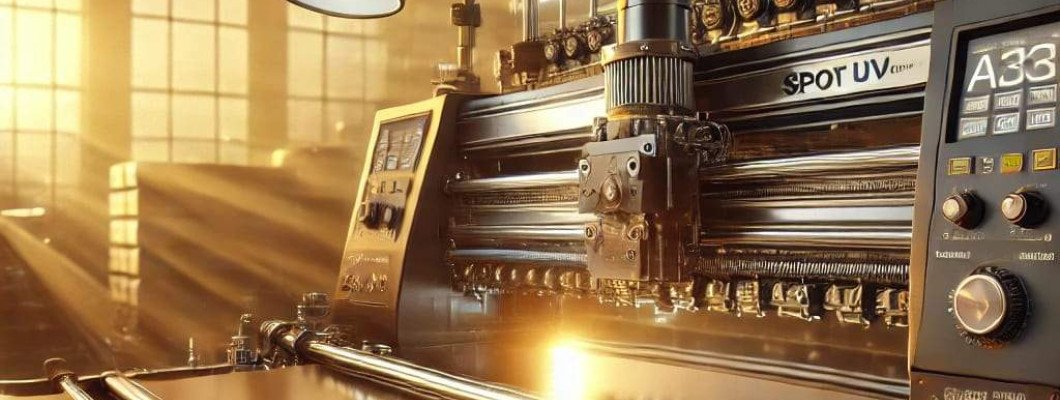
The Industrial Reality of Scaling A3 Spot UV Printing in Business Environments
In scalable printing enterprises, the integration of A3 Spot UV Printing Machines presents a specific challenge: operational bottlenecks that emerge despite the apparent gain in process automation and throughput. Unlike generic flatbed or standard UV printers, spot UV technology—particularly at the A3 scale—requires exacting synchronization between substrate handling, UV coating application, and curing phases. This sensitivity to process timing and material variability causes throughput constraints often unnoticed in preliminary evaluations.
Consider a medium-volume print shop transitioning from traditional coating techniques to an A3 Spot UV Printing Machine designed for decorative finishes on greeting cards, packaging samples, and promotional materials. The bottleneck does not solely reside in the print speed, nominally advertised at 5–10 A3 sheets per minute. Instead, it manifests in substrate feeding reliability under diverse paper thicknesses (ranging from 150 gsm to 350 gsm) and the curing lamp's uniformity across the print area. The UV coating must polymerize within milliseconds post-application to avoid smudging or surface defects; any lag or inconsistency escalates defect rates and necessitates slower machine operation or manual intervention.
Moreover, the machine's automation systems—such as servo-controlled transport belts and optical registration sensors—introduce potential system-level conflicts. Variations in motor torque under load shifts or sensor misalignment can cause micro-delays detectable only with high-resolution timing instrumentation. Such delays accumulate, lowering net throughput, increasing labor hours devoted to quality control, and eroding profit margins.
Operational data from field deployments indicate that the effective output efficiency rarely exceeds 75% of maximum rated capacity due to these hidden technical and mechanical bottlenecks. This gap underscores the importance of critically assessing machine integration into existing workflows rather than relying on manufacturer throughput claims alone.
Technical Deep Dive into A3 Spot UV Printing Bottlenecks and Hardware Considerations
1. Substrate Handling and Mechanical Stress Points
Managing substrates within the 297 mm x 420 mm A3 print area imposes mechanical precision constraints. The system’s feed rollers must maintain consistent pressure (between 0.5 to 1.2 N/mm) to avoid substrate deformation or misregistration. Excessive force increases paper micro-creasing risk, especially at higher grammages. The servo motor's micro-stepping resolution (typically 0.018 degrees per step) governs sheet positioning accuracy, allowing a theoretical ±0.1 mm repeatability. However, any cumulative backlash in gear trains can reduce precision, causing print misalignment. This is critical when spot UV coating requires micron-level registration to achieve the desired visual effect.
2. UV Coating Deposition Dynamics and Ink Rheology
The spot UV coating is deposited via specialized print heads or flood coaters with a droplet volume range of 20–80 picoliters (pl), depending on the desired gloss and thickness. The coating fluid exhibits non-Newtonian shear-thinning properties, with a viscosity range from 500 to 1200 mPas at 25°C. Stable droplet formation necessitates precise temperature control within ±1°C to maintain viscosity consistency. Variations can cause uneven film thickness, impacting gloss uniformity and curing stability. Given the curing lamp intensity of 3000 mW/cm² at a 15 mm focal distance, the film must remain within the cure window of 200–400 milliseconds exposure. Mathematical modeling predicts optimal curing energy (E) using E = I × t, where I is intensity and t is exposure time, to avoid under- or over-curing, both detrimental to finish quality.
3. UV Lamp Thermal Management and Power Consumption
UV curing lamps, commonly medium-pressure mercury vapor lamps or LED arrays, produce significant heat output—up to 450 W per lamp during operation. Effective thermal dissipation is mandatory to stabilize lamp output and prolong lifespan (typically 1000–2000 hours). The integration of forced-air heat sinks and thermoelectric coolers can reduce operating temperatures by 30–40°C, sustaining output uniformity within ±5% intensity variation. Power consumption profiles show peaks at startup, with steady-state running averaging 350 W. Thermal sensors placed within 5 mm proximity of the lamp housing provide real-time feedback, enabling dynamic power adjustments. Failure in thermal regulation can result in UV intensity drift, compromising cure depth and adhesion.
4. Control System Latency and Synchronization Challenges
High-precision synchronization between substrate feed, UV coating application, and curing process requires real-time control algorithms with cycle times below 10 ms. Latency from sensor input to actuator response must be minimized to prevent positional offsets. Programmable logic controllers (PLCs) with 32-bit ARM Cortex-M processors running at 120 MHz are typically employed. The control firmware incorporates PID loops for servo positioning and lamp power modulation. Empirical latency tests indicate end-to-end control loop delays averaging 8.5 ms, sufficient for near-perfect timing coordination. Still, integration with factory automation middleware introduces additional communication overhead, potentially disrupting timing sequences if not rigorously managed.
5. Comparison Table for Typical Components Impacting Operational Bottlenecks
| Component | Standard Specification | Enhanced Specification | Impact on Bottlenecks |
|---|---|---|---|
| Servo Motor Resolution | 0.018°/step | 0.005°/step | Improves sheet positioning ±0.1 mm to ±0.03 mm, reducing misregistration |
| UV Lamp Type | Medium-pressure Hg Vapor, 3000 mW/cm² | High-power LED Array, 3500 mW/cm² | Improves cure stability, lowers heat output, reduces thermal drift |
| Coating Fluid Viscosity | 500–1200 mPas @ 25°C | 400–800 mPas with temperature control | Enhances droplet uniformity, reduces clogging, stabilizes thickness |
| Control Loop Latency | 8.5 ms | <5 ms with FPGA integration | Better synchronization, minimizes delays causing defects |
Scenario Analysis of A3 Spot UV Printer Usage in Varied Business Models
Scenario 1: High-Volume Promotional Packaging Manufacturer
In this environment, the throughput bottleneck is paramount, as production lines demand uninterrupted print runs exceeding 10,000 units daily. The operational bottlenecks identified significantly affect overall cycle times. Using the printer’s base configuration, effective throughput drops to 7,500 units due to substrate feed and UV curing inconsistencies. Upgrading the control latency and utilizing enhanced servo motors can reclaim 15% throughput, easing labor costs and reducing overtime.
Scenario 2: Boutique High-End Artisan Print Shop
Here, microscopic registration precision and coating depth consistency are prioritized over raw speed. Bottlenecks related to coating rheology and thermal management dominate. Implementing advanced temperature control and lower-viscosity coatings improves gloss uniformity and reduces defect rates from 3% to sub-1%, directly impacting customer satisfaction and reducing reprint costs.
Scenario 3: Mid-Sized Enterprise Expanding Product Range
This scenario emphasizes workflow integration challenges. The printer must handle various substrates with rapid job changeovers. Latency in the control system and mechanical feed adjustments cause bottlenecks that manifest as increased operator intervention, averaging 6 minutes per job switch. Automation enhancements and tighter synchronization mechanisms reduce downtime by 40%, improving batch turnaround times.
Expert FAQ on Operational Bottlenecks in A3 Spot UV Printing Machines
Q1: How does substrate thickness variability affect feed system precision?
Variances in substrate thickness alter feed roller pressure distribution, causing slip or skew if not compensated by adaptive servo control. Without closed-loop feedback mechanisms, repeatability degrades by ±0.3 mm.Q2: What methods exist to stabilize UV coating rheology during prolonged runs?
Employing inline temperature regulators and ultrasonic mixing prevents fluid settling and viscosity spikes, maintaining coating homogeneity and minimizing nozzle clogging.Q3: Can upgrading from mercury vapor to LED UV lamps materially reduce bottlenecks?
Yes, LED UV lamps provide instantaneous on/off switching and reduced heat generation, enabling faster curing cycles and lowering thermal drift-induced defects.Q4: What are the implications of control system latency on print quality?
Higher latency causes timing misalignments between substrate position and UV application, resulting in halo effects or incomplete cure zones, degrading visual and tactile finish quality.Q5: How do maintenance protocols influence operational bottlenecks?
Regular calibration of servo motors, cleaning optical sensors, and preventive lamp replacement reduce unplanned downtime and maintain nominal throughput levels.
Strategic Verdict on A3 Spot UV Printing Machine Integration in Scaling Enterprises
Assessing the operational bottlenecks inherent in A3 Spot UV Printing Machines reveals a complex interplay between mechanical precision, material science, and real-time control systems. Enterprises considering scale-up must prioritize technical due diligence beyond headline throughput speeds, focusing on substrate handling fidelity, UV curing consistency, and control latency minimization. Investments in enhanced servo components, thermal management, and advanced control architectures can markedly improve effective output and quality consistency. The trajectory of this technology suggests a gradual shift towards more intelligent automation layers and LED-based curing systems that reduce thermal constraints while enhancing synchronization precision. For scalable business owners, these factors define not only capacity ceilings but also cost and labor optimization potentials within competitive printing operations.