Analyzing Hidden Operational Bottlenecks in PrintPods Handheld Printers for Absorbent Surfaces
The Industrial Reality of Handheld Printing on Absorbent Materials
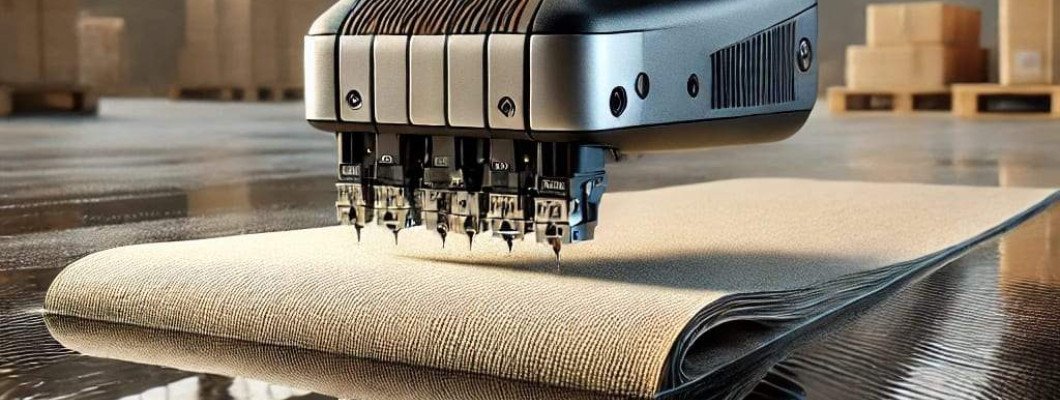
Handheld printers like PrintPods are engineered to directly mark absorbent surfaces, targeting industries ranging from textiles and packaging to warehousing and logistics. Despite the apparent simplicity of handheld printing, real-world deployments reveal a complex interplay of hardware limitations, substrate variability, and operational demands. Consider a logistics warehouse scanning and printing labels at pace. The operator must balance speed with print clarity and ink drying times, while the device contends with uneven absorbent surfaces such as cardboard or fabric blends that cause inconsistent ink absorption and smudging risks. Environmental fluctuations, such as humidity and temperature, further compound operational bottlenecks, often going unnoticed until print quality declines or device maintenance frequency spikes. These challenges translate into downtime, rework, and increased operational costs, yet are frequently underappreciated in initial technology assessments.
Moreover, the handheld nature introduces ergonomic factors that affect operator fatigue and precision, indirectly influencing throughput and quality. Unlike fixed industrial printers, PrintPods units must maintain reliable printhead alignment and droplet placement accuracy despite inevitable hand tremors and varying application angles. This introduces hidden performance degradation vectors, where print defect rates increase non-linearly with extended continuous usage. Such operational characteristics demand rigorous technical understanding beyond superficial specifications, especially when integrating the printer into high-velocity workflows where even minor pauses cascade into significant productivity losses.
Finally, the ink chemistry tailored for absorbent media faces its own trade-offs. Quick absorption is necessary to prevent smudging, yet this often leads to reduced pigment density and diminished print durability. Consequently, ink replenishment cycles become a hidden cost center, with early depletion or clogged nozzles reducing effective uptime. These seemingly minor issues aggregate into critical bottlenecks that impact total cost of ownership and operational efficiency, aspects rarely highlighted in vendor datasheets but essential for enterprise-grade reliability.
Technical Deep-Dive into PrintPods Operational Constraints
Printhead Design and Ink-Droplet Physics
PrintPods handheld printers typically utilize piezoelectric or thermal inkjet printheads optimized for low-viscosity ink formulations compatible with porous substrates. The printhead nozzle diameter ranges approximately 20-30 micrometers, enabling droplet volumes of 10 to 15 picoliters (pl). At this scale, droplet formation frequency is constrained by the piezo actuator response time, generally capped near 8-12 kHz for handheld devices to conserve power and limit heat dissipation. This inherent limitation affects the maximum achievable dots per inch (dpi), generally peaking around 300 dpi for absorbent surfaces without excessive motion blur.
Ink Absorption Dynamics on Porous Substrates
Absorbent substrates exhibit complex capillary action governed by substrate porosity, surface energy, and fiber orientation. The Darcy’s law approximation for ink penetration velocity (v) through porous media applies:
v = (k / μ) * (ΔP / L)
where k is the permeability coefficient (m^2), μ is ink viscosity (Pa·s), ΔP pressure differential (Pa), and L the penetration depth (m). Typical permeability values for cardboard and nonwoven fabrics range 10^-12 to 10^-10 m^2, with ink viscosities near 2-5 mPa·s. This results in rapid ink absorption but also significant lateral spreading, causing print dot gain and resolution loss.
Motion Control and Operator Variability
Unlike stationary printers, handheld devices must compensate for operator-induced velocity fluctuations and angular deviations. Considering handheld printing speed typically varies between 30-60 mm/s, and the device sampling frequency is about 100 Hz, spatial sampling intervals fluctuate between 0.3 mm to 0.6 mm. This introduces alignment challenges when maintaining high-resolution print quality. Gyroscope and accelerometer fusion algorithms partially mitigate this, but their real-time correction bandwidth is limited, leading to occasional artifacts such as banding and misregistration.
Thermal Management and Power Consumption
Continuous handheld operation generates heat, especially in piezo printheads and control electronics. Typical power consumption ranges 5-10 Watts during active printing, causing device surface temperatures to reach 40-50°C under prolonged use. Thermal expansion affects nozzle geometry and ink viscosity, altering droplet size and jetting velocity. Passive heat dissipation through device casing is limited by size constraints, necessitating operational duty cycles or intermittent pauses to prevent hardware degradation.
Maintenance Implications and Consumable Lifecycle
Ink cartridges for PrintPods devices have volumes around 10-20 ml, translating to approximately 50,000 to 100,000 droplets depending on drop volume and print density. However, nozzle clogging due to ink drying or particulate contamination is common, especially with absorbent substrates that shed fibers. Cleaning cycles typically require manual initiation and incur downtime averaging 5-10 minutes per event. Considering a high-throughput environment with 8 hours of continuous operation, up to 3-4 such maintenance cycles per shift increase effective OEE (Overall Equipment Effectiveness) losses substantially.
| Parameter | PrintPods Handheld | Fixed Industrial Printer |
|---|---|---|
| Maximum dpi | 300 | 600-1200 |
| Ink Drop Volume (pl) | 10-15 | 6-10 |
| Print Speed (mm/s) | 30-60 | 100-200 |
| Maintenance Frequency | Every 2-3 hours | Every 8-12 hours |
| Thermal Dissipation | Passive, 40-50°C max | Active cooling, 25-35°C |
Scenario Analysis of PrintPods Deployment
Warehouse Labeling Under Time Pressure
In a distribution center printing batch labels on corrugated cardboard, PrintPods delivers flexible on-demand marking without expensive fixtures. However, bottlenecks arise due to operator speed variations and ink drying, causing frequent smudges and reprints that delay shipment deadlines. The moderate dpi suffices for barcodes but limits complex graphics, while maintenance cycles require scheduling breaks that reduce net throughput.
Textile Sample Marking in Quality Control
During garment production, PrintPods handheld printers rapidly mark absorbent textile swatches with color codes and batch info. The handheld format offers mobility across production lines, but ink absorption inconsistency on different fabric weaves reduces print contrast. Operators must balance speed with accuracy, with downtime for printhead cleaning impacting Q/C throughput during peak periods.
Construction Site Material Tagging
On-site printing of absorbent wooden planks and insulation materials benefits from portability. Rough substrate surfaces challenge droplet adhesion uniformity, and environmental dust causes faster nozzle degradation. Operational pauses for maintenance exacerbate delays in fast-paced environments, emphasizing the need for robust preventive schedules and operator training to minimize bottlenecks.
Expert FAQ on Operational Bottlenecks and Technical Constraints
What causes the primary print quality degradation during prolonged handheld use?
Print quality declines primarily due to cumulative nozzle clogging from ink drying and particulate contaminations, coupled with operator-induced misalignment and variable motion speeds that exceed real-time compensation capabilities.
How does substrate variability impact inkjet print consistency in handheld devices?
Variations in substrate porosity and surface roughness alter ink absorption rates and lateral spreading, leading to inconsistent dot gain and reduced effective dpi, which handheld devices must partially offset via controlled ink formulations and motion compensation.
Can thermal buildup in handheld printers be fully mitigated without active cooling?
While design optimizations and duty cycling reduce thermal buildup, absence of active cooling limits continuous operation periods due to heat-related viscosity changes and printhead wear, necessitating operational pauses.
What are the trade-offs in ink chemistry for absorbent substrates?
Faster absorbing inks reduce smudging but lower pigment concentration, affecting print contrast and durability. Slower absorbing inks improve image quality but increase drying times and clogging risk.
How significant is operator training in minimizing bottlenecks?
Operator training is critical for maintaining consistent speed, angle, and handling during printing, directly influencing print quality, reducing maintenance frequency, and optimizing throughput.
Strategic Verdict on PrintPods Handheld Printers within Operational Contexts
PrintPods handheld printers represent a viable solution for flexible on-the-go marking on absorbent substrates but manifest clear operational bottlenecks when scaled to intensive industrial use. The limitations in print resolution, ink absorption variability, and thermal management necessitate carefully balanced maintenance regimes and skilled operators to sustain performance. Without mitigations, hidden costs from rework, downtime, and consumable consumption undermine total cost of ownership. Future product iterations should prioritize enhanced printhead materials resistant to clogging, refined firmware algorithms for motion error compensation, and integrated thermal regulation systems tailored for handheld formats. Until such advancements materialize, PrintPods devices are best suited for moderate throughput environments requiring mobility over absolute precision or speed. A technically rigorous appraisal exposes these operational constraints, enabling businesses to make informed decisions aligned to their unique workflow demands and cost structures.