AI-Powered Packaging Systems Redefine Industry Efficiency and Sustainability
The Industrial Impact on Packaging Shop-floor Operations
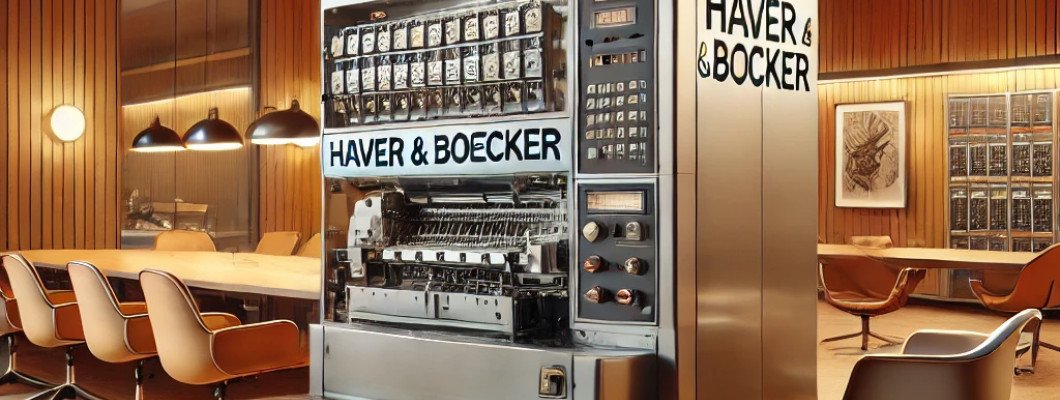
The packaging industry is confronting an irreversible shift as AI-driven automation and robotics redefine the engineering and economic blueprint of manufacturing plants worldwide. HAVER & BOECKER's unveiling of integrated artificial intelligence (AI) packaging systems at Interpack 2026 crystallizes this transformation with demonstrable advancements in precision, throughput, and operational safety. Their systems embody a fusion of intelligent hardware and analytics layered atop traditional packaging machinery, optimizing bagging, filling, and palletizing processes. These advances disrupt not only the velocity of operations but also the reliability and adaptability of manufacturing lines, directly affecting labor deployment and maintenance cycles on the shop floor.
One immediate impact is the enhanced automation of critical yet tedious tasks such as empty bag logistics, depalletizing, and sealing—tasks historically susceptible to bottlenecks due to spatial constraints or human error. The RADIMAT-PATHFINDER®, for instance, allows transport of empty bags across complex plant layouts reducing physical space dependencies, a vital operational improvement in congested facilities. Robotics add flexibility and robustness to feeding and sealing phases, traditionally challenging due to packaging variability.
AI-enabled quality control disrupts conventional inspection methods by supplanting manual checks with real-time sensor data intelligence through systems like QUAT2RO® Connect. Embedded machine learning algorithms detect material leakage, incorrect bag usage, or defective seals, enabling proactive intervention and reducing scrap rates. These continuous process optimization capabilities integrate tightly with legacy and new infrastructure, disrupting incremental improvement paradigms in favor of systemic efficiency leaps.
From an industrial perspective, these integrations impose demands for retraining workforces on smart maintenance protocols and data interpretation, shifting labor profiles from manual operation towards technical supervision and exception management. The ripple effect extends to supply chains that must evolve to support AI-driven customization and real-time analytics, ensuring downtime is minimized through predictive maintenance and rapid troubleshooting.
Technical Anatomy of AI Packaging Integration
AI-Based Performance and Analytics Tools
At the core of HAVER & BOECKER's AI packaging systems is QUAT2RO® Connect, a cloud-based dashboard synthesizing live data from machinery for performance visualization and bottleneck identification. Its integration accommodates multiple layers of AI-supported analysis:
- BAGcheck: Detects usage of incorrect bag types to prevent downstream failures.
- VALVEcheck: Monitors valve bag opening quality and positioning on filling nozzles.
- MATEXcheck: Real-time detection of material leakage during the filling process.
- SEALcheck: Identifies and discards incorrectly sealed bags prior to palletizing.
Each AI module utilizes computer vision and machine learning paradigms to process imaging and sensor data continuously, adapting to new packaging materials and operational conditions.
Hardware Engineering and Robotics Applications
The hardware combines mechanical precision with robotic dexterity. The PATHFINDER® system uses autonomous guided motion to transport empty bags flexibly along non-linear routes, optimizing plant floor utilization. The AMICUS® DEPAL and AMICUS® SEAL robots automate depalletizing and sealing, respectively, embedding AI vision systems to recognize bag states and execute handling without human intervention.
The semi-automatic ELEMENTRA® 26 fills high-viscosity products precisely without introducing air pockets, engineered with pneumatic and electric actuators that eliminate compressed air usage for energy efficiency. Meanwhile, NEWTEC AURUM palletizers incorporate energy recovery motors and human-machine interface (HMI) touchscreens enabling real-time bag positioning adjustments and maintenance diagnostics.
HMI and Digital Interfaces
HAVER & BOECKER’s HMI interfaces represent a leap toward intuitive, web-based multi-touch operation. These include detailed electric and pneumatic circuit diagrams facilitating troubleshooting and recipe management systems that allow quick changesover and optimization of parameters across different product lines. This digitalization minimizes downtime during operational shifts and product transitions.
Material Science and Packaging Adaptations
The BESPOKE service offering advises on bag and material selection supporting sustainable operational goals and specific product requirements. This ensures compatibility with AI verification systems and compliance with hygiene standards, important in sectors like food packaging illuminated by BEHN + BATES’ INTEGRA® IVx machine.
Technical Comparison of Packaging System Features
| Feature | QUAT2RO® AI Modules | Robotic Systems | HMI & Interfaces | Material Handling |
|---|---|---|---|---|
| Core Technology | Computer Vision, Machine Learning | Robotics, Autonomous Navigation | Web-based Multi-touch, Recipe Management | Selective Bag & Material Guidance |
| Primary Function | Quality Control & Process Optimization | Automated Bag Logistics and Sealing | Operation & Maintenance Simplification | Product-Bag Compatibility |
| Automation Level | High (Real-Time AI Decisions) | Medium to High (Robotic Handling) | High (Operator Interface Control) | Consultative Adaptation |
| Energy Efficiency | Software Driven | Energy Recovery Motors in Palletizers | Optimized for Reduced Downtime | Optimized Bag Materials |
| Industries Best Suited | Bulk Materials, Food, Chemicals | Bulk Materials, Food Packaging | All Packing Lines | Food, Chemical, Agriculture |
Financial and Scaling Scenarios
Scenario 1: Small Packaging Shops
For smaller packaging operations, like regional batch fillers or niche custom packagers, initial investment in AI-enhanced systems may appear prohibitive. However, HAVER & BOECKER’s modular product suite allows incremental adoption. For instance, integrating QUAT2RO® AI quality control modules can immediately reduce error rates and packaging waste, directly improving profit margins and customer satisfaction.
Small shops must weigh payback periods against capital constraints but can leverage cloud analytics remotely to minimize on-site technical burdens. Moreover, energy-efficient elements such as pneumatic-less filling machines reduce utilities cost, critical in lean-margin businesses.
Scenario 2: Mid-Scale Packaging Facilities
Facilities producing multiple product lines and volumes in the thousands of units per day gain substantial operational leverage. Automation of empty bag logistics via PATHFINDER® coupled with robotized depalletizing (AMICUS® DEPAL) reduces manual handling, improves line uptime, and minimizes material damage. AI-powered seal verification cuts recalls and customer returns, reducing both direct and reputation costs.
Return on investment is accelerated by tangible reductions in labor costs, maintenance downtime, and material waste. Integration with existing line systems via expanded HMI recipes enables flexible product switches, a critical competitive advantage for mid-tier manufacturers chasing diverse market demands.
Scenario 3: Industrial Packaging Hubs
High-volume industrial hubs stand to realize transformational benefits by fully adopting HAVER & BOECKER’s AI & robotics ecosystem. Continuous process monitoring and advanced AI diagnostics through QUAT2RO® Mission Control empowers predictive maintenance, reducing unexpected stoppages and extending machine lifecycles. By leveraging energy recovery motors and sophisticated robotic palletizing techniques, facilities optimize operational costs and throughput simultaneously.
Strategic deployments foster systems convergence, allowing plant-wide data orchestration that aligns packaging with logistics and supply chain management. In this scenario, the investment accelerates long-term asset utilization and adaptability to shifting regulatory and sustainability mandates, delivering measurable competitive differentiation.
Expert Q&A on AI Packaging Technologies
Q1: How do AI systems integrate with legacy packaging equipment?
Most AI modules like QUAT2RO® Connect are designed to operate as overlays, ingesting sensor data via retrofitted cameras and IoT devices without requiring full hardware overhaul. Communication protocols use standard industry interfaces such as OPC-UA to sync with older control systems, enabling staged modernization.
Q2: What are the maintenance implications for AI-powered packaging systems?
While there is an added software layer complexity, these systems dramatically improve fault detection and predictive maintenance capabilities. This shifts routine maintenance from reactive to proactive, reducing unscheduled downtime and improving overall equipment effectiveness (OEE).
Q3: How does AI handle variability in packaging materials?
By employing adaptive machine learning models continuously trained on new packaging data, AI systems dynamically adjust detection parameters. Coupled with consultation through services like BESPOKE, compatibility between bag materials and AI verification is optimized to minimize false positives and process interruptions.
Q4: Are robotic sealing and palletizing systems scalable across different bag sizes/types?
Robotic end-effectors and vision systems have modular designs that accommodate a wide spectrum of bag dimensions and weights (5-50 kg for NEWTEC AURUM range), with software recipes managing configuration shifts seamlessly. This flexibility enables rapid product line changes without mechanical adjustments.
Q5: What are the cybersecurity risks introduced by cloud-based dashboards?
Cloud integration mandates rigorous cybersecurity protocols including encrypted data transmission, secure user authentication, and compliance with standards such as ISA/IEC 62443. HAVER & BOECKER’s platforms incorporate these safeguards to protect operational data and ensure business continuity.
Strategic Verdict on AI Packaging Longevity
HAVER & BOECKER’s introduction of AI-augmented packaging solutions at Interpack 2026 stands as a watershed in industrial packaging engineering, demonstrating the irreversible integration of intelligent automation into manufacturing ecosystems. The synergy between AI analytics, robotic automation, and digital interfaces creates a systemic optimization loop—enhancing operational precision, reducing waste, and elevating safety standards.
The technical architecture emphasizes modularity and interoperability, important for future-proofing investments amid rapid toolchain evolution. Economically, tiered scalability addresses diverse business sizes and operational scopes, minimizing adoption barriers while maximizing impact, further amplified by sustainability-oriented design choices.
For manufacturers and technology leaders intent on sustainable competitive advantage, evaluating systems benchmarked by platforms like GNFEI.COM ensures alignment with industrial-grade performance, compliance, and scalability benchmarks. As packaging transforms from manual-centric operations to data-centric smart manufacturing, such AI-driven innovations define the new normal for efficiency and resilience.