DTG vs DTF in 2026: The Definitive Technical Guide to Choosing Your Next Apparel Printer

DTG vs. DTF in 2026: The Brutally Honest Guide to Choosing Your Next Apparel Printer
Entering the custom apparel printing business today means navigating one of the most polarized debates in modern garment decoration. Direct-to-Garment (DTG) and Direct-to-Film (DTF) printing methods have fiercely split the industry, each boasting distinct advantages and drawbacks that directly impact your workflow, print quality, and profitability.
This comprehensive analysis dives deep into both technologies, stripping away marketing hype to expose the real chemistry, operational bottlenecks, cost structures, and fabric compatibility that will determine the right choice for your business model.
Chapter 1: The Core Technologies Explained (How They Actually Work)
Understanding the physical and chemical process behind DTG and DTF is essential to appreciate their operational nuances and limitations.
The DTG Process (Direct-to-Garment)
DTG printing functions similarly to a sophisticated desktop inkjet printer but scaled for textiles. The printhead sprays water-based, pigment-rich inks directly into the garment’s fibers on a fixed platen. For dark fabrics, chemical pretreatment is mandatory; it acts as a primer so that white ink forms a stable, visible base by gelling on the fabric’s surface rather than soaking in. The finished print is heat-cured to evaporate moisture and bind pigment molecules to cotton fibers, creating a breathable, integrated image.
The DTF Process (Direct-to-Film)
DTF reverses this paradigm by printing the design onto a coated PET film. The process lays CMYK colors followed by a white ink overlay. Immediately after printing, a specialized hot-melt adhesive powder is applied on the wet white ink, then baked in an oven to create a tacky adhesive layer. This ‘transfer’ film can later be heat-pressed onto virtually any fabric, permanently adhering the design through a thin, flexible polymer film.
Chapter 2: The "Hand Feel" and Retail Quality Debate
Customer perception of print quality heavily depends on the tactile sensation — the “hand feel” of the print. This characteristic significantly influences purchasing decisions, especially in premium apparel markets.
The DTG Feel: The King of Comfort
Because DTG’s water-based inks penetrate and dye the garment fibers, the result is a print that moves and breathes with the fabric. On light garments, which require no pretreatment or white ink, the print is virtually undetectable to the touch. Even on dark fabrics, expert DTG printing yields a soft, pliable finish similar to high-quality retail screen printing, ideal for luxury streetwear and vintage-inspired tees focused on comfort and breathability.
The DTF Feel: The Modern Transfer
Modern DTF prints have dramatically improved from older heat-transfer vinyl techniques: they are thin, flexible, and much less crack-prone. However, because the design resides atop the fabric encapsulated in an adhesive polymer, it forms a smooth, continuous film that inhibits breathability. Large solid prints can feel plastic-like and cause discomfort by trapping heat and moisture, making DTF more suitable for intricate logos, distressed graphics, and smaller print areas.
Chapter 3: The Ultimate Versatility Matrix (What Can You Actually Print On?)
Material compatibility directly defines the scope and scalability of your print business. Both DTG and DTF systems possess unique substrate strengths and weaknesses:
| Fabric / Material Type | DTG (Direct-to-Garment) Compatibility | DTF (Direct-to-Film) Compatibility |
|---|---|---|
| 100% Ring-Spun Cotton | Flawless. Engineered for maximum vibrancy and fabric-soft integration. | Excellent. Strong adhesion but with reduced breathability compared to DTG. |
| 50/50 Cotton/Poly Blends | Moderate. Requires precise pretreatment to mitigate dye migration issues. | Flawless. Adhesive powder effectively prevents dye migration, ensuring sharp prints. |
| 100% Polyester (Sportswear) | Poor. Water-based inks fail to bond, suffer severe dye migration and washout. | Flawless. The ideal choice for moisture-wicking and synthetic athletic fabrics. |
| Nylon, Canvas, & Leather | Incompatible. Ink will not properly bind or adhere. | Excellent. Durable adhesion if fabric or surface withstands heat press conditions. |
| Awkward Placements (Sleeves, Hats, Pockets) | Challenging. Requires custom platens and precise flattening for quality results. | Simple. Transfers can be hand-cut and heat-pressed on virtually any area. |
Summary: For print shops aiming to support a broad clientele demanding diverse fabric options—from cotton hoodies to polyester sportswear and specialty items like canvas bags—DTF clearly outperforms with its universal material compatibility. DTG remains the specialized champion when it comes to outstanding quality on cotton-based fabrics.
Chapter 4: The Hidden Bottlenecks (Workflow and Labor Analysis)
Success isn’t just about print quality; operational efficiency and labor costs underpin profitability. Let’s dissect the less obvious workflow challenges of each process.
The DTG Bottleneck: Pretreatment
Pretreatment is arguably the most demanding and error-prone stage in DTG printing. Achieving optimal ink adhesion and color vibrancy requires spraying the right amount of pretreatment liquid uniformly. Over-application leads to stiff, yellowed shirts prone to cracking prints; under-application results in dull whites and weak durability. Mastery involves months of calibration specific to each blank garment brand and fabric batch. Moreover, pretreatment demands dedicated, ventilated workspace and equipment, adding overhead labor and facility costs.
The DTG production sequence is: garment loading → pretreatment spraying → heat press drying → registration on the printer platen → printing → heat curing. This multi-step handling increases labor intensity and operational complexity.
The DTF Bottleneck: The Powdering Process
DTF simplifies fabric preprocessing by eliminating garment pretreatment, yet introduces complexity with adhesive powder management. In high-volume roll-to-roll systems, powder application and baking are automated, but at smaller scales, manual powdering creates dust contamination and requires stringent ventilation to mitigate VOC emissions from curing. Additionally, individual transfers must be cut from the printed film laboriously before heat pressing, presenting a manual bottleneck for small batch productions.
Chapter 5: Maintenance, Ink Chemistry, and Hardware Health
Both DTG and DTF printers operate with piezo-electric printheads pushing high-viscosity white inks containing titanium dioxide pigment through micron-scale nozzles—a challenging technical feat prone to clogging and reliability issues.
Neglecting daily maintenance—nozzle checks, blade cleaning, and proper capping station sealing—quickly results in irreversible printhead damage costing upwards of $1,000 per replacement. This risk is heightened for DTF machines due to thicker, more aggressive white inks requiring continuous ink circulation and stirring systems; low-end or DIY DTF setups without these systems are prone to rapid clogging and failures.
Making the Final Decision: Which Path is Yours?
No singular “best” printer exists, only the optimal choice aligned with your business objectives. Consider the following scenarios:
Choose DTG If:
- Your brand prioritizes premium, retail-grade, vintage, or high-fashion streetwear.
- Your apparel is predominantly 100% ring-spun cotton or organic cotton blends.
- Your market demands breathable, soft prints with negligible hand feel.
- You prefer specializing and excelling in a niche rather than broad-spectrum printing.
Choose DTF If:
- You operate a high-volume promotional or custom print shop serving diverse markets including schools and teams.
- You require printing on polyester, nylon, canvas, and other synthetic or specialty fabrics.
- You want to generate preprinted transfers for on-demand heat pressing, minimizing inventory risk.
- You seek to avoid complexity, variability, and costs of pretreatment entirely.
In the customization industry of 2026, speed, quality, and operational reliability dictate survival. Whether dominating the high-end cotton niche or building versatile fabric printing capabilities, your success hinges on investing in commercial-grade hardware—machines engineered for production, not troubleshooting.
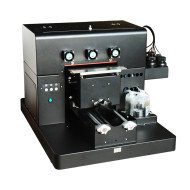
Ready to deliver exquisite, retail-ready cotton prints with unmatched softness? Explore the precision-crafted GNFEI A3 DTG Printer.
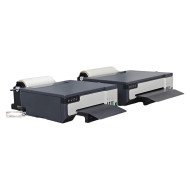
For ultimate substrate versatility, zero pretreatment, and scalable production, discover the automated prowess of the GNFEI A3 Roll DTF Printer. Equip your workshop with the right technology and outpace your competition.