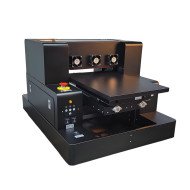
Analyzing Operational Bottlenecks in Economical A4 Multifunction LED UV Printers for Scalable Businesses
The Industrial Reality
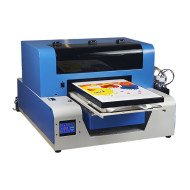
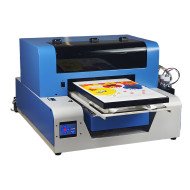
Within high-throughput production environments, the integration of an Economical A4 Multifunction LED UV Printer into scalable workflows reveals complex operational bottlenecks that impact overall productivity. Unlike industrial-grade wide-format UV printers designed explicitly for mass output, these compact units must balance versatility and affordability, frequently leading to unintended throughput constraints under heavy operational loads.
Consider a mid-sized print shop aiming to scale from prototype runs to moderate batch production. While the A4 form factor facilitates handling smaller prints and diverse substrates, onboard multifunction features—such as scanning and copying—introduce additional power and processing demands that can throttle the printer’s ink curing and printhead firing rates. Limited LED UV lamp intensity and print engine design optimized for economical use typically yield slower cycle times per sheet compared to industrial counterparts.
Moreover, the printer's thermal management system, calibrated for low energy consumption, may induce frequent cool-down intervals to prevent component overheating, adding latent delays when run continuously. This effect is magnified in multi-shift operations where uptime continuity directly correlates with labor efficiency and order fulfillment speed.
The compact printer’s firmware architecture, presumably optimized for ease of use rather than seamless batch workflow automation, can further introduce human interaction bottlenecks—particularly when job queue management lacks granular prioritization or remote monitoring capabilities. Operators may encounter latency switching between print modes or substrate thickness settings, diminishing throughput consistency.
In sum, the intersection of multifunction hardware demands, thermal load management, and workflow orchestration challenges establishes a bottleneck landscape that must be thoroughly quantified for any scalable business relying on Economical A4 LED UV printers for reproducible, deadline-sensitive print operations.
Printhead Engineering and Ink Curing Constraints
The printhead technology in economical A4 LED UV printers typically employs piezo-electric drop-on-demand nozzles calibrated to eject ink droplets sized between 6 and 12 picoliters (pl). This enables moderate resolution, often capped around 1200 x 1200 dpi. However, nozzle density rarely matches higher-end inkjet arrays used in industrial printers, limiting raw throughput volume. The LED UV curing stage, powered by low-wattage LED arrays (~5-10 W/cm), affects drying speed and adhesion efficacy on diverse substrates like coated paper, plastics, and thin metal sheets.
Quantifying energy output reveals that curing times per pass average around 1.2 seconds at optimal lamp intensity, lengthening under ambient temperature fluctuations. The printhead firing frequency, constrained by onboard processor speed and ink viscosity dynamics, tends to peak at roughly 10,000 drops per second, which, combined with curing latency, caps effective sheets per hour below 30 in continuous operation modes.
Comparison with larger-format industrial UV LED printers—which integrate multiple higher-density nozzles capable of firing up to 50,000 drops per second with 10-fold greater LED power—demonstrates clear throughput gaps. For scaling operations, these hardware limitations represent a fundamental throughput ceiling unless compensated by significant parallelization or workflow offloading.
Thermal Profile and Maintenance Cycle Implications
Thermal management in A4 LED UV printers is designed with minimal active cooling to maintain cost efficiency and form factor constraints. Passive heat dissipation via aluminum chassis and small heat sinks is supplemented by intermittent fan operation governed by thermal sensors. Under continuous duty, internal temperatures may rise beyond 55 °C, triggering automatic cooldown phases lasting 3-5 minutes every 30 minutes of operation to avoid printhead or LED array damage.
This thermal cycling disrupts continuous runs, forcing periodic pauses that impact labor scheduling and job completion timelines. Over extended use, such temperature fluctuations can accelerate component wear, particularly in the UV lamp diodes whose lifespan—averaging 2000 operational hours under ideal conditions—may degrade faster with thermal spikes. Consequently, maintenance cycles for LED arrays and printhead cleaning become critical predictive variables for operational budgeting.
Workflow Integration and Automation Challenges
The multifunction capability introduces complexity in software and network integration. Economical models often incorporate proprietary firmware with limited API support, restricting automation potential within larger print production ecosystems. Ethernet or Wi-Fi connectivity is common but typically lacks robust protocols for remote job management, error reporting, or predictive maintenance alerts.
From an operational standpoint, this limits the printer’s ability to integrate into automated digital front-ends (DFEs) that manage job queuing, color profiling, and throughput optimization across multiple devices. Manual intervention remains prevalent for setting print parameters, substrate selection, and quality checks, elevating labor overhead and potential for human error, particularly in high-volume scenarios.
Comparing Economical A4 Multifunction LED UV Printer with Industrial-Grade Alternatives
| Feature | Economical A4 Multifunction LED UV Printer | Industrial-Grade Wide-Format LED UV Printer |
|---|---|---|
| Max Print Area | 210 x 297 mm (A4) | Up to 1,600 x 3,200 mm |
| LED UV Power Density | 5-10 W/cm | 50-80 W/cm |
| Printhead Nozzle Density | Up to 600 nozzles per color channel | Up to 4,000 nozzles per color channel |
| Resolution | Up to 1200 x 1200 dpi | Up to 2400 x 1200 dpi |
| Continuous Operation Thermal Limit | ~30 minutes before cooldown | Continuous 24/7 operation |
| Networking and Automation | Basic USB/Ethernet with limited API | Full DFE integration, remote monitoring |
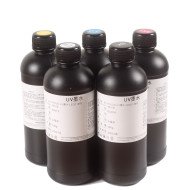
| Ink Types Supported | UV-curable standard inks | Extended inks: flexible, rigid substrates |
Scenario Analysis for Scalable Businesses
Case 1 A Boutique Print Shop Expanding On-Demand Customization
A small print shop aiming to offer personalized merchandise can leverage the Economical A4 printer for low-volume, high-mix jobs requiring rapid substrate switching. However, throughput constraints and cooldown delays limit batch scalability beyond 100 sheets per day without labor cost increases. Effective use entails careful job scheduling and operator training to minimize idle time during thermal cycles.
Case 2 Mid-Sized Production Facility Introducing Prototyping and Short Runs
Here, the printer serves prototyping and rapid sample creation. Its multifunction scanning aids quality control. Yet, transition times between jobs and limited automation cause throughput bottlenecks when orders scale to dozens of batches daily. Investment in workflow software and dedicated maintenance protocols is essential to maintain uptime.
Case 3 Corporate In-House Printing for Marketing Collateral
For corporate environments, the printer supports decentralized small batch printing of materials with quick turnaround. Thermal management limitations impose operational scheduling around office hours. Integration with enterprise print servers is limited, requiring manual data transfer and increasing administrative overhead.
Expert FAQ
How does the LED UV lamp power affect print quality and throughput?
Lower wattage LED arrays constrain curing speed, necessitating slower passes to ensure ink polymerization. This reduces throughput and can affect adhesion on less receptive substrates, requiring substrate-specific calibration.
What maintenance routines extend printhead longevity in multifunction LED UV printers?
Regular nozzle cleaning cycles, controlled ink viscosity, and avoiding prolonged continuous operation minimize clogging and printhead wear. Scheduled LED lamp inspections prevent unexpected downtime.
Can these printers handle thicker or unconventional substrates?
Substrate thickness is limited by platen clearance, typically under 10 mm. Multifunction scanning and printing on irregular surfaces may require manual adjustments or supplementary fixtures.
What are the main firmware limitations impacting automation?
Proprietary firmware often lacks comprehensive API endpoints and remote diagnostics, preventing integration into enterprise workflow management systems and limiting automated print queue management.
How does thermal cycling influence operational cost over time?
Frequent cooldown phases reduce effective uptime, increasing labor and energy costs. Accelerated component degradation due to thermal stress raises maintenance frequency and parts replacement expenses.
Strategic Verdict
The Economical A4 Multifunction LED UV Printer presents a technically appropriate solution for low-volume, high-mix printing scenarios where footprint constraints and multifunction capabilities outweigh throughput demands. However, when applied within scalable business models targeting continuous production, inherent hardware and firmware bottlenecks—particularly thermal management, limited LED power, and automation deficits—significantly restrict operational efficiency. Future advancements must prioritize higher-density printhead arrays, improved thermal regulation systems, and open integration protocols to transition from economical use toward industrial-grade reliability. Until such enhancements are realized, deployment remains best justified in niche applications rather than extended production pipelines.