Scaling Textile Printing with DTF Printers Unlocking New Growth Frontiers
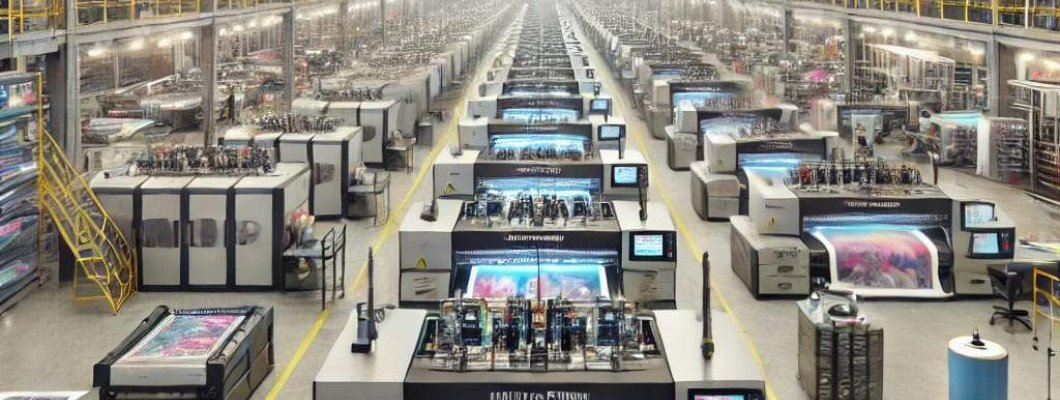
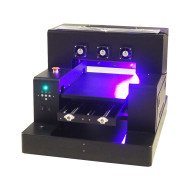
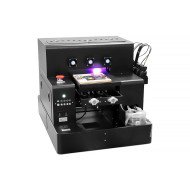
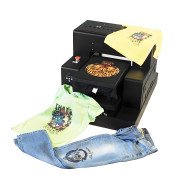
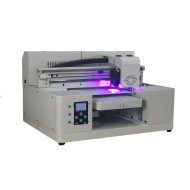
The direct-to-film (DTF) printer is transforming textile printing operations at an unprecedented pace. As companies seek to scale their production without sacrificing quality or profitability, the dtf printer emerges not just as a tool but as a strategic asset. Within the first 100 words, it becomes clear that the dtf printer's impact extends well beyond conventional printing—it's reshaping how businesses approach growth, capacity, and market reach.
Industrial textile manufacturing faces a complex challenge: how to meet rising demand with tighter deadlines and diverse product requirements. The dtf printer answers this by enabling faster, flexible, and more cost-effective printing solutions than traditional screen or direct-to-garment methods. Yet, the real scaling power of the dtf printer lies in its integration into production workflows, workforce upskilling, and return on investment strategies.
To fully grasp how dtf printers scale textile printing, one must explore the distinct technical attributes, operational efficiencies, and business economics they introduce. This article provides a comprehensive operational deep-dive from the perspective of a high-volume factory intent on leveraging dtf technology as a driver of scalable growth. By dissecting six critical technical facets, revealing practical profit scenarios, and addressing expert queries, we paint an analytical portrait of dtf printers' role in accelerating industrial textile printing.
Ink Chemistry and Film Compatibility
At the heart of any dtf printer’s ability to scale production is the specialized pigment ink designed for optimal adhesion and color fidelity on transfer films. Unlike traditional plastisol screen inks, dtf ink is water-based pigment ink, cured via heat to bond with polymer-coated films. This chemical base allows for high durability, wash resistance, and vibrant color profiles.
Film compatibility varies, with some films featuring advanced coatings that improve ink transfer and peel strength. The adaptability of dtf printers to multiple film substrates means a factory can diversify its product line — from light cotton to poly blends — without massive retooling. The scalability advantage here is clear: fewer material constraints translate to quicker product changeovers and higher throughput.
"Ink chemistry is the pivot point for scaling with dtf technology; its precision and consistency underpin every production increment." — Dr. Leah Nguyen, Polymer Chemist
Printhead Technology and Speed Optimization
Most dtf printers employ piezoelectric printheads capable of fine droplet control. This technology allows for high-resolution output with remarkable speed, surpassing older direct-to-garment models. Advanced dtf printers integrate multi-nozzle arrays and variable dot sizes to optimize speed and minimize ink waste.
Scaling depends on the balance between speed and quality. Factories must configure printheads for their required dpi and throughput, often experimenting with heat, substrate tension, and ink feed rates. Some modern units offer wide-format prints up to 24 inches, enabling bulk print runs of large designs with speed gains measured in multiples over screen printing.
"Speed isn’t just about the printhead but also how the entire ink delivery system synchronizes under load." — Marco Silvestri, Print Technology Engineer
Powder Application and Curing Systems
After printing on the film, dtf printers use a fine adhesive powder applied to the wet ink before curing. This powdering step is critical for achieving strong transfers onto fabric. Automated powder dispensers with precision control prevent oversaturation and reduce waste, which becomes an efficiency multiplier when scaling.
Following powder application, curing ovens or UV systems solidify the adhesive layer, locking the pigment in place. The integration of continuous curing conveyors allows simultaneous printing and curing—a must-have for scaling operations aiming for consistent quality at high volumes.
Software Integration and Workflow Automation
Scaling a dtf printing operation is also about controlling complexity. Software suites that automate color management, print queueing, and job tracking reduce manual errors and boost throughput. Integration with ERP systems enables real-time inventory and cost analysis, allowing managers to optimize scheduling based on demand forecasts.
Advanced RIP software supports pre-treatment simulation and ink-limit adjustments tailored to fabric types, minimizing trial runs and wasted materials. Workflow automation reduces downtime and maximizes printer utilization—key factors in scaling.
"Workflow software is the unsung hero in scaling dtf production, orchestrating precision while cutting lead times." — Anjali Deshpande, Production Automation Specialist
Maintenance Protocols and Downtime Reduction
With increased throughput comes increased wear. Effective maintenance protocols are essential to preserve print quality and uptime. Predictive maintenance technologies, including sensor feedback on printhead health, nozzle clogging, and powder dispenser calibration, help factories anticipate issues before they become costly breakdowns.
Training staff on routine cleaning and minor repairs is equally critical. Well-documented maintenance schedules combined with manufacturer support contracts create robust operating environments conducive to continuous scale.
Material Sourcing and Scalability Impact
Scaling dtf printing is inseparable from strategic supply chain management. High-volume factories engage multiple suppliers for pigment inks, films, and powders to ensure consistency and buffer against shortages. Economies of scale come not just from faster printing but also from bulk purchasing agreements reducing per-unit material costs.
Material quality directly affects print longevity and customer satisfaction. Factories that invest in testing incoming materials and benchmarking suppliers experience fewer defects—translating into higher repeat orders and stable growth trajectories.
Operational Math and Case Studies
Scenario 1: Small-Scale Factory Transition
A garment factory running screen printing on 5000 units monthly shifts to dtf printing. Initial investment of $50,000 on the printer and materials boosts speed by 3x. With a reduction in labor by 30% and material waste slashed by 20%, monthly operational costs drop by 25%. The ROI is realized within 9 months due to increased order capacity and faster turnaround.
Scenario 2: High-Volume Production Ramp
A large textile printer integrates multiple dtf printers, each capable of 1000 prints/day. Synchronizing curing and powdering processes reduces downtime by 15%. Bulk ink and film sourcing reduce materials costs by 18%. The factory doubles monthly output within a year, capturing new market segments and increasing profit margins by 12%.
Scenario 3: Niche Product Line Expansion
A premium apparel brand uses dtf printing to test new fabric blends without heavy tooling costs. The printer’s ability to swap film types quickly enables rapid prototyping. Although unit cost is higher, the speed and flexibility allow the brand to launch limited editions that generate significant buzz and boost brand equity, offsetting initial scaling expenses.
Advanced FAQ
- Q: How does dtf ink adhere differently compared to traditional inks?
A: Dtf inks rely on pigment particles bonded with polymer coatings on transfer films, cured via heat, unlike plastisol inks that are cured directly on fabric. - Q: What maintenance is critical to avoid printhead clogging?
A: Daily nozzle checks, automated cleaning cycles, and proper ink filter changes are critical to maintain uninterrupted printing. - Q: Can dtf printers handle polyester blends effectively?
A: Yes, choosing appropriate films and adhesive powders allows high-quality transfers onto polyester and mixed fabrics. - Q: How does powder application uniformity affect print quality?
A: Uneven powder causes blurred edges or weak adhesion; precise control systems ensure perfect coating for consistent results. - Q: Are there environmental considerations for dtf printing scale-up?
A: Water-based inks are less toxic, and efficient curing reduces energy use, making scaling relatively eco-friendly with responsible waste management. - Q: What role does workflow software play in multi-printer setups?
A: It coordinates job assignments, balances loads, and reduces human error, essential for synchronized high-volume production.
The Final Verdict
For high-volume factories aiming to scale textile printing, the dtf printer represents a pivotal advancement. Its blend of high-speed, versatility, and cost control directly addresses bottlenecks of traditional methods. The technology's technical sophistication—from ink chemistry to automated curing—enables factories to increase output without proportional increases in labor or waste.
Moreover, structured maintenance and software integration make sustained growth feasible without compromising quality. Operational case studies confirm that the ROI timeline for dtf adoption is attractive for volume-driven businesses, with scalability unlocking new revenue streams and market agility.
Ultimately, the dtf printer is not merely a machine but a nucleus of scalable textile manufacturing strategy. High-volume factories embracing this technology position themselves to dominate in competitive markets, ensuring future-readiness and operational excellence.