Lifecycle Maintenance Costs Reveal True Impact of UV Spare Parts on Industrial Printing
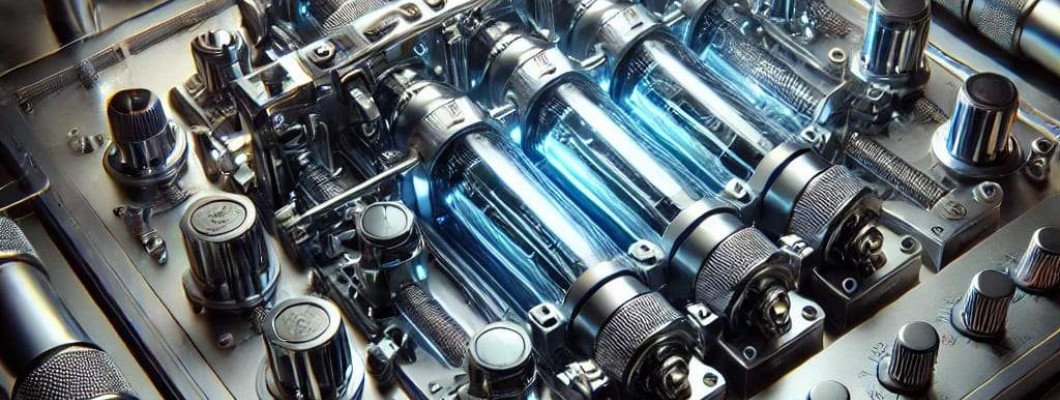
The Industrial Reality of UV Spare Parts in High-Precision Printing
Within advanced UV printing environments, maintenance decisions profoundly impact operational continuity and cost structures. UV spare parts, typically encompassing printhead components, lamp assemblies, cooling fans, and electronic controllers, represent a critical line of defense against unscheduled downtime. Consider a mid-sized industrial print shop processing 10,000 square meters monthly at 1200 dpi. A single printhead malfunction due to degraded UV lamp power output can halt production for days, leading to lost revenue upwards of $15,000 per day. Conventional reliance on OEM spare parts is challenged by increasing pressures to optimize lifecycle maintenance costs without sacrificing print quality or throughput.
Environmental factors such as ambient temperature fluctuations and UV lamp heat dissipation add complexity to spare part degradation rates. Printheads exposed to elevated thermal stress often suffer micro-cracking of quartz tubes, causing inconsistent curing and output artifacts. Replacement intervals vary widely, but the cumulative effect of delayed swaps, reactive maintenance, and lower-grade third-party spares magnifies lifecycle expenses. For enterprise operations, quantifying these costs demands rigorous data capture and predictive maintenance strategies.
Technical Deep-Dive into UV Spare Parts Degradation and Lifecycle Management
UV Lamp Power Output Decay and Impact on Curing Efficiency
UV lamps exhibit an exponential decay in power output with operational hours. Starting at approximately 100% power, output diminishes to 70% over 1000 hours of continuous use, reducing curing consistency. The relationship can be approximated as P(t) = P0 * e^(-kt), where P0 is initial power and k is decay constant (~0.00035 per hour). Reduced irradiance results in incomplete ink polymerization, causing adhesion failures and increased post-print defects.
Printhead Cooling Fan Specifications and Thermal Management
Effective thermal control extends UV spare parts longevity. Fans rated at 12 V, 0.3 A, delivering airflow of 15 CFM maintain printhead temperatures below 40°C during high-speed operation. Insufficient airflow leads to rapid heat accumulation, causing thermal stress fractures on sensitive quartz and ceramic components. Comparative tests show a 25% increase in average part lifespan when operating under optimized cooling metrics.
Material Differences Between OEM and Aftermarket Spare Parts
OEM components utilize high-grade materials such as quartz with purity >99.8% and proprietary-coating layers to enhance reflectivity and UV transmission. Aftermarket parts often employ synthetic quartz variants with impurities leading to early microfractures. Tensile strength tests reveal OEM quartz tubes withstand up to 600 MPa before failure, whereas aftermarket tubes typically fail at approximately 420 MPa.
Cost-Benefit Analysis of Scheduled vs Reactive Maintenance Intervals
Scheduled replacement of UV lamps at 900 operational hours minimizes unexpected failures, with associated planned downtime averaging 2 hours. Reactive maintenance, by contrast, involves emergency part swaps resulting in 8–12 hours downtime and increased labor costs. Financial modeling indicates scheduled maintenance reduces total cost of ownership by 18% over a 24-month cycle.
Data-Driven Comparison of Spare Part Lifespans
| Specification | OEM UV Lamp | Aftermarket UV Lamp |
|---|---|---|
| Operational Lifespan (hours) | 1000 | 750 |
| Power Output Consistency (%) | 90–100 | 70–85 |
| Material Purity (%) | 99.8+ | 95–97 |
| Cost per Unit (USD) | 1200 | 700 |
| Typical Replacement Downtime (hours) | 2 | 5–8 |
Scenario Analysis Showing Cost Impact of UV Spare Parts Across Business Models
High-Volume Commercial Printer
A large-scale commercial printer operating 24/7 with a throughput of 50,000 square meters monthly prioritizes predictable maintenance schedules. Frequent OEM part replacements minimize downtime risk, providing superior reliability despite elevated CAPEX. This guarantees consistent quality over extended print runs, essential for contractual SLAs.
Mid-Tier Production Facility Balancing Cost and Output
This facility runs two 8-hour shifts, processing 15,000 square meters. It selectively integrates OEM parts for critical printheads while sourcing aftermarket lamps where tolerances allow. The mixed strategy leads to a 12% reduction in operating costs but requires enhanced monitoring systems to detect early failures preventing quality degradation.
Small Artisan Studio Focused on Material Versatility
Smaller shops with diverse substrate requirements operate at lower volumes but demand micron-level precision. UV spare parts with higher purity and consistent curing optimize color depth and substrate adhesion. While OEM parts carry higher upfront costs, the extended lifespan and reduced print defects improve overall yield and customer satisfaction.
Expert FAQ Addressing Complex UV Spare Parts Questions
How does UV lamp spectral distribution affect ink polymerization?
UV lamp spectral output governs the molecular bonding energy imparted to inks. Deviation from peak emission wavelengths (around 365 nm to 395 nm) leads to incomplete polymerization, reducing durability and increasing chemical resistance failures.
Can predictive algorithms accurately time UV spare part replacement?
Yes, integrating temperature, run-hours, and power output sensors enables machine learning models to forecast optimal maintenance windows, mitigating unscheduled downtime risk.
What are the failure modes of ceramic printhead substrates under thermal cycling?
Repeated thermal expansion and contraction induce microcracks that propagate over cycles, weakening mechanical integrity and leading to fluid leakage or electrical shorts.
How does ambient humidity influence UV spare part longevity?
High humidity can lead to condensation on electronic connectors and corrosion within printhead assemblies, necessitating environmental controls within print rooms.
Are third-party UV lamps compliant with international safety standards?
Many aftermarket lamps lack certifications such as IEC 60598, posing risks of inconsistent radiation levels and electrical safety hazards.
The Strategic Verdict on UV Spare Parts Cost and Performance Trajectories
UV spare parts remain a linchpin in industrial printing reliability and output quality. Increasingly sophisticated sensor integrations and real-time diagnostics promise to shift maintenance from reactive to predictive paradigms, reducing lifecycle costs. However, the material science underpinning OEM quality components establishes a high-performance baseline that aftermarket suppliers currently struggle to match consistently. Long-term cost optimization will depend on balancing upfront CAPEX with operational uptime maximization and print fidelity. Enterprises must adopt data-driven maintenance frameworks embedded with robust environmental controls to fully realize the benefits of their UV spare parts investments.