Hidden Operational Bottlenecks in Cake and Pizza Edible Food Printers Revealed with Clinical Precision
The Industrial Reality of Edible Food Printing Operations
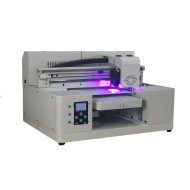
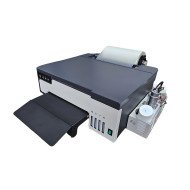
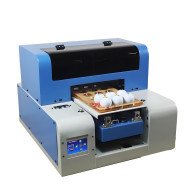
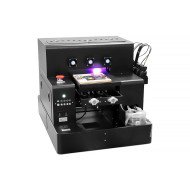
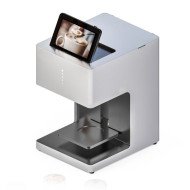
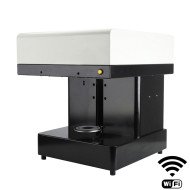
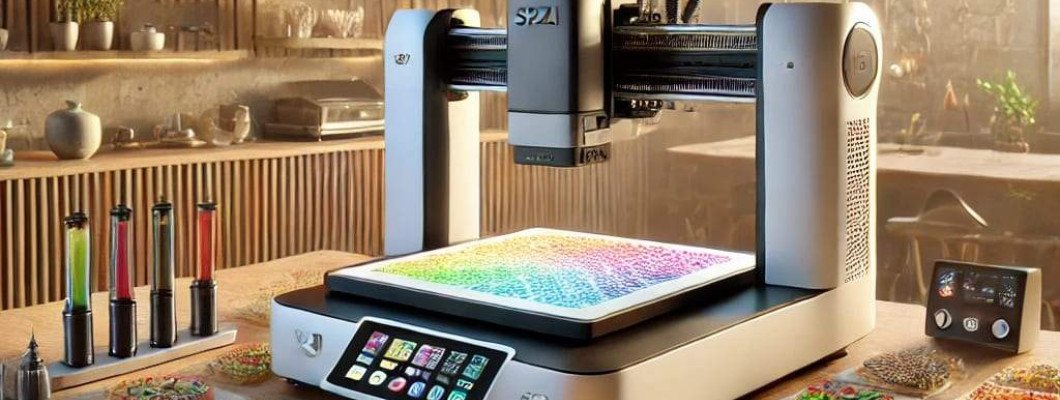
Printing edible food products such as cakes and pizzas introduces a complex interplay of mechanical precision, food-grade material handling, and stringent operational flows that diverge significantly from conventional industrial printing environments. Imagine a high-throughput bakery or pizzeria deploying a specialized edible food printer designed to deposit frosting, sauces, or other edible inks onto substrates such as cake layers and pizza dough. On paper, these printers promise customization and automation, but beneath the surface, operators face persistent challenges that bottleneck production, reduce asset uptime, and inflate operational costs.
Most notable is the microclimate sensitivity of edible inks, which are thermo-reliant and prone to viscosity fluctuations within 5-10 °C variations. This leads to nozzle clogging, inconsistent layer deposition, and spoilage risks that granularly disrupt continuous print jobs. Additionally, the food substrates themselves—whether soft cake sponges or uneven pizza dough—exert variable mechanical stresses on dispensing apparatuses, causing frequent calibration drift and printhead misalignment. The ambient humidity in kitchen environments further exacerbates print quality with substrate swelling or surface moisture accumulation, challenging repeatable micron-level accuracy.
These operational bottlenecks manifest as unpredictable maintenance cycles, increased labor for manual intervention, and ultimately loss of throughput capacity in commercial production lines. Identifying and quantitatively mapping these friction points becomes essential for businesses aiming to scale edible printing without sacrificing quality or asset reliability.
Technical Deep Dive into Operational Bottlenecks
1. Thermal and Ink Rheology Constraints
Edible inks used in cake and pizza printers are non-Newtonian fluids with shear-thinning characteristics, sensitive to temperature-driven viscosity changes. Operating temperature ranges between 20-30 °C require precision thermal management within ±1 °C to maintain stable flow rates. Deviations beyond this range can increase ink viscosity by 25-40%, raising nozzle pressure from typical 5 bar to spikes approaching 7 bar, exacerbating clog risks and requiring higher extrusion forces.
2. Printhead Calibration and Mechanical Wear
Printheads designed for edible materials incorporate micro-valves and piezoelectric actuators with tolerances under 10 microns. Continuous mechanical contact with flexible food substrates introduces wear and alignment drift. For example, substrate thickness variability of ±2 mm in dough or cake layers shifts nozzle-substrate distance, causing print inaccuracies beyond ±100 microns, surpassing industry standards for high-precision food decoration.
3. Environmental Humidity and Substrate Surface Physics
Relative humidity fluctuations from 40% to 70% impact substrate moisture content directly. Swelling rates of cake sponges can reach 3-5% volumetric increase, altering surface topology and absorption rates. This phenomenon modifies the ink-substrate adhesion coefficient, fluctuating between 0.6 to 0.9 (unitless), resulting in blotchiness or ink bleed if not compensated with adaptive printhead control algorithms.
4. Maintenance Scheduling and Unplanned Downtime
Non-ideal operational conditions lead to mean time between failure (MTBF) reductions. Empirical data from comparable cake and pizza printer models indicate MTBF averages 150 hours under controlled conditions, but degrade to as low as 90 hours with fluctuating environmental and substrate variables. Maintenance routines extend to 1-2 hours per session, occurring biweekly, thus reducing effective uptime to approximately 85% under high-demand production.
5. Comparative Operational Metrics of Cake vs Pizza Printers
| Specification | Cake Printer | Pizza Printer |
|---|---|---|
| Typical Ink Viscosity (mPa·s) | 120-150 | 140-180 |
| Nozzle Diameter (µm) | 70 | 90 |
| Operating Temperature Range (°C) | 20-25 | 22-28 |
| Optimal Substrate Thickness (mm) | 15-30 | 8-15 |
| Average Throughput (items/hr) | 10-15 | 12-18 |
| MTBF (hours) | 150 | 130 |
Scenario Analysis of Operational Bottlenecks Impact
1. Boutique Bakery with High Customization Demand
A bakery specializing in bespoke cakes faces challenges in maintaining print precision as frequent substrate variations require constant recalibration. Thermal inconsistencies lead to increased nozzle clog rates, causing an average of 10% yield loss per batch. Operational bottlenecks manifest in frequent pauses, increasing labor costs and limiting potential for automation-led scaling.
2. Mid-Size Pizzeria Integrating Printable Sauce Patterns
The pizzeria implements edible food printers to create intricate sauce patterns on pizza bases. Humidity fluctuations in kitchen staff areas cause substrate swelling, which results in misregistration errors exceeding ±150 microns. This necessitates manual quality inspection post-print, slowing throughput and negating automated advantages.
3. Large-Scale Food Service Provider Seeking Volume Efficiency
In a high-volume environment, unpredictable maintenance events reduce the MTBF and lead to unscheduled downtime. The asset utilization rate drops below 80%, impacting order fulfillment timelines. The bottleneck is predominantly attributed to inadequate environmental controls and lack of real-time printhead health monitoring.
Expert FAQ on Complex Operational Challenges
Q1 What measures can stabilize ink viscosity beyond environmental controls?
Adding rheology modifiers such as xanthan gum or employing inline thermal conditioning modules stabilizes ink flow properties, maintaining viscosity within ±5%. This prevents pressure fluctuations and nozzle clogging.
Q2 How does substrate heterogeneity specifically affect piezoelectric actuator lifespan?
Variable mechanical stresses from inconsistent substrate textures induce micro-fatigue cycles in piezoelectric materials, accelerating actuator degradation by up to 20% compared to uniform substrates.
Q3 Can adaptive printhead gap control fully compensate for substrate swelling?
Partial compensation is achievable through real-time optical sensors adjusting nozzle distance; however, rapid swelling events can exceed actuator response time, resulting in temporary print quality loss.
Q4 What role does predictive maintenance analytics play in minimizing downtime?
Integrating sensor telemetry with machine learning models can predict imminent nozzle blockages or mechanical wear, allowing preemptive interventions that extend MTBF by 15-25%.
Q5 How critical is humidity control in kitchen environments for edible printers?
Maintaining relative humidity within ±5% of the target range is crucial as excursions beyond this degrade substrate integrity and print quality, increasing rework rates by over 30%.
Strategic Verdict on Edible Food Printer Bottleneck Mitigation
Edible food printers occupy a niche yet technically demanding segment where operational bottlenecks directly constrain scalability and cost efficiency. Addressing thermal ink dynamics, substrate variability, and environmental controls through integrated hardware-software solutions remains paramount. Future progress will likely hinge on real-time adaptive feedback systems, advanced material formulations, and predictive maintenance frameworks to enhance uptime and output consistency. Without such focused interventions, enterprises risk diminished returns on asset investments despite the alluring promise of automation and customization in food printing.