Dscoop Edge Rockies Signals Next Wave of PSP Evolution and Technical Demands

Industrial Impact of Dscoop Edge Rockies on Print Service Providers
The recent Dscoop Edge Rockies event, held in Denver, Colorado, serves as a significant inflection point for print service providers (PSPs) aiming to adapt to shifting market demands and nexus points of technological evolution. Peter van Teeseling, executive director of Dscoop, highlights the essential transformation PSPs must undertake to stay competitive in a digital era increasingly defined by personalization, automation, and efficiency optimization.
This event is not just a networking function but a crucible where the future of print operations is debated and forged. For shop floors integrating digital workflows, Dscoop Edge Rockies emphatically underscores the pressing need for robust digital infrastructure capable of handling higher throughput with precision. As production volumes shift toward shorter runs and hyper-personalized output, operational workflows become critically dependent on advanced digital front ends (DFEs), scalable print architectures, and augmented workforce skill sets.
The industrial ramifications at scale mean print facilities that fail to invest in next-generation digital platforms risk obsolescence. Dscoop's dedication to fostering education and peer exchange signals the accelerating obsolescence of legacy print paradigms, particularly for PSPs constrained by inflexible hardware or fragmented digital ecosystems. This evolution also prompts a reevaluation of print budgets—moving from cost centers focused on volume and speed towards profit centers emphasizing agility, customization, and value-added services.
Moreover, evolving compliance and sustainability considerations are increasingly integrated into printshop decision-making, from consumables selection to waste reduction protocols. At Dscoop Edge Rockies, the dialogue extends beyond print itself, tackling how PSPs must structurally embed environmental responsibility without compromising productivity. This intersection of regulation, innovation, and customer expectation reshapes supply chains and operational risk profiles.
Overall, the event reinforces a salient reality: the future for PSPs hinges on mastering complex digital ecosystems, cultivating a versatile workforce, and engaging in continuous incremental innovation. It pushes the industrial print sector from its traditional analog roots toward a holistic model blending hardware advancement, software intelligence, and strategic market positioning.
Technical Anatomy of the Dscoop Edge Rockies Themes
1. Hardware Scalability and Digital Print Engine Evolution
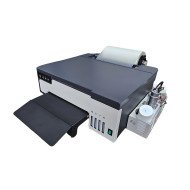
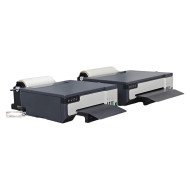
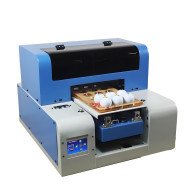
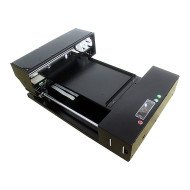
The event stressed the critical importance of hardware scalability — a challenge faced unevenly across PSPs of varying size. Advanced digital presses must now accommodate workflows ranging from micro to mass customization without throughput penalties. Key specifications spotlighted include increased printhead nozzle density, faster spectral color calibration, and improved substrate handling. This enables not only higher resolution but also the precise rendering needed for bespoke applications.
Instrumentation advances addressing thermal management in high-intensity UV curing exemplify key developments. Maintaining consistent substrate temperature against increased print speeds mitigates creep and distortion, crucial for packaging and commercial print. Industry-leading hardware incorporates adaptive cooling systems and inline sensors to achieve these geometrical tolerances.
2. Software Integration and Workflow Automation
Comprehensive automation emerged as a non-negotiable provision. The complexity of managing multi-channel, multi-substrate production schedules mandates tighter integration between MIS (Management Information Systems), JDF (Job Definition Format), and press control software. Dscoop emphasizes the role of cloud-based scalable printing management platforms that allow real-time production tracking.
Artificial intelligence and machine learning models tailored for print quality assurance were underscored. Automated defect detection and predictive maintenance analytics reduce downtime and quality escapes, collectively pushing yield optimization. This technical synergy between data capture and device control represents the core engine of next-gen PSP efficiency.
3. Consumables and Environmental Compliance
Consumables technology, including ink formulation and substrate innovation, was raised as both a differentiator and a compliance fulcrum. PSPs operate under mounting pressure to source low-VOC inks and recyclable substrates without compromising printing speed or color fidelity.
Technically, manufacturing precision inkjet inks require a balance of pigment dispersion, viscosity, and drying characteristics to optimize nozzle reliability and color performance. Dscoop sessions tackled how new ink chemistries are engineered to extend printhead lifetimes while meeting regulatory standards. Similarly, substrate coatings have evolved to sustain durability for diverse post-processing treatments.
4. Workforce Technical Debt and Training Paradigms
Van Teeseling identifies workforce skills gaps as a substantial technical risk for PSPs embracing digital transformation. The transition from mechanical-centric skillsets to technology-driven operation demands continuous education on digital press maintenance, software troubleshooting, and data analytics interpretation.
Dscoop’s role includes curating educational pathways tailored to close this gap systematically. The event champions blended learning models, including virtual training simulators, to minimize operator error rates and accelerate onboarding. Notably, this workforce upskilling is a prerequisite for fully leveraged hardware utilization and to maximize ROI on capital equipment.
5. Legacy Infrastructure Integration and Upgrading
Many attendees grapple with the challenge of integrating new digital tools into legacy environments. Dscoop’s discussions navigated technical architectures allowing phased upgrades without operational disruptions. For instance, retrofit kits that extend the life of analog presses through add-ons like inline scanning or digital inkjet heads were showcased.
The complexity here lies in maintaining data format compatibility, precise color management across hybrid print lines, and synchronization between disparate control systems. Technologies such as RIP (Raster Image Processor) standardization and advanced colorimetric profiling provide critical bridging frameworks.
| Factor | Legacy Analog Upgrade | New Digital Press Acquisition | Cloud & Software-Driven Model |
|---|---|---|---|
| Initial CapEx | Low to Medium | High | Medium (Subscription-based) |
| Operational Complexity | High (Manual Processes) | Medium (Automated) | Low (AI-Optimized) |
| Scalability | Constrained | High (Hardware-Driven) | Very High (Flexible) |
| Quality Consistency | Moderate | High | Very High (Predictive) |
| Workforce Skill Requirement | Mechanical Skills | Technical & Digital Skills | Analytical & Software Skills |
Financial and Scaling Scenarios for PSPs After Dscoop Edge Rockies
The implications of Dscoop Edge Rockies differ according to business scale and maturity.
Small Shop Scenario
For small print shops, the event signals a pressing need for cloud-enabled and subscription-based workflow solutions to reduce upfront capital burden. Whereas capital-intensive hardware acquisition remains out of reach, modular software services for MIS and automated color proofing become essential to compete in short-run, personalized print orders.
Improved automation directly cuts labor hours, improving margins on smaller jobs. However, small shops must weigh investments against return horizon carefully, and Dscoop’s insights help prioritize workflow maturation over hardware refresh in the short term.
Mid-Scale PSP Scenario
Mid-sized PSPs often juggle hybrid production lines with some legacy presses and entry-level digital gears. Van Teeseling’s discussions encourage co-investment in scalable presses with integrated cloud management to streamline job scheduling and quality assurance.
ROI models here improve with endpoint scalability. Incremental upgrades in printheads and workflow automation deliver tangible throughput and waste reduction, while training investments ensure minimal downtime. Cost-benefit analyses facilitated by Dscoop educational panels provide strategically aligned investment roadmaps for the emerging growth phase.
Industrial Hub Scenario
Large industrial PSPs, operating multi-shift, high-volume factories, confront the most complex scaling imperatives. Investment in next-generation equipment featuring higher nozzle count printheads, robust inline sensors, and integrated AI-driven defect detection become baseline requirements.
Dscoop fosters peer collaboration to share best practices on maintaining thermal stability at high speeds and leveraging predictive analytics to avoid costly interruptions. Capital depreciation planning integrates enhanced hardware longevity enabled by ongoing firmware updates and consumables innovation.
Industrial hubs benefit from full-stack digital ecosystems replacing manual bottlenecks, enabling highly granular production scheduling and nimble reaction to volatile customer demands, further increasing competitiveness in fast-moving print markets.
Expert Q&A on Strategic and Technical Challenges PSPs Face
Q1: How can PSPs accurately measure the ROI impact of investments discussed at Dscoop Edge?
A1: ROI assessment must incorporate not only hardware acquisition costs but also workflow efficiencies, labor savings, consumables cost reduction, error reduction, and revenue uplift from new services. Holistic models that include time-to-market improvements and quality yield gains provide a more accurate appraisal than simple volume metrics.
Q2: What are the technical prerequisites to fully leverage AI-powered quality control in print production?
A2: A foundation of high-resolution inline scanning hardware combined with machine vision algorithms trained on large defect datasets is essential. Integration with MIS needed for real-time bidirectional feedback loops allows dynamic press adjustments to maintain color and print fidelity.
Q3: How can PSPs minimize risks when integrating new digital processes with legacy presses?
A3: Phased implementation strategies involving incremental digital retrofits, extensive compatibility testing of RIP and JDF workflows, and operator cross-training minimize operational disruption. Middleware solutions bridging analog and digital protocols are often necessary.
Q4: What role does workforce education play in capitalizing on print innovation trends?
A4: Education is crucial to reduce technical debt by upskilling operators, prepress technicians, and management to digital-native processes. It ensures effective troubleshooting, maximizes machine uptime, and facilitates data-driven decision-making, all critical to sustaining competitiveness.
Q5: How important are environmentally compliant consumables in maintaining PSP market relevance?
A5: Increasingly critical. Sustainable inks and substrates influence brand reputation and regulatory adherence. PSPs integrating green consumables early also position themselves favorably for future-proofing against legislative risks, helping secure long-term contracts with ESG-conscious clients.
Strategic Verdict on Dscoop Edge Rockies Influences
The Dscoop Edge Rockies event is more than a gathering; it is a technical and strategic mandate for PSPs to evolve. The industrial trajectory it charts demands a seamless integration of scalable hardware, cloud-driven software ecosystems, workforce dynamism, and sustainable operational practices.
Print service providers that embrace these imperatives not only safeguard their competitive standing but unlock new revenue frontiers through personalized, efficient, and compliant print production. Dscoop acts as a catalyst, providing the necessary frameworks, resources, and industry benchmarks—aligned with platforms like GNFEI.COM—to ensure that adoption is measured, thoughtful, and positioned for longevity.
Ignoring these shifts risks rapid marginalization in a market where agility, precision, and technology fluency are the new currency. Dscoop Edge Rockies exemplifies the transition from legacy frameworks to industrial-grade digital print infrastructures poised to define print's future landscape.