Analyzing the Operational Bottlenecks of the Portable PrintPen Edible Printer in High-Precision Food Printing

The Industrial Reality of Portable Edible Ink Printing Devices
The emergence of portable edible printing technology, such as the Portable PrintPen Edible Food & Drinks Printer, introduces a novel paradigm for on-demand customization in food and beverage environments. However, integrating such precision printing hardware into daily operational workflows presents multifaceted challenges. Consider a high-volume pastry kitchen incorporating the PrintPen for bespoke dessert decoration. The handheld device demands consistent printhead alignment on irregular, often moist substrates under variable ambient conditions.
Operationally, the PrintPen must overcome mechanical stability challenges due to operator hand tremor and the non-uniform surface topography of food items. These factors directly influence the precision of droplet placement at micron-level tolerances, a crucial determinant of print fidelity. Furthermore, the handheld, battery-powered design entails constraints on thermal dissipation and power management, potentially impacting continuous runtime and the reliability of piezoelectric inkjet actuation. Within tightly scheduled food preparation timelines, any delay caused by device recalibration or ink drying issues translates to throughput loss and increased labor overhead.
The chemical composition and rheological properties of edible inks further complicate print consistency. Variability in viscosity and surface tension affects nozzle clogging propensity, requiring frequent maintenance cycles that interrupt production flow. Environmental factors such as humidity and temperature fluctuations common in commercial kitchens represent additional variables influencing ink drying kinetics and print longevity on edible surfaces.
From a systems perspective, integrating a portable printer designed primarily for sporadic, artisanal applications into environments demanding scalability and repeatability surfaces critical operational bottlenecks. These include managing consumable supply chains for specialized edible inks, ensuring hygienic maintenance without compromising printhead integrity, and training personnel in precise handling techniques to minimize error rates.
Technical Deep Dive into PrintPen Operational Constraints
Printhead Mechanics and Precision Under Handheld Usage
The core printhead technology relies on piezoelectric actuators to eject ink droplets in volumes around 10–20 picoliters (pl) per pulse. Achieving 300 dpi resolution requires droplet placement accuracy within approximately 84 micrometers (mm) per dot. In a handheld context, hand tremor introduces positional variance exceeding ±500 μm at typical human tremor frequencies (8–12 Hz), necessitating real-time stabilization algorithms or mechanical dampening to maintain output quality.
Ink Rheology and Nozzle Clogging Dynamics
Edible inks must balance pigment dispersion, viscosity (ideally 2–5 mPa·s at 25°C), and surface tension (~30–40 mN/m) to prevent nozzle clogging. Empirical data suggest that settling times over 30 seconds without usage increase clog risks exponentially. The PrintPen’s portable design limits integration of active nozzle heating or ultrasonic cleaning modules common in industrial systems, increasing maintenance frequency.
Battery and Thermal Management Trade-offs
A 7.4 V Li-ion battery packs approximately 15 Wh energy capacity, supporting a maximum continuous runtime of roughly 45 minutes at 20 W power draw typical for piezo actuator drivers and onboard microcontroller loads. Thermal dissipation is constrained by the device’s compact form factor (approximately 250 g mass, 150x50x30 mm dimensions), leading to in-device temperature rises exceeding 50°C during sustained operation, risking ink thermal degradation.
Environmental Impact on Print Fidelity
Humidity levels above 60% significantly extend ink drying times on sugar- and fat-based substrates, increasing smudging risks. Additionally, ambient temperature fluctuations between 18°C and 28°C influence droplet evaporation rates, altering final color intensity and sharpness. These environmental dependencies introduce variability in repeatable output quality in uncontrolled kitchen settings.
Comparative Table of PrintPen Versus Industrial Edible Printers
| Specification | Portable PrintPen | Industrial Edible Printer |
|---|---|---|
| Print Resolution | 300 dpi | 600–1200 dpi |
| Droplet Volume | 10–20 pl | 1–10 pl |
| Continuous Runtime | ~45 minutes | 8+ hours |
| Maintenance Frequency | Every 1–2 hours | Every 6–8 hours |
| Weight | 250 g | 15–25 kg |
| Environmental Controls | None | Integrated humidity/temperature regulation |
Scenario Analysis of Portable Edible Printing Across Business Models
Case 1 High-End Artisan Bakery
Artisans demand substrate versatility and fine color depth achievable with the PrintPen’s 300 dpi output. The handheld nature offers creative freedom on irregular pastries but necessitates retraining for precision control. Short print runs and customization justify frequent calibration. However, bottlenecks arise during peak hours as printhead cleaning interrupts workflow.
Case 2 Event Catering Services
On-site customization with the Portable PrintPen enables rapid branding on edible items. Yet, battery limitations restrict high-volume deployment. The device’s sensitivity to ambient humidity in outdoor scenarios introduces quality variability, impacting client satisfaction. Operational downtime for maintenance reduces throughput.
Case 3 Mid-Sized Food Production Facility
Integrating the PrintPen into automated lines is impractical due to handheld operation and maintenance requirements. The unit serves best in prototyping or small batch product testing rather than mass production, where consistent output and extended runtimes are mandatory. Scaling up requires transition to industrial-grade systems with automated quality controls.
Expert FAQ Addressing Advanced Technical Challenges
Q1 How does hand tremor quantitatively affect dot placement accuracy?
Human hand tremor amplitude can be modeled as a sinusoidal oscillation with peak-to-peak deviations of 1000 μm at 10 Hz frequency. Without mechanical stabilization, this leads to droplet misplacements exceeding 10x the permissible 84 μm dot pitch, resulting in blurred or double-printed images.
Q2 What ink properties minimize nozzle clogging in a portable device?
Optimal inks maintain viscosity under 5 mPa·s and possess surfactants to stabilize pigment particles at ~200 nm diameter. Additives that reduce drying time without altering colorant binding are critical to avoid residue buildup.
Q3 Can thermal management be improved without adding bulk?
Passive heat pipes utilizing graphite composites embedded in the device casing can enhance conduction, dispersing heat across a larger surface area, reducing hot spots without increasing weight significantly.
Q4 What are the best practices for ink reservoir refilling during production?
Modular, sealed cartridge systems designed for rapid snap-in replacement minimize contamination risk and downtime, critical for maintaining hygienic standards while sustaining throughput.
Q5 How does ambient humidity influence edible ink drying kinetics?
Higher relative humidity slows evaporation rates, extending drying times by 30–40%, increasing the likelihood of ink bleeding and substrate deformation when contact time is insufficient before handling.
Strategic Verdict on Portable Edible Printing Technology Trajectory
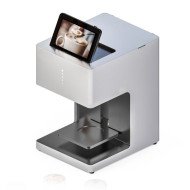
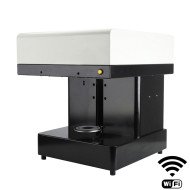
The Portable PrintPen Edible Food & Drinks Printer manifests the convergence of handheld precision printing and culinary customization but is constrained by significant operational bottlenecks. The intrinsic limitations of piezoelectric actuation under manual instability, combined with environmental sensitivities and ink chemistry challenges, circumscribe its scalability for high-throughput environments. Future technological advances must address device stabilization, extend continuous runtime, and integrate environmental regulation mechanisms to overcome these barriers. Meanwhile, its current utility aligns primarily with artisanal applications requiring high customization over volume. This device exemplifies the trade-offs inherent in portable edible printers between mobility and industrial-grade reliability.